



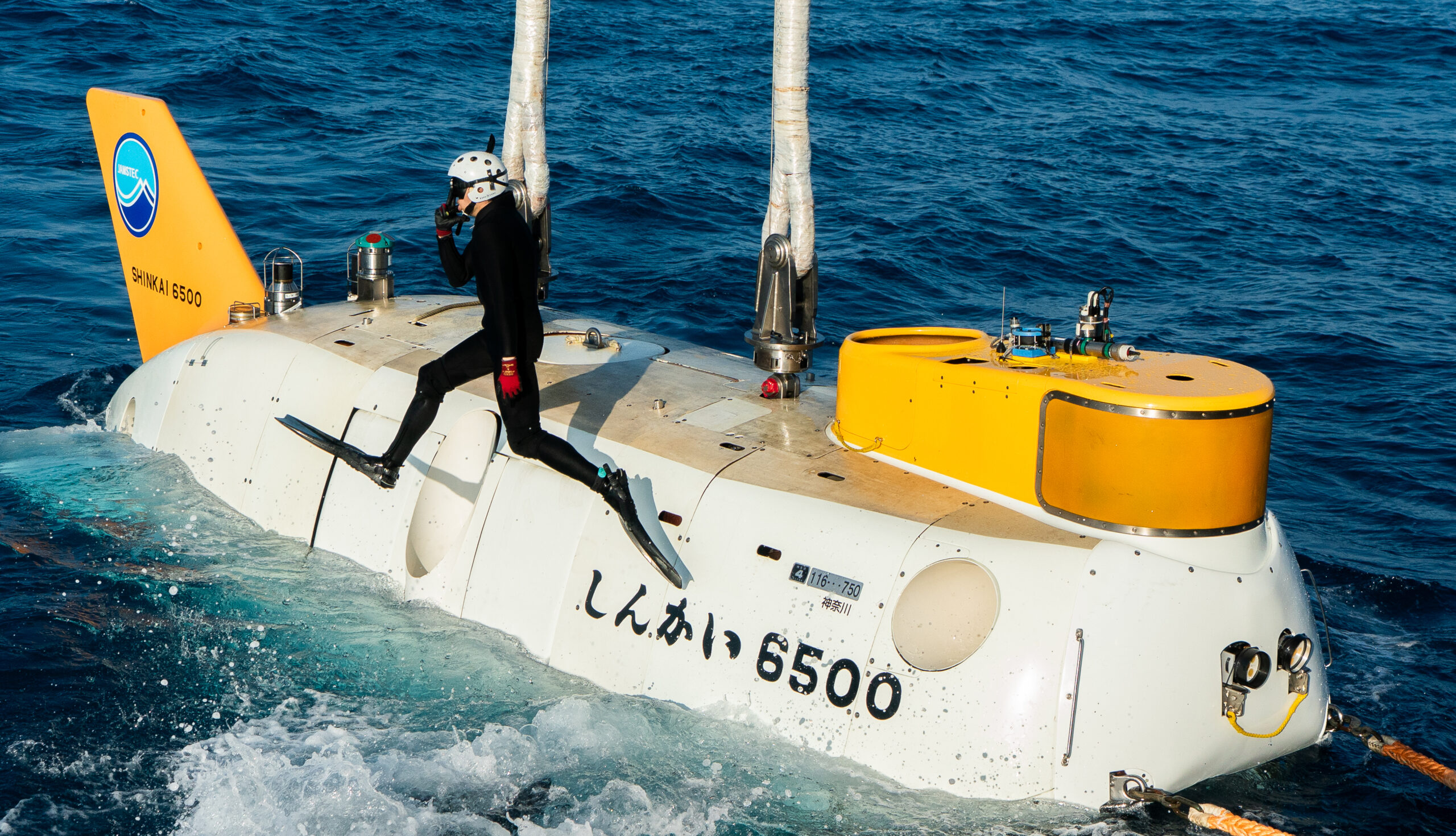
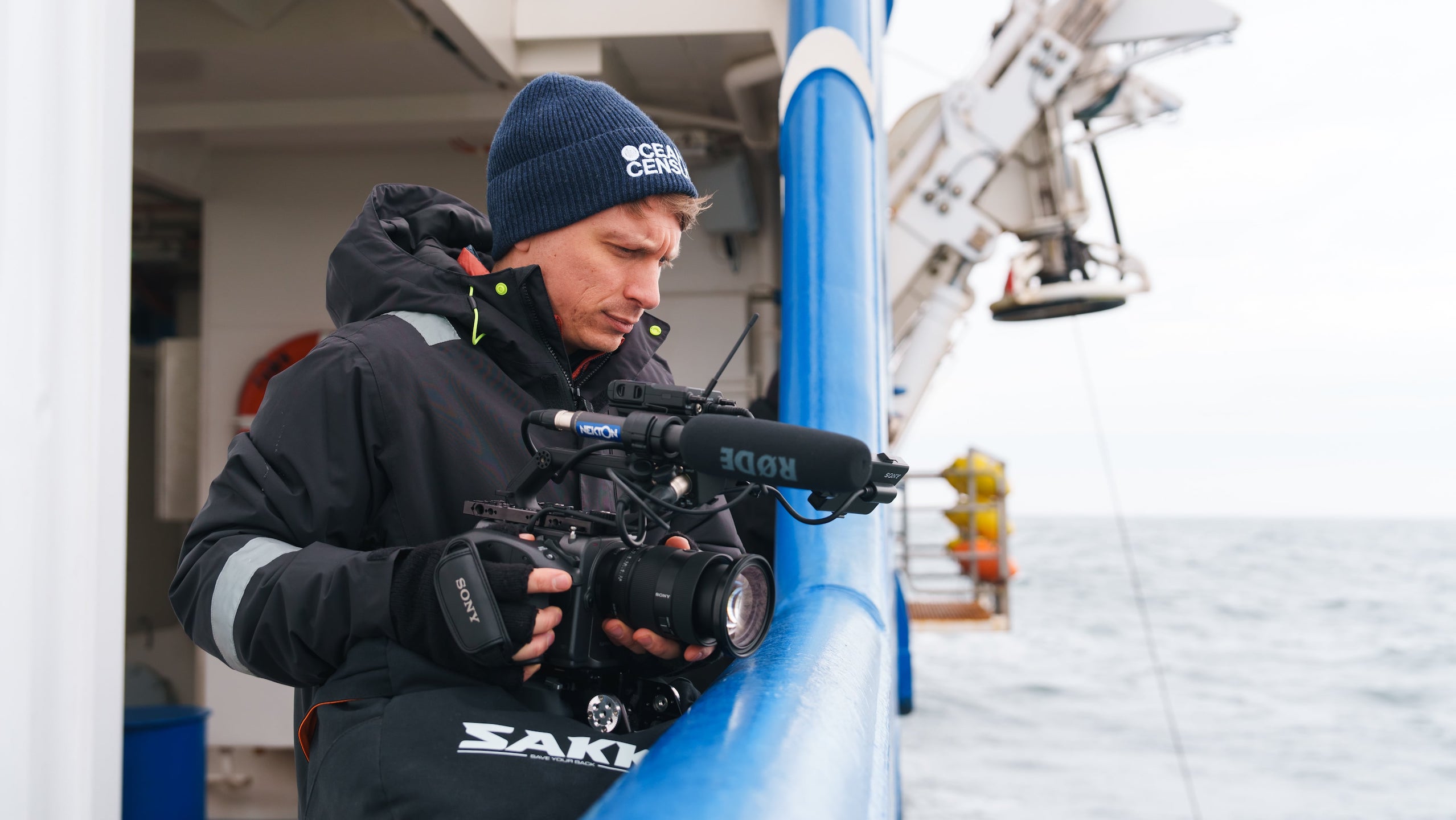
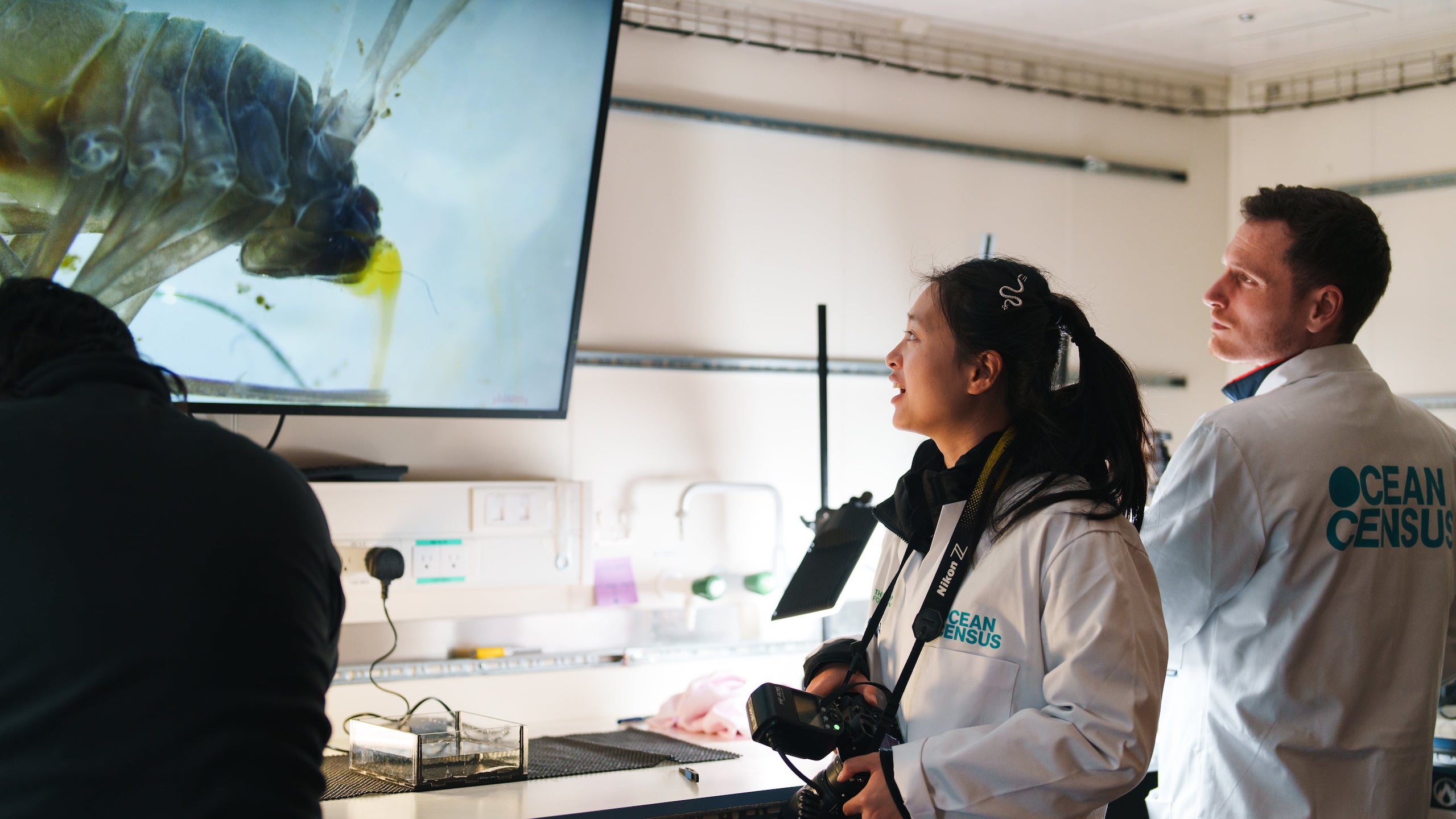
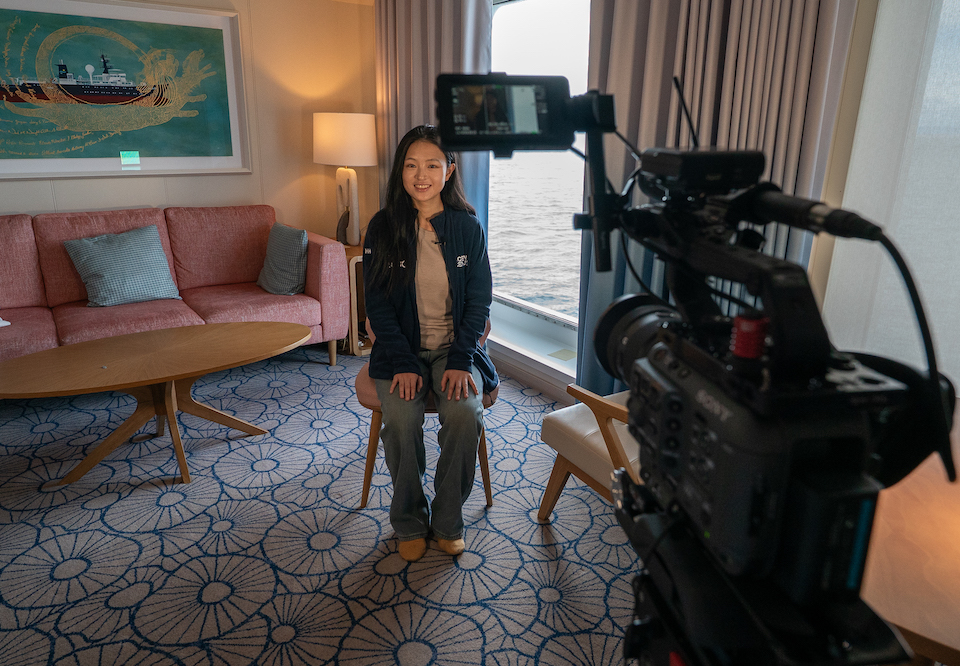





Little creatures with a sting!
Discovering the diversity of sea anemones

Q&A with Dr. Michela Mitchell
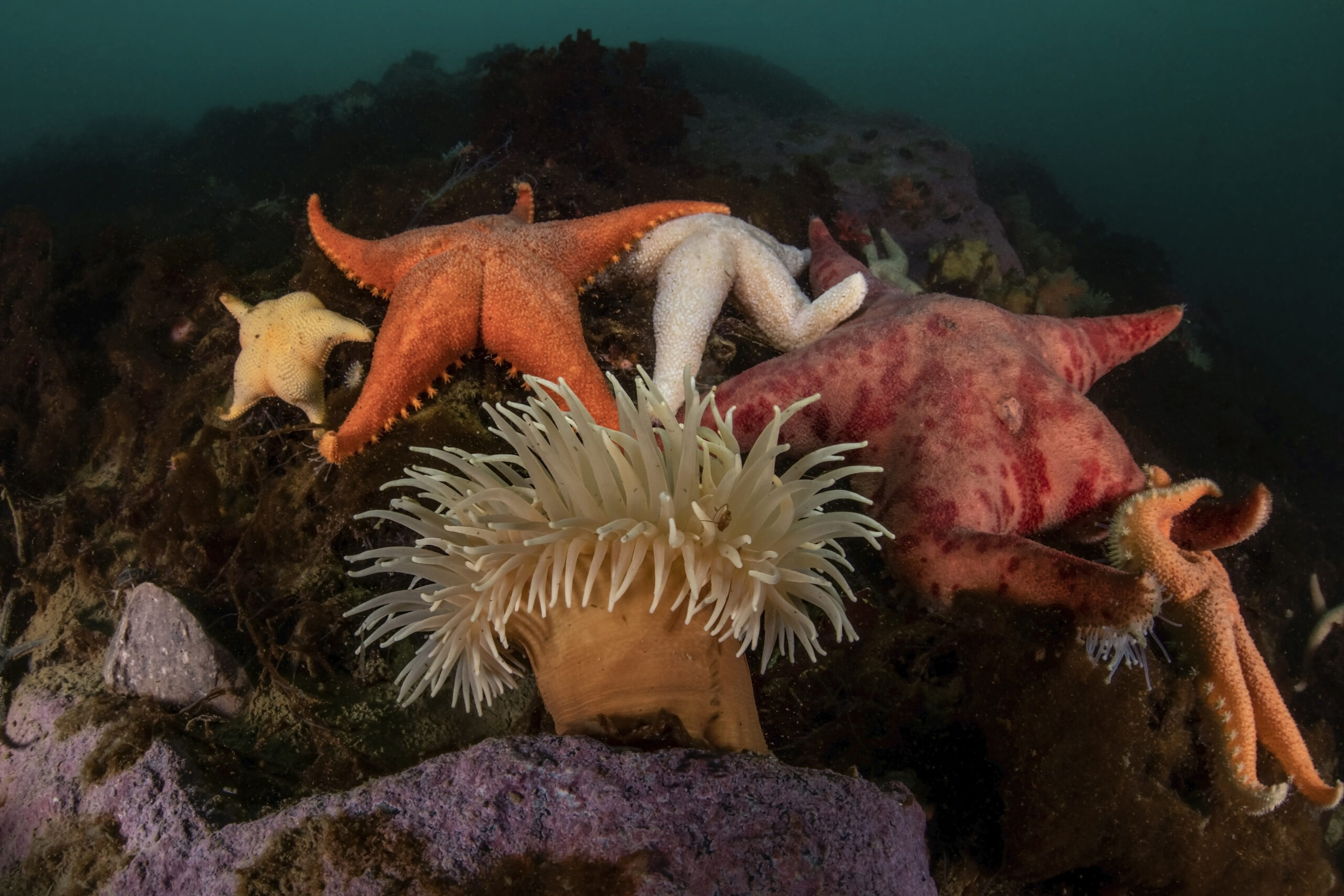
When we think of sea anemones, we might feel the sting of accidentally brushing against one underwater, or think of Disney’s animated film Nemo, and his clownfish home among the tentacles of a sea anemone. But there’s much more to these fascinating animals than meets the eye…
In a recent interview with Dr Michela Lee Mitchell, an Ocean Census Species Discovery Award 2026 recipient researching Actiniaria (sea anemones), we explored the remarkable diversity, biology and hidden complexities of these marine creatures.
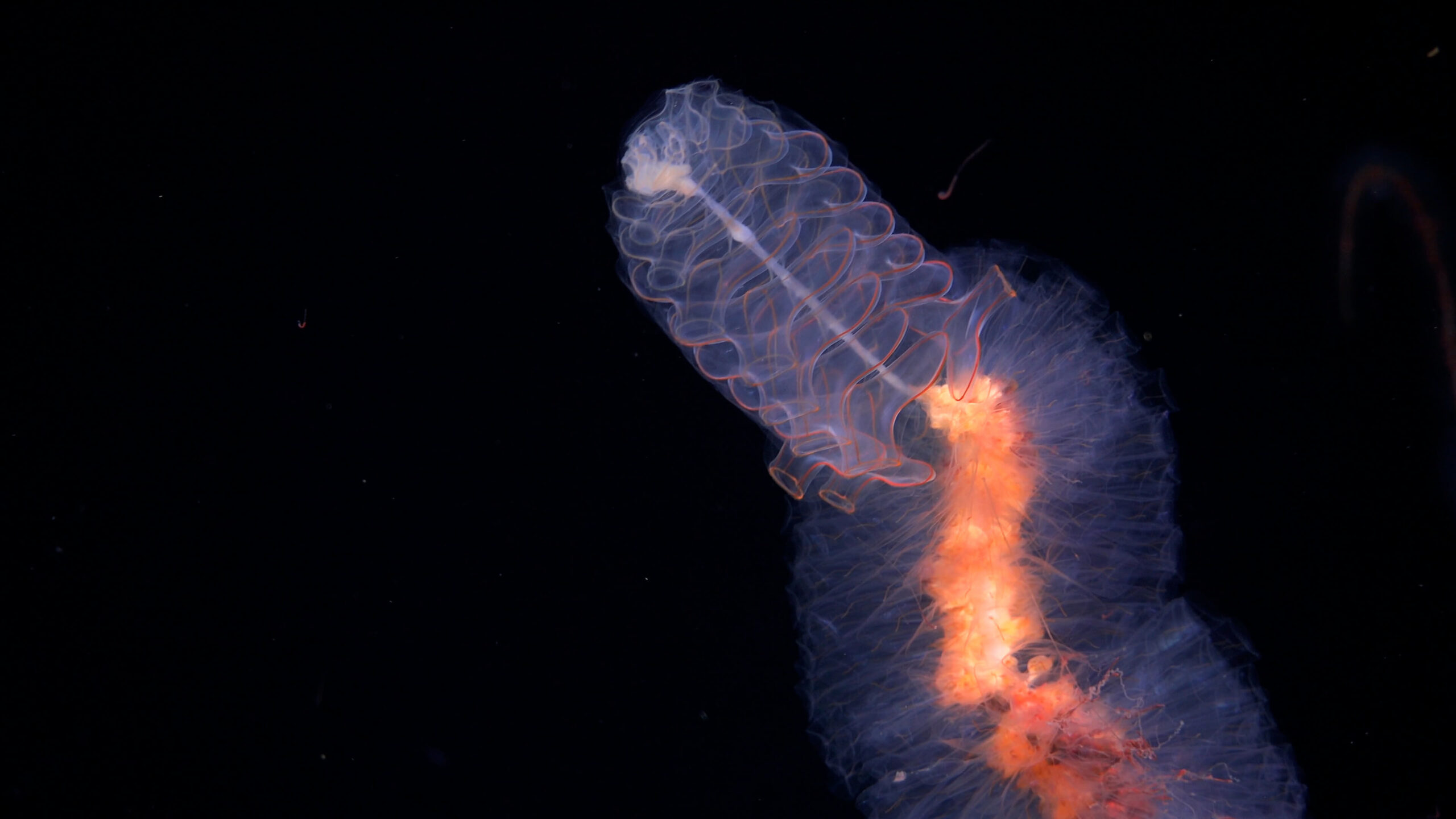
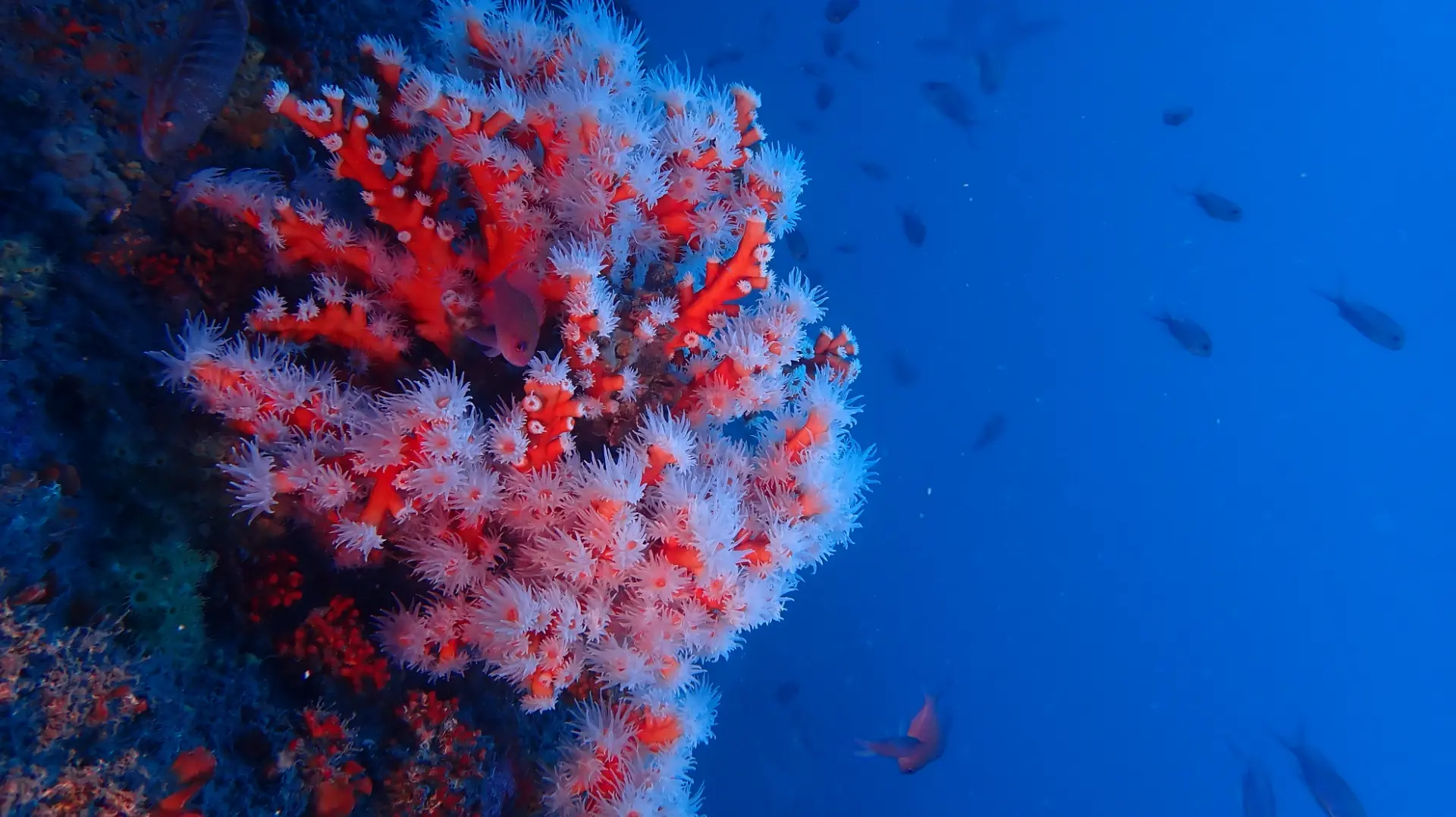
Featured image credit: Ocean Image Bank/ Filippo Borghi
Why should people care about sea anemones?
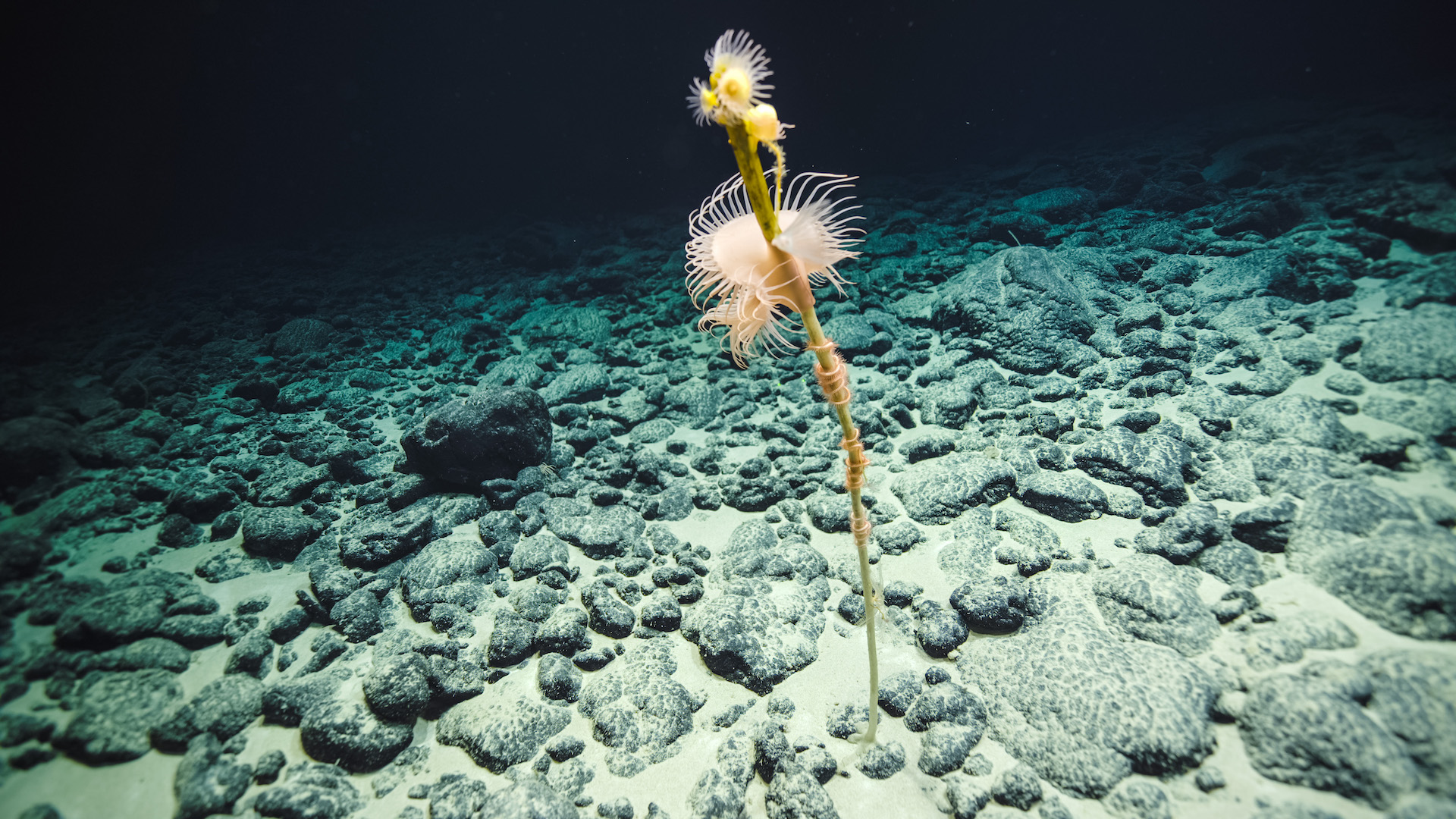
We have a lot to learn from sea anemones – they have been around for ~700 million years and have adapted to every challenge during that time. They live in every marine environment and habitat, and have developed some excellent mutually beneficial relationships (e.g. with crabs and fish). The venom contains toxins that can be used for therapeutics to treat disease. In some countries they are a food source. We know so little about numerous species, including the invasive ones. Every aquarium owner knows Exaiptasia, a prolifically reproducing sea anemone that is almost impossible to get rid of once established in the tank.
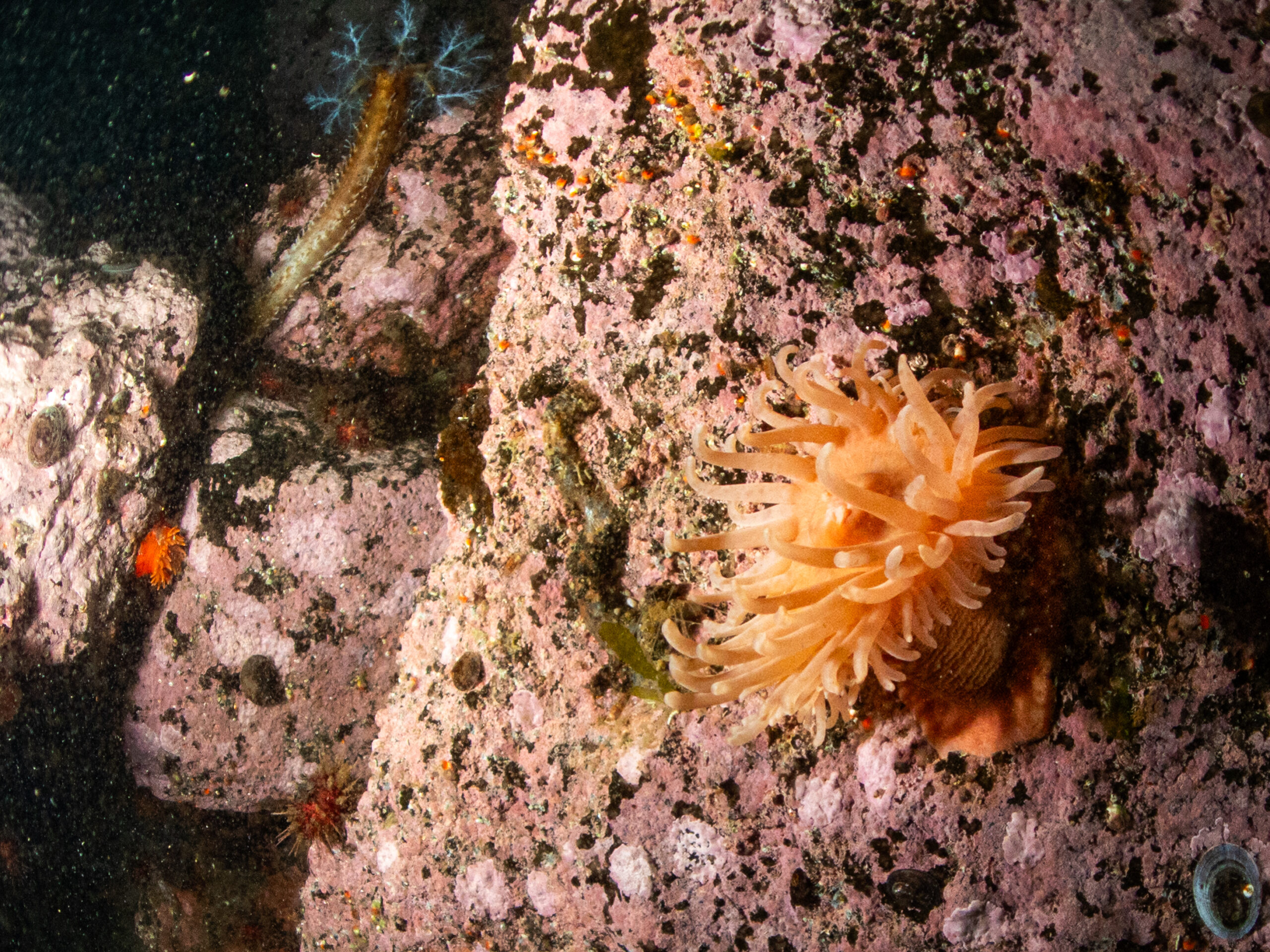
Image credits: Ocean Image Bank/Kim Nesbitt
What makes sea anemones particularly challenging to identify?
Sea anemones have the same fundamentally simple body shape and morphology, and we use external and internal characteristics to identify them. What is most challenging is that different species can look exactly the same. Alternatively, morphology characters can have a huge variation i.e. 100 – 200 tentacles, yet in others it is set in stone e.g. 12. Size varies depending on nutrition, they can shrink or get bigger depending on their food availability. We can’t identify from photos in general as some characters are hidden in sand and rocks and as I said some species look the same.
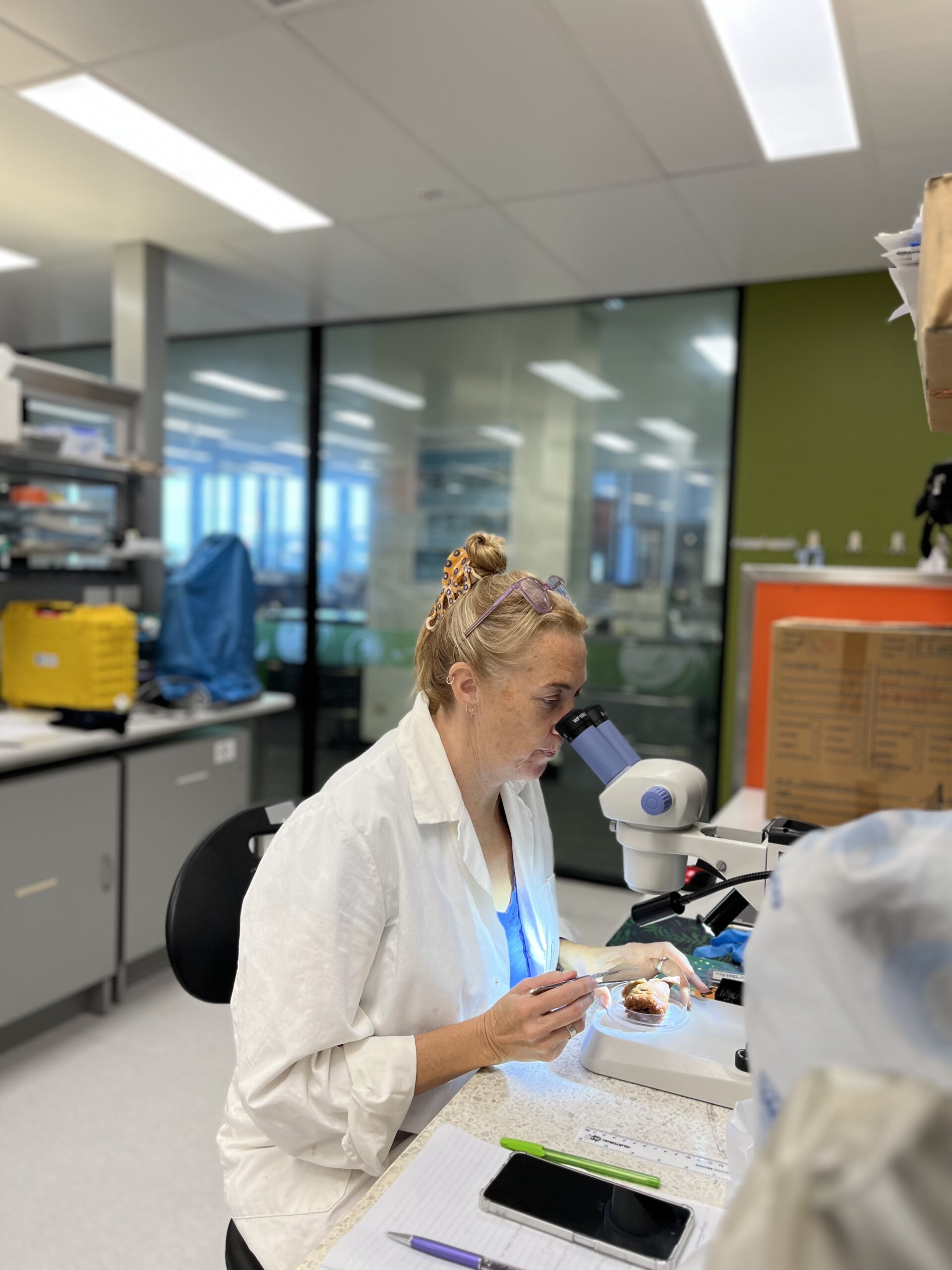
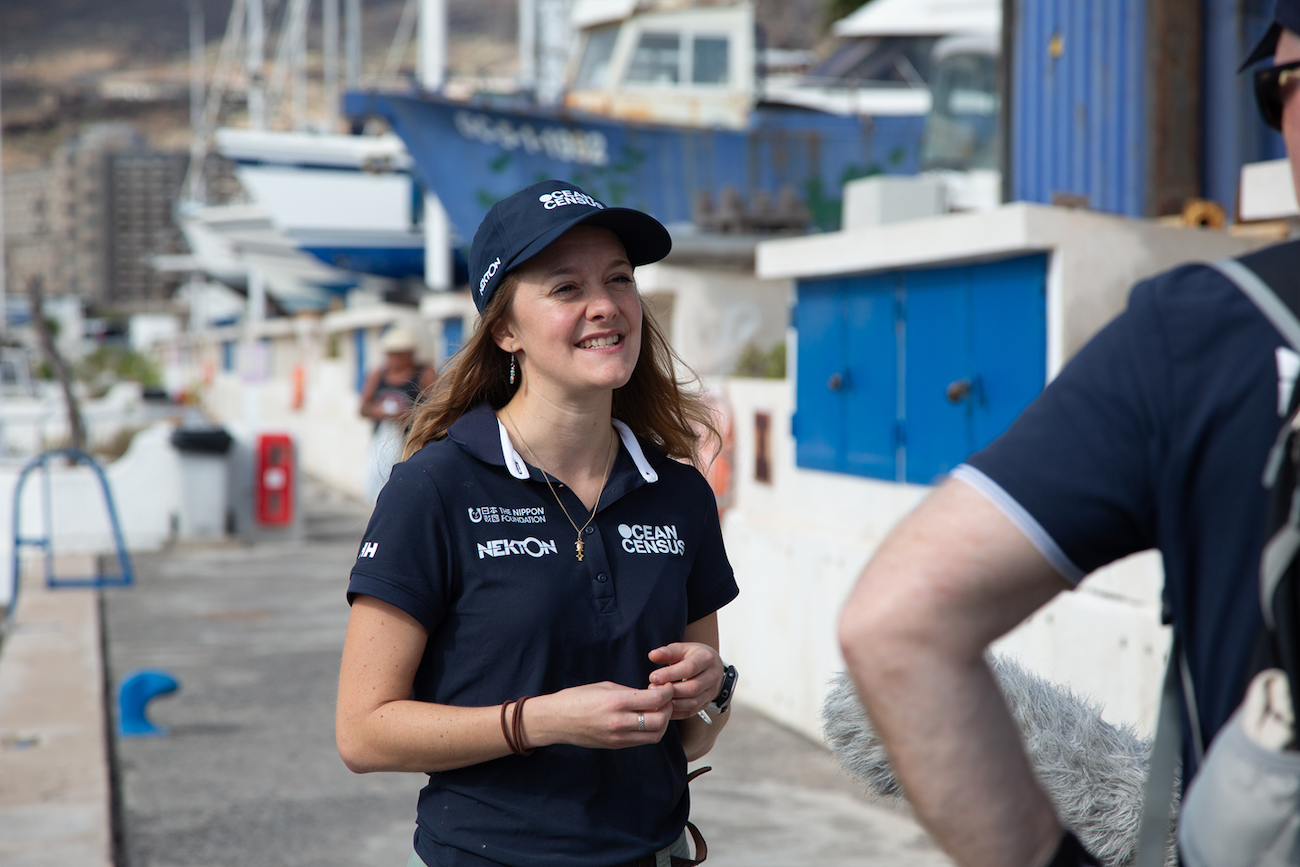
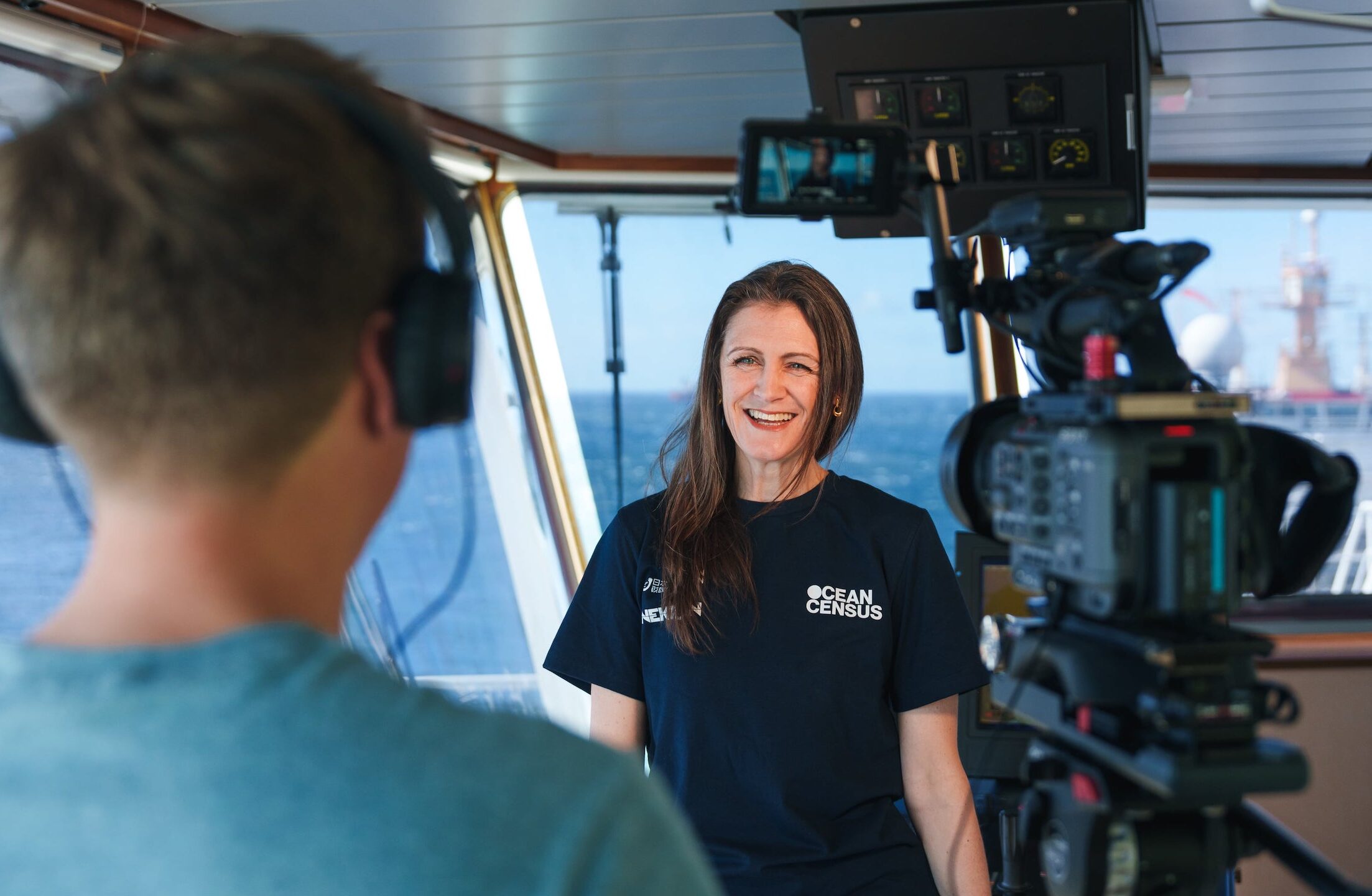
Dr. Michela Mitchell at the CSIRO/Ocean Census Species Discovery Workshop. Image Credit: Ocean Census
Is there a feature or features you specifically look for when determining if a sea anemone is a new species?
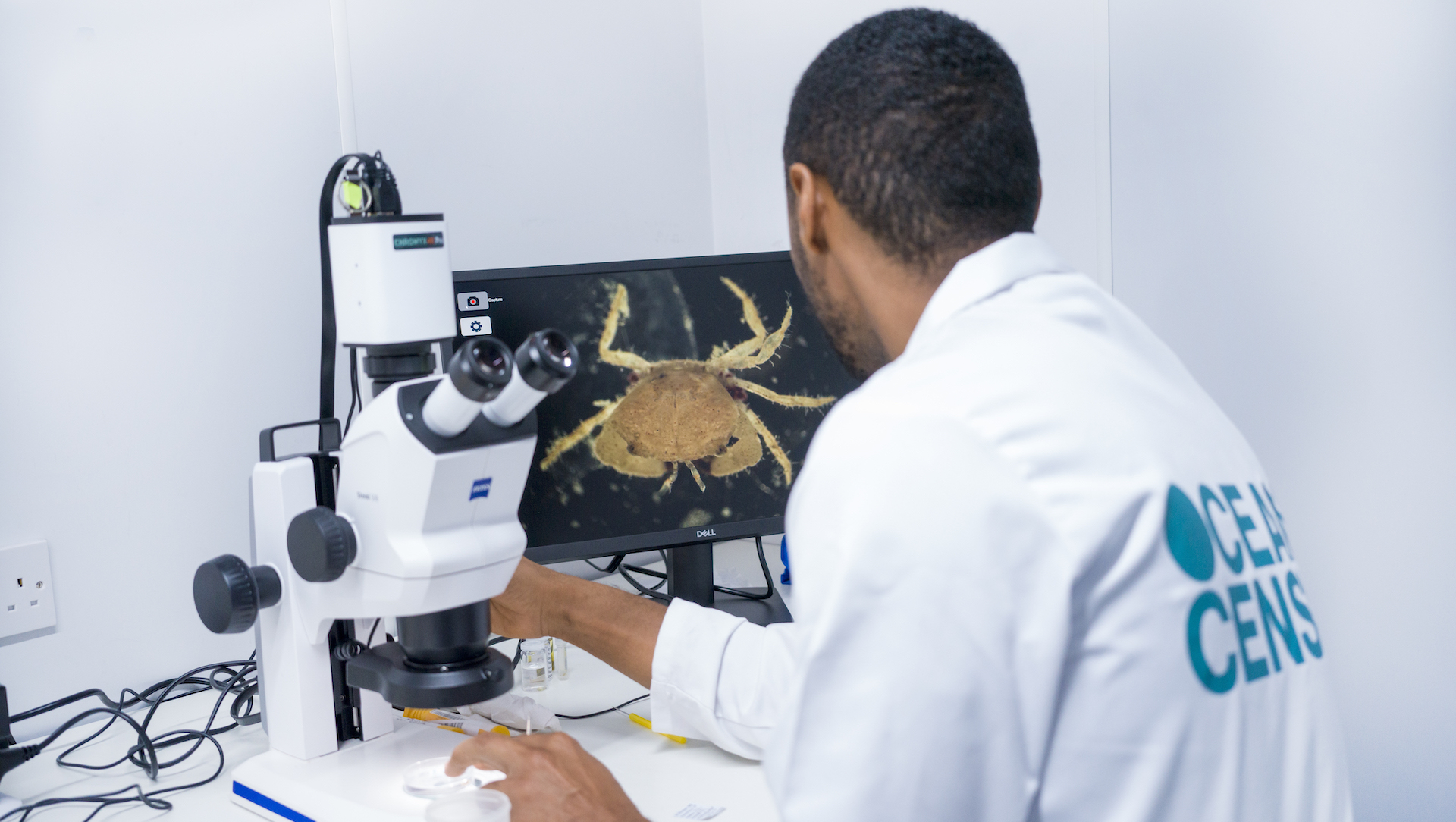
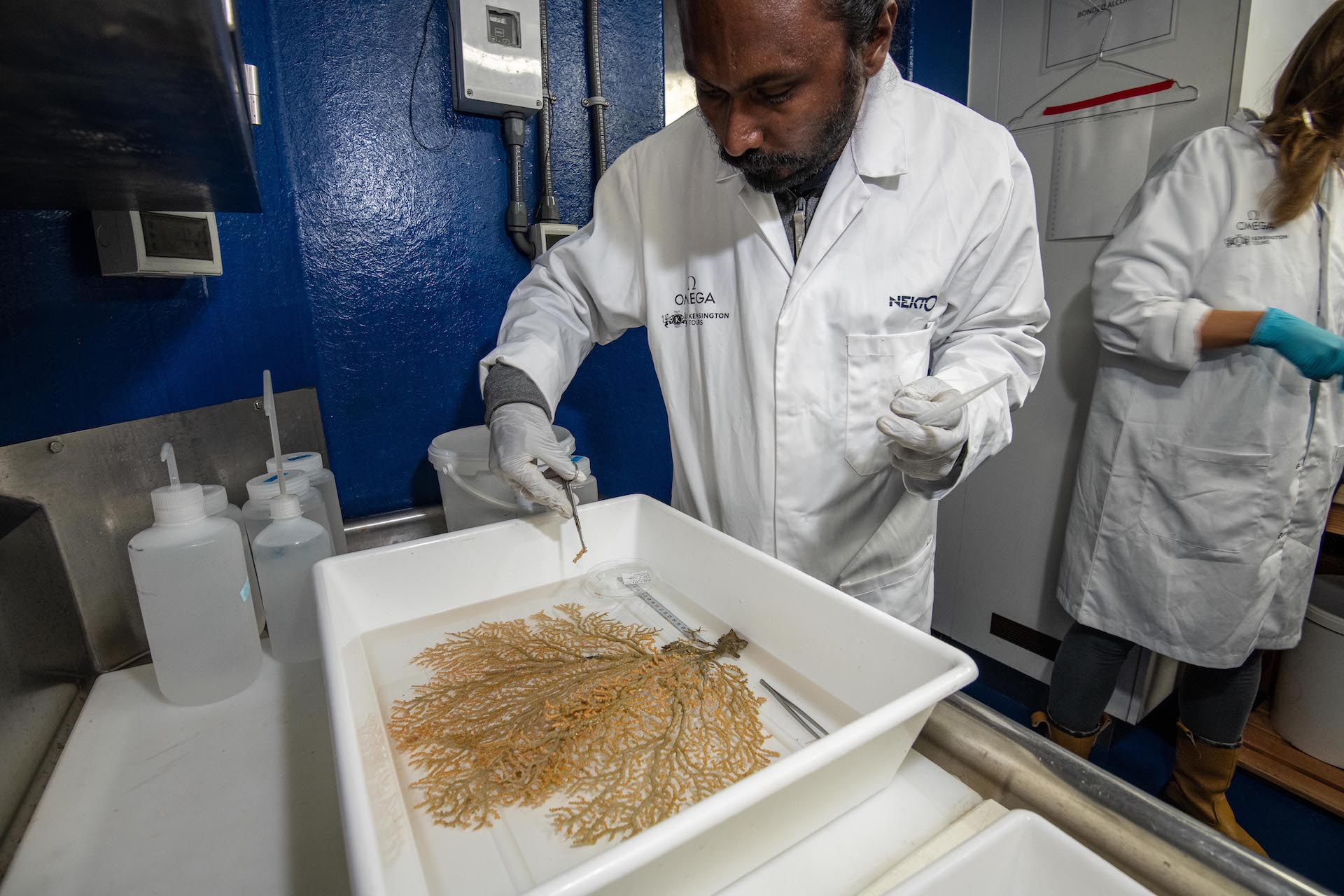
I look for the type of foot (pedal disc or physa) first i.e. do they attach to substrate or anchor in sand. If the column has distinctive features – warts (verrucae) or vesicles (hollow bubbles) or if it is smooth. Then I can split into groups based on the sphincter muscles which the animal uses to contract the body closed. Once I get a broad overview, I then need to compare it back to other species with similar features and trawl through countless papers describing species in a genus.
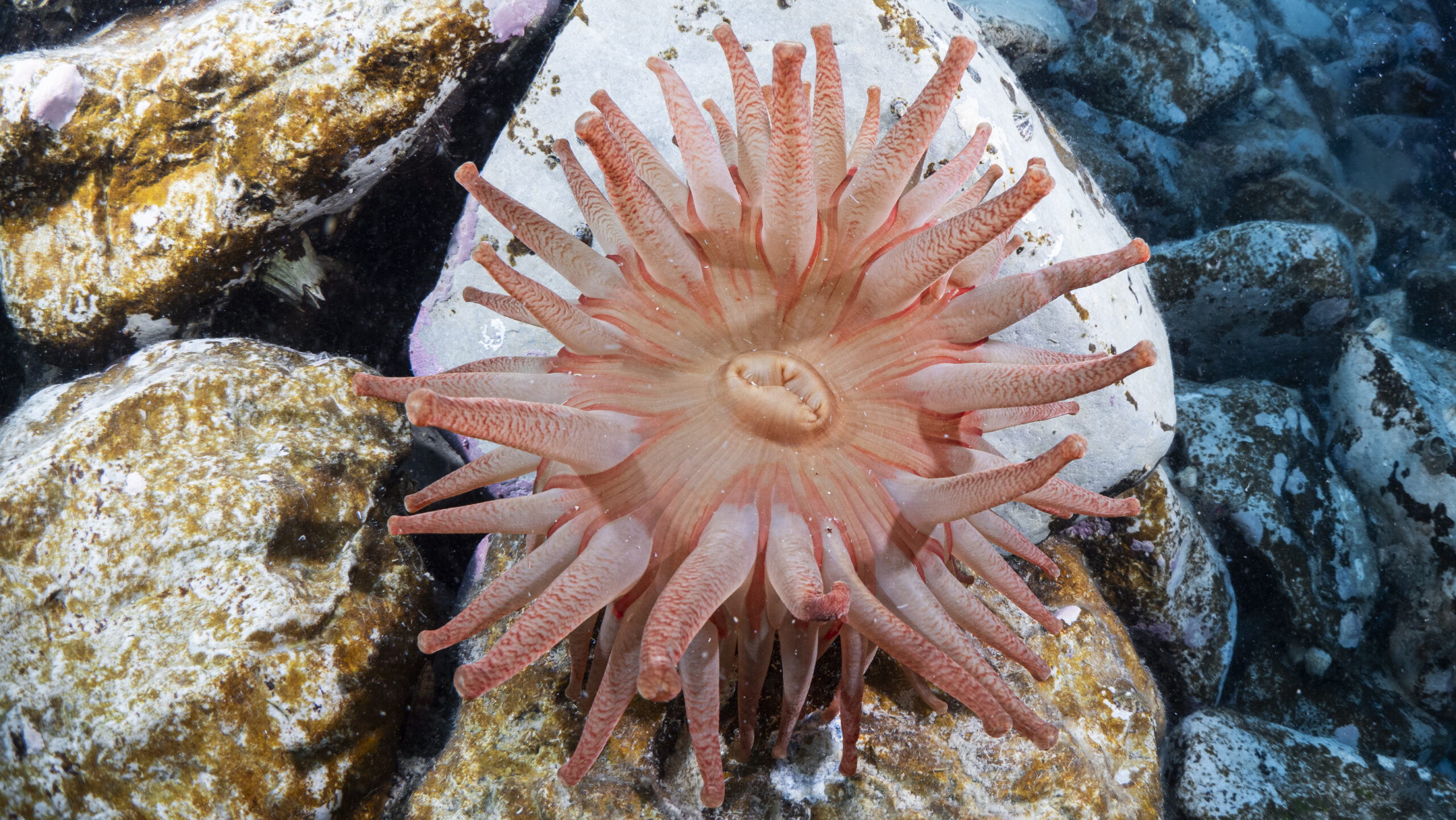
Credit: Adam Maire / Ocean Image Bank
What’s the most exciting or surprising sea anemone you’ve come across in your research so far?
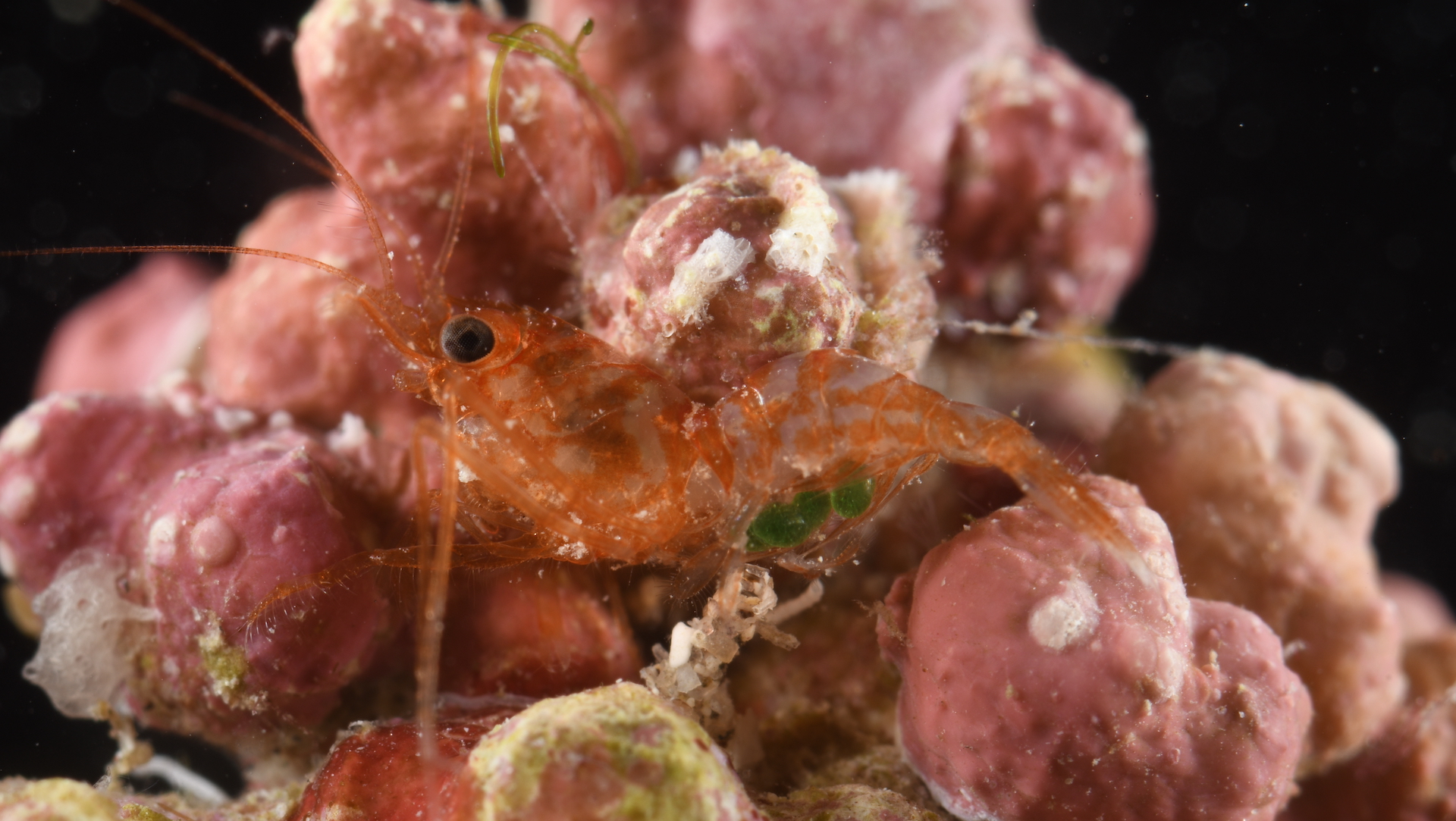
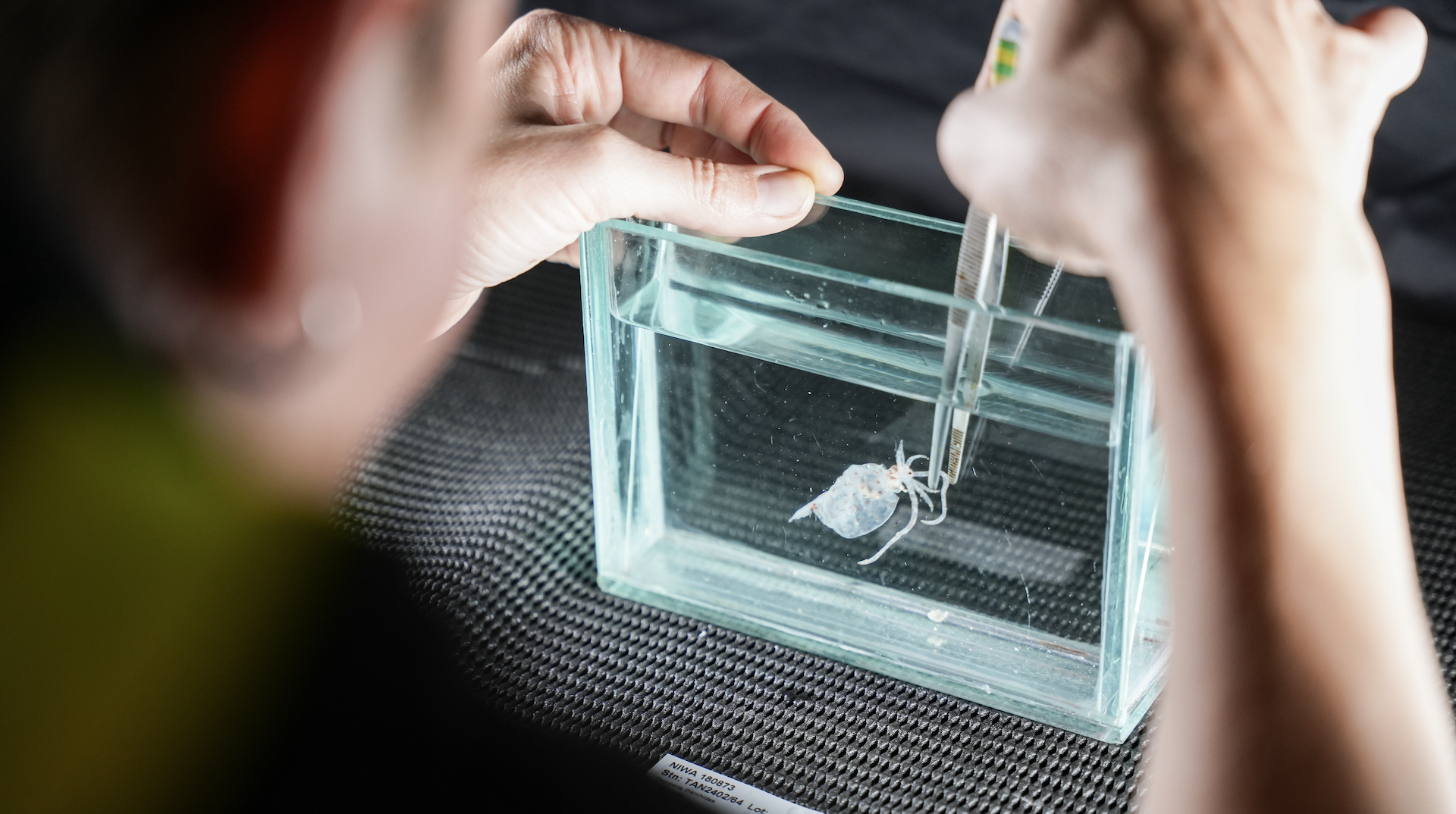
I am always amazed at the amount of diversity we haven’t uncovered or documented. Like the Epizoanthids that live in association with hermit crabs and are a minority group usually left unstudied. The ones I just examined as part of the Ocean Census Species Discovery Award are either all new records or new species simply because it is a group without any experts in Australia. Everyone knows the crabs, but no one looks at the animals they carry around, allowing them to develop into large crabs. I like finding weird associations too. I found a micromollusc 99% intact in the throat of an epizoanthid throat which can be passed onto the next taxonomist for identification and or description. Imagine how many micromolluscs live at the bottom of the sea. Mindboggling.
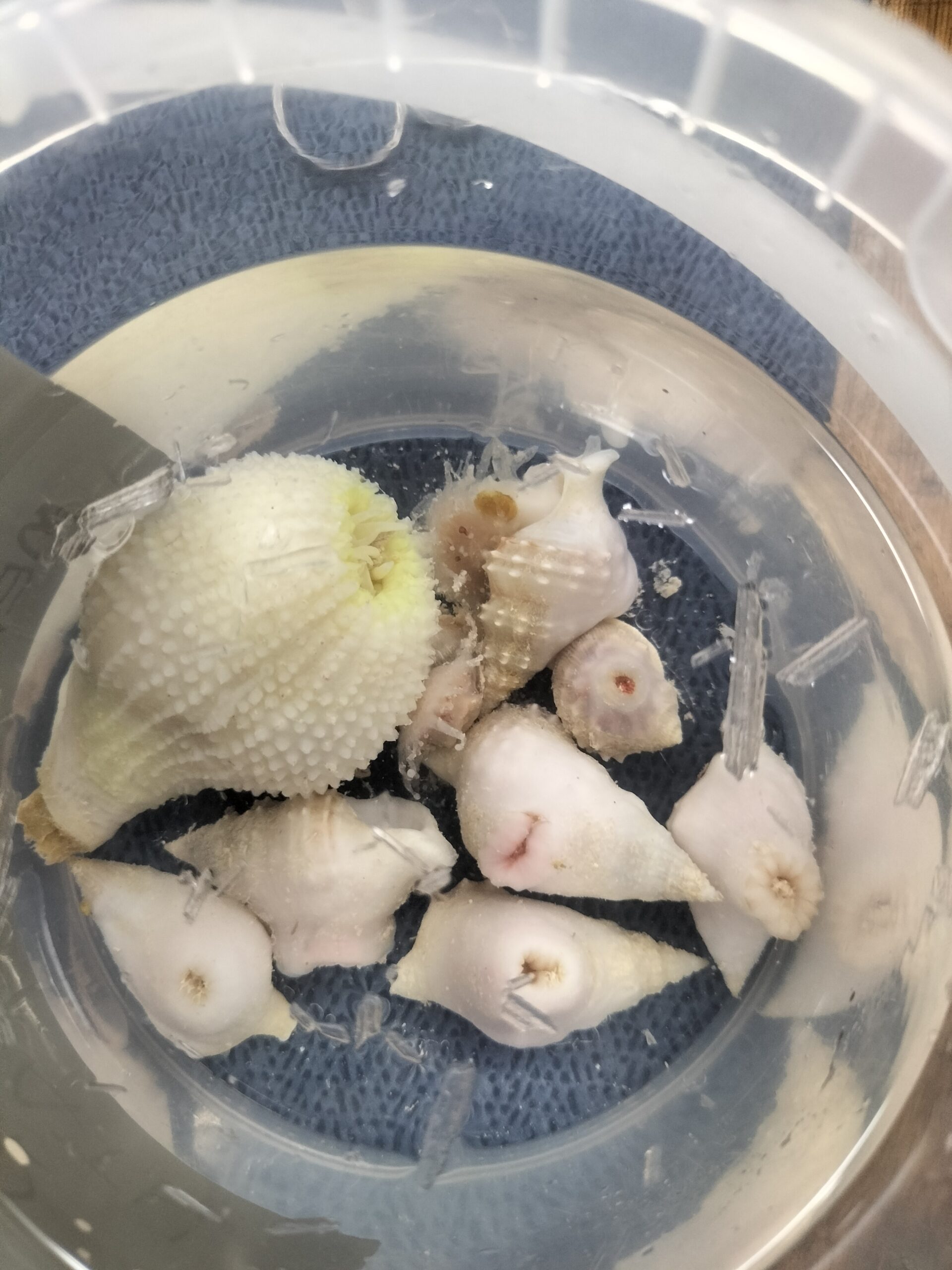
Image Credit: Dr Michela Mitchell
An expedition can collect thousands of specimens – why is the work after the voyage just as important as what happens at sea?
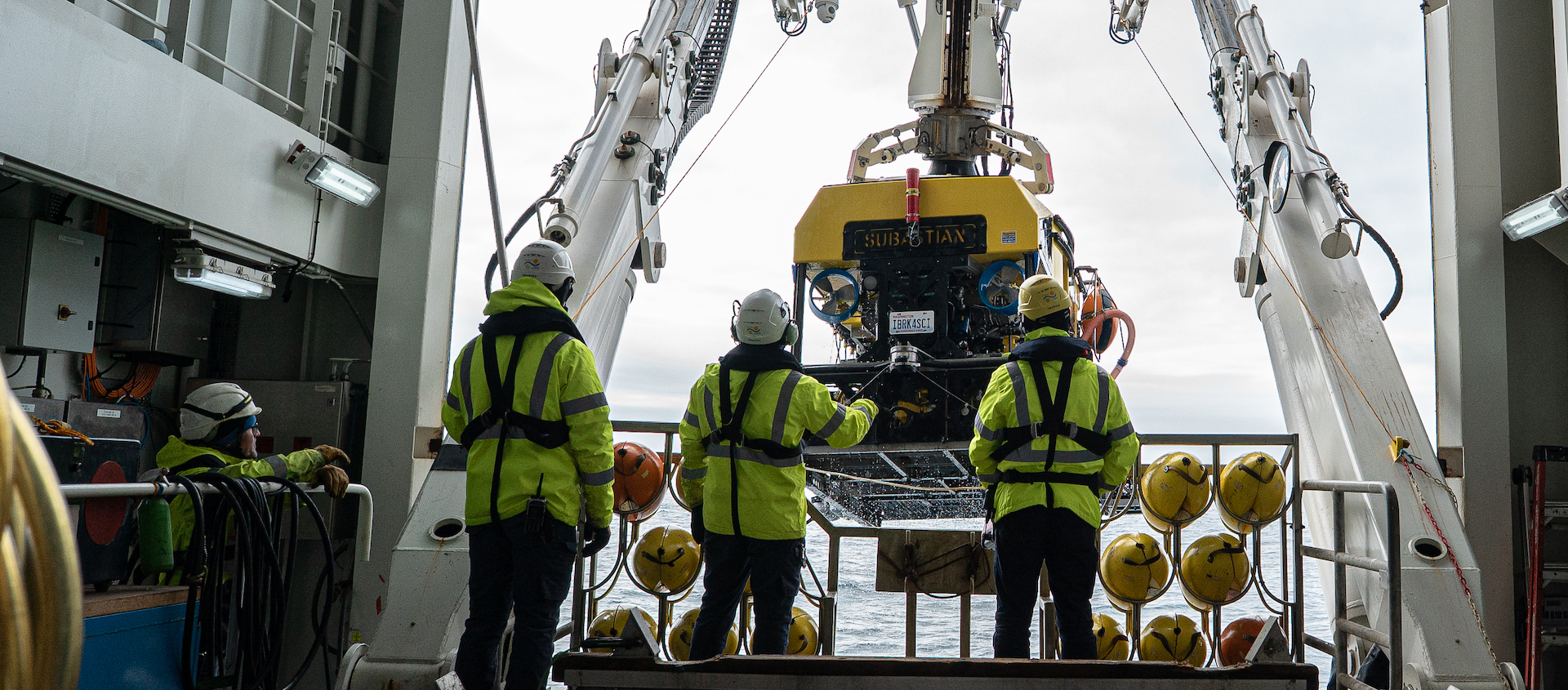
The work that happens post voyage is arguably of equivalent importance, if not more. Without cataloguing what was collected you can’t identify biodiversity patterns, document endemic fauna, pinpoint areas of ecological importance for conservation, or identify where areas of disturbance may have changed faunal assemblages requiring management. Invertebrates make up at least 99% of fauna in collections yet are vastly understudied compared to other fauna (I’m looking at you fish!).
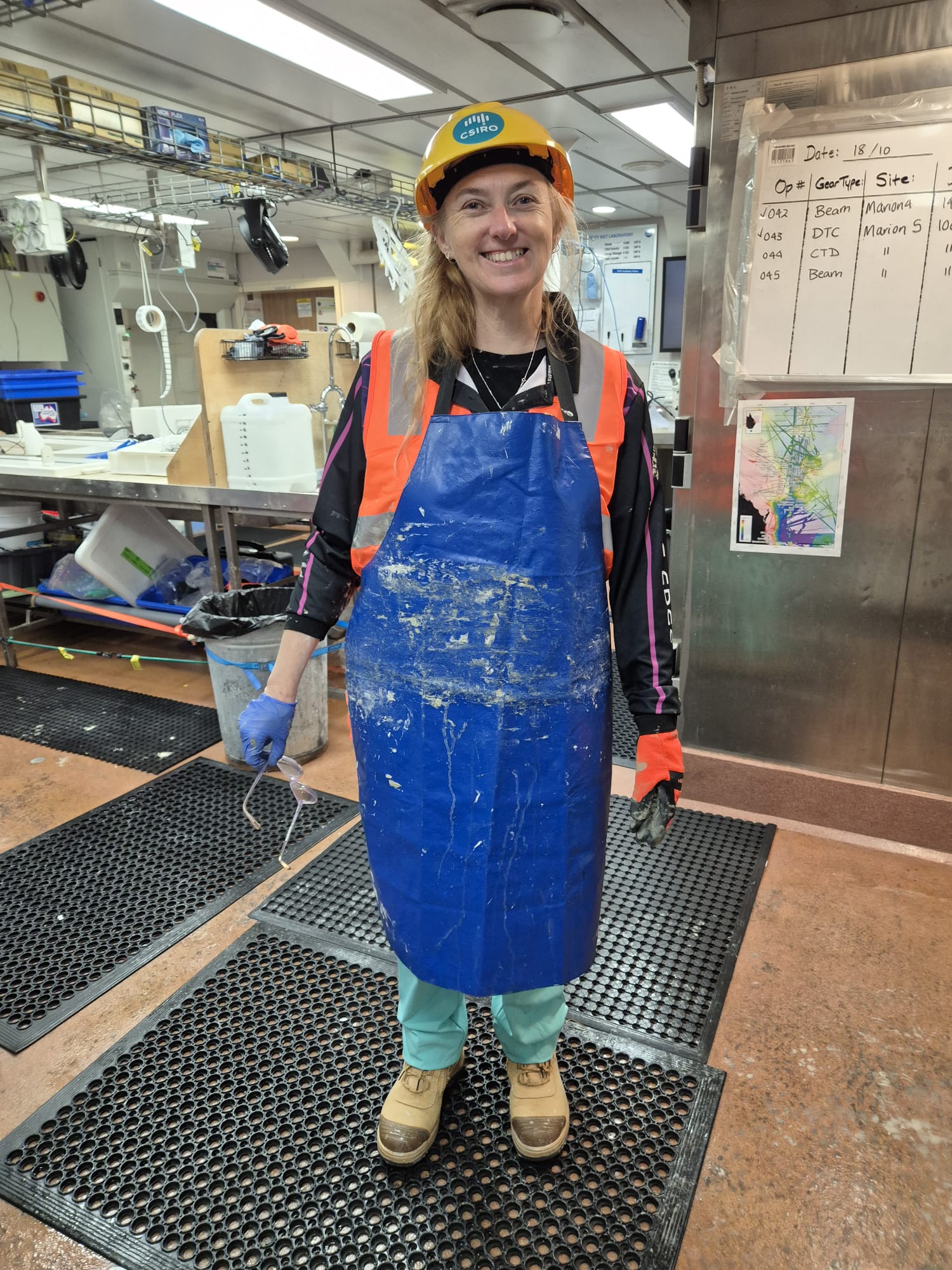
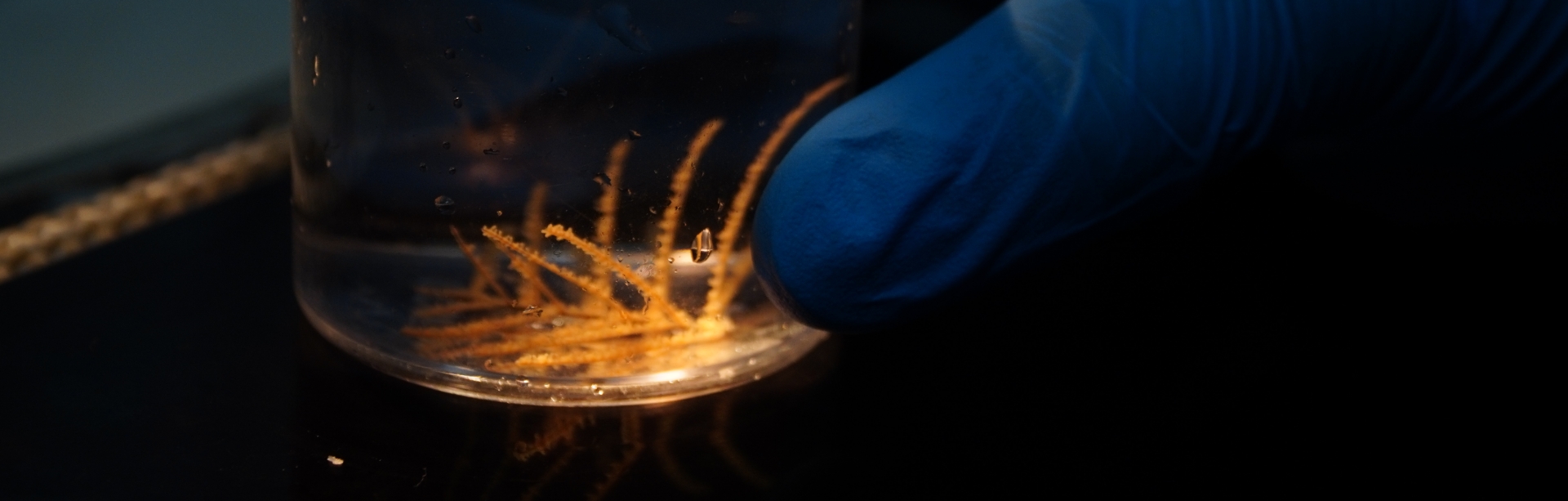
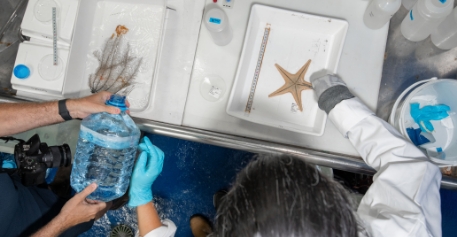
Dr Michela Mitchell on the CSIRO Coral Sea expedition. Image Credits: CSIRO
Why is it becoming increasingly difficult to find specialists who can identify these less-studied groups?
At the end of the day there are very few jobs for employed taxonomists and even fewer funding schemes for taxonomic research. Therefore, it holds little attraction for students to learn the speciality and many groups remain unstudied due to a shortage in taxonomist numbers. Taxonomy is not taught as a discipline at university at the level required to be a specialist. Think of it like a medical doctor. They undertake a graduate degree and then go off to study with specialists in their field of choice.
I think there is a perception that taxonomy is easy, it’s not, and takes a lot of training. Taxonomy underpins everything from food safety to treatment of envenomations.
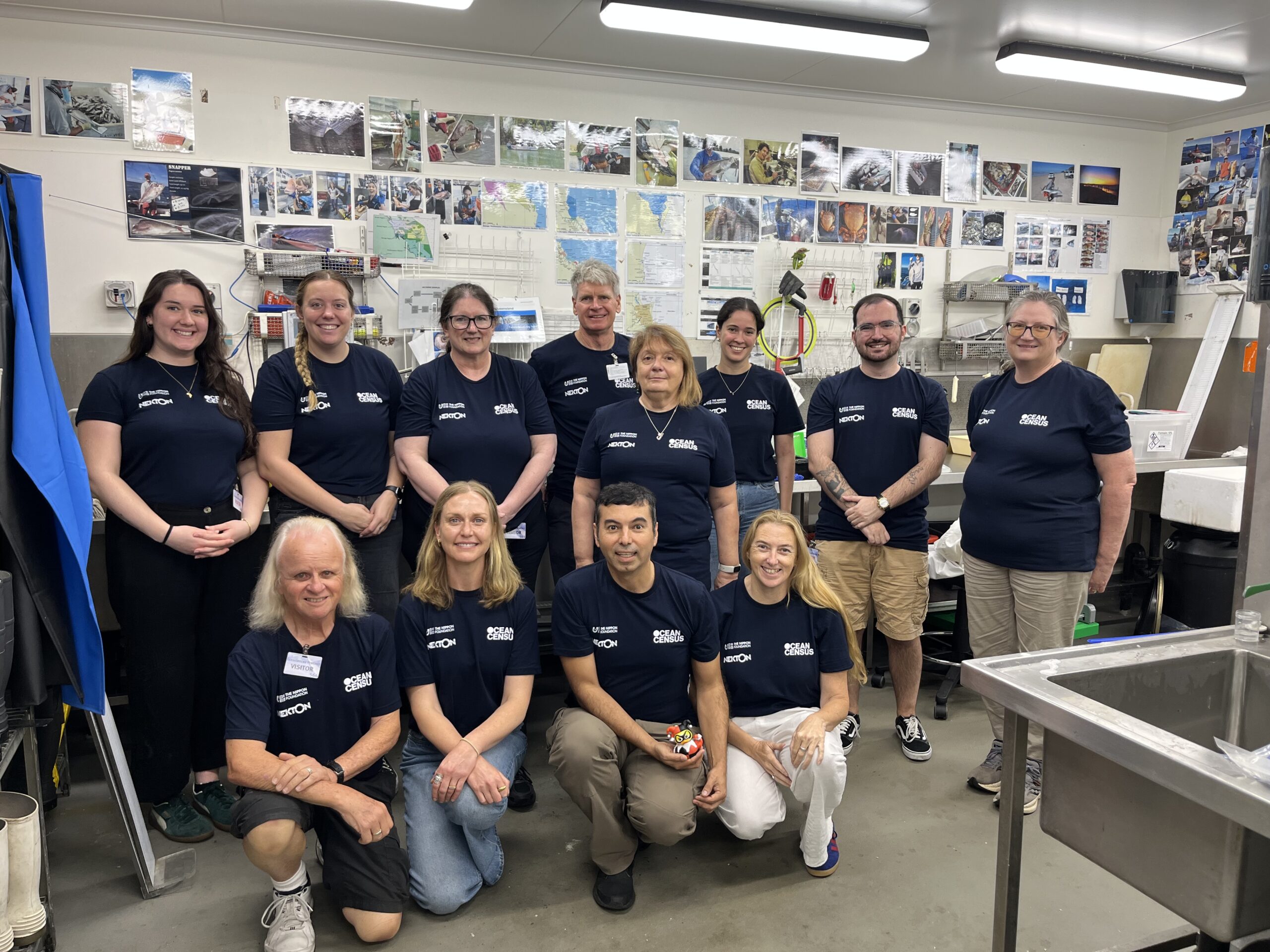
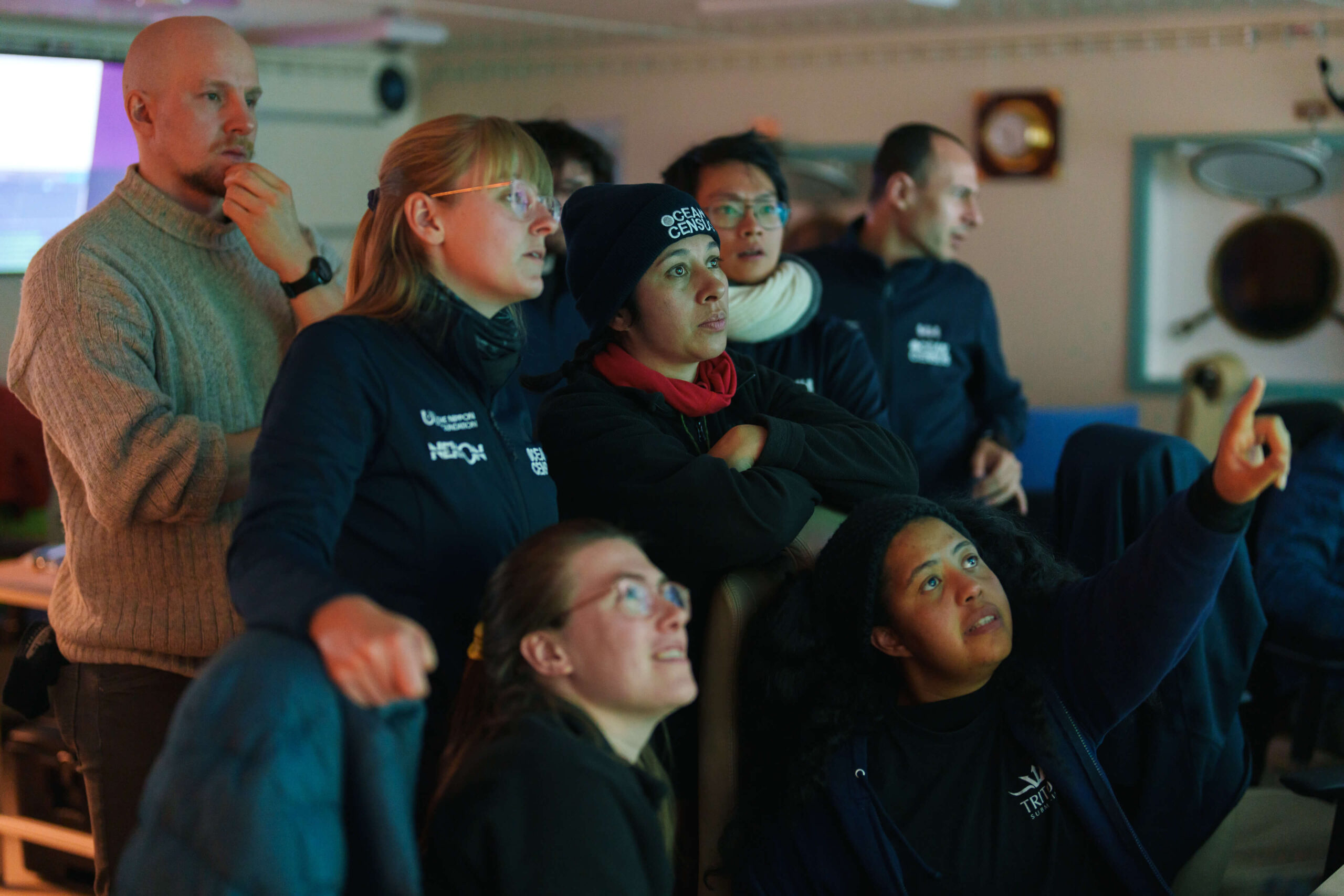
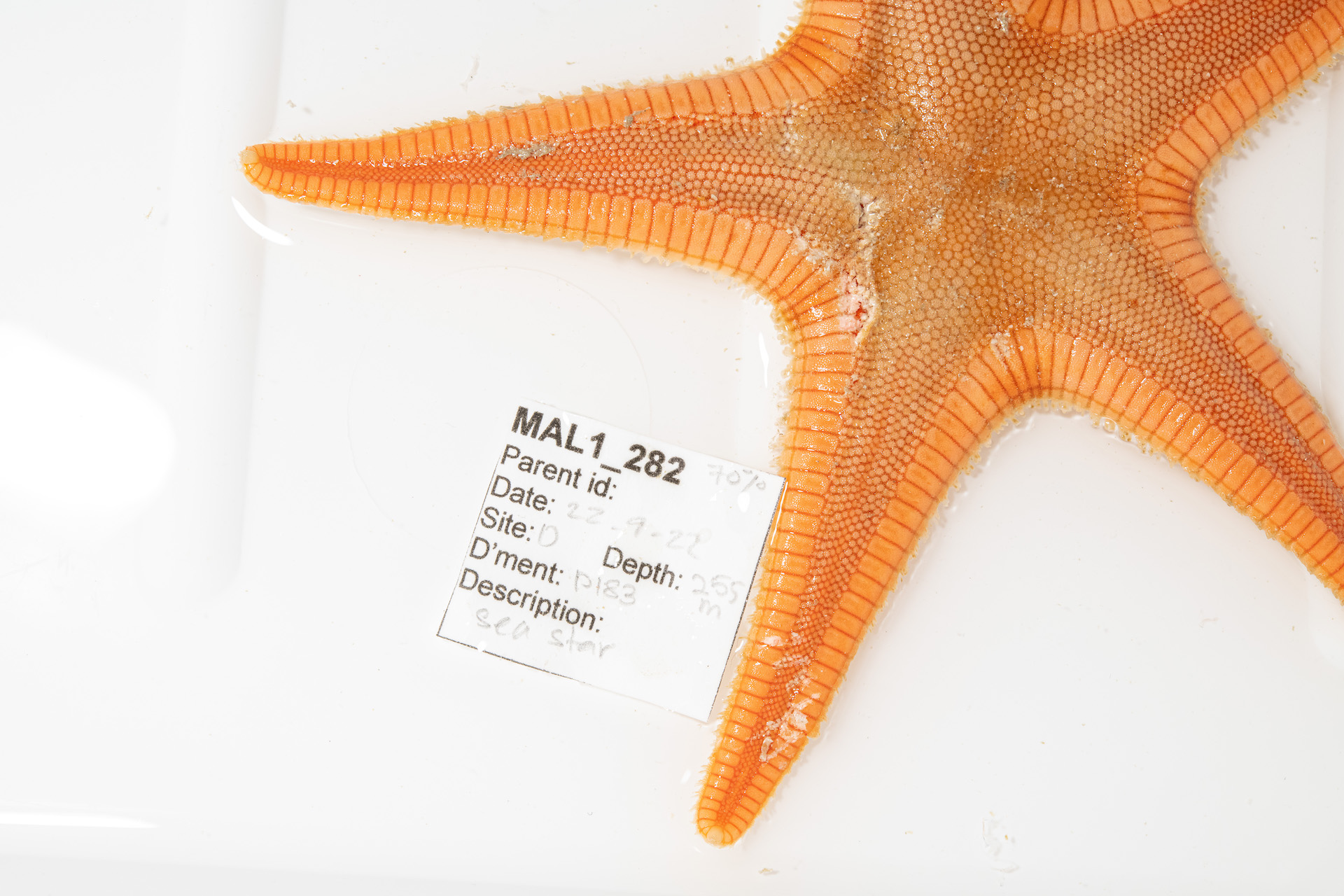
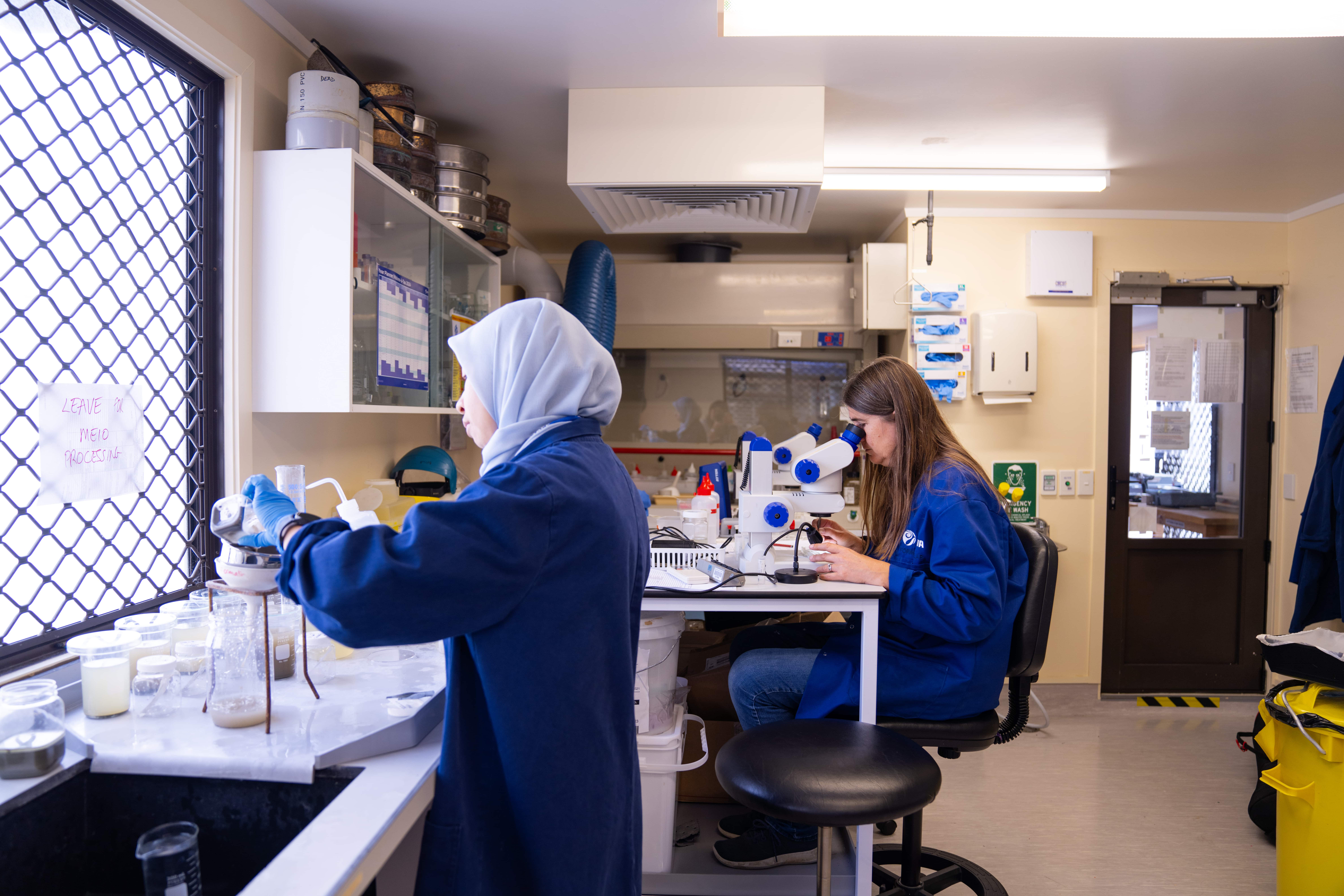
CSIRO/Ocean Census Invertebrate Species Discovery Workshop in Brisbane. Image Credit: The Nippon Foundation-Nekton Ocean-Census/CSIRO
How does identifying species help us understand biodiversity and make better conservation decisions?
If we don’t know what species we have in an area, we have no idea how to manage it now and into the future. If you don’t know how many species you have then you can’t say you understand the biology or uniqueness of the area or how the ecosystem works together as one to keep a healthy marine environment.
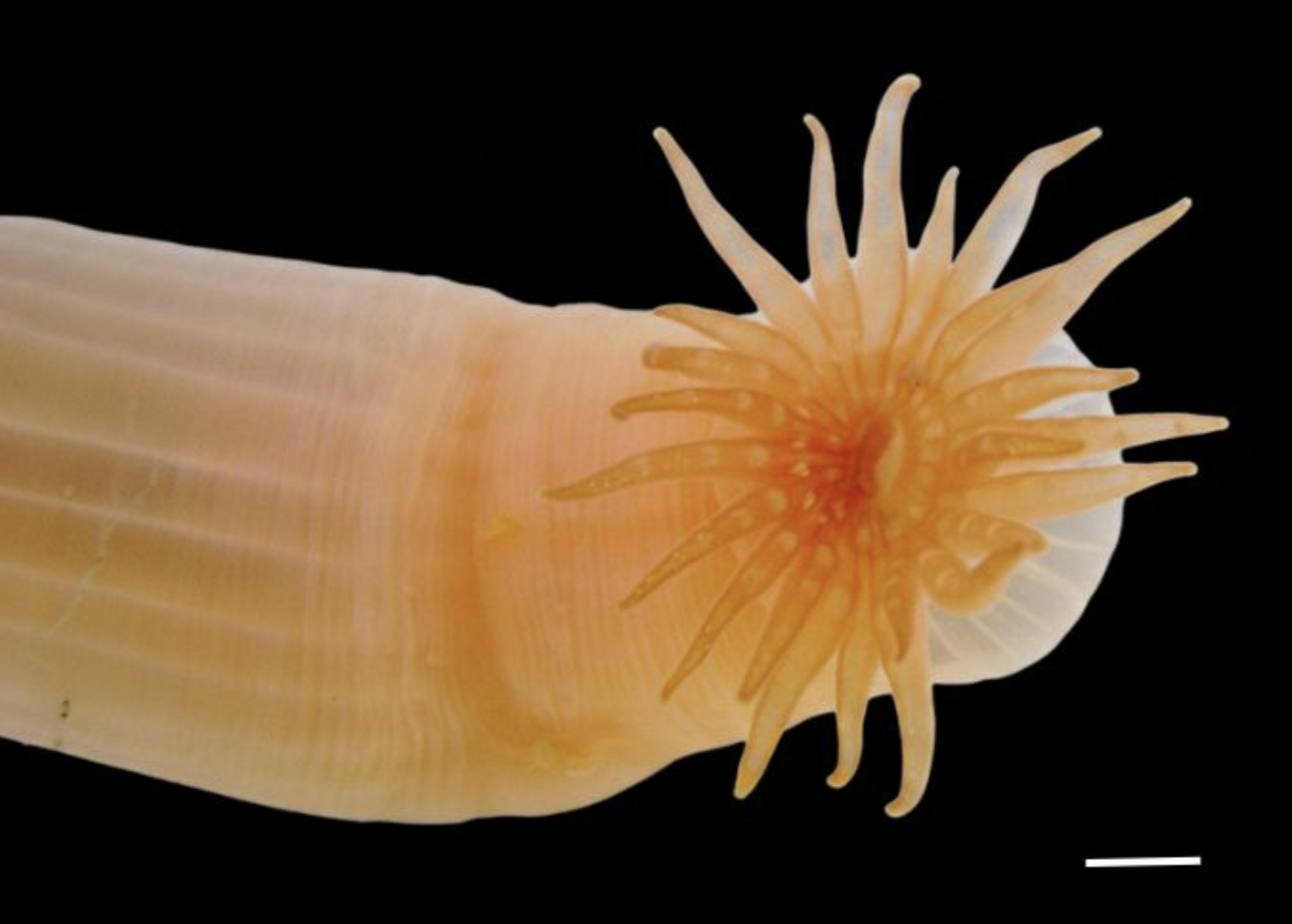
Burrowing-sea-anemone. Image Credit: The Nippon Foundation-Nekton Ocean Census, Agustin Garese
Learn more about the Ocean Census
Science Network
The Ocean Census Science Network is a worldwide community of marine biologists, taxonomists, geneticists, ecologists, and conservationists working together to accelerate species discovery and expand our knowledge of ocean life. By combining cutting-edge technology, collaborative research, and open-access data, we are transforming how ocean biodiversity is discovered, classified, and understood.
By being a part of the science network and signing up to our monthly newsletter, you’ll be able to stay up to date with the latest news on species discovery awards.
If you’d like to join the network, please apply below.
Related News
Join the census
The Ocean Census Alliance unites national and philanthropic marine institutes, museums, and universities, backed by governments, philanthropy, business and civil society partners.


