









Species ID
OC-SP-0003292
Discovered
Phylum
Mollusca
Species ID
OC-SP-0003292
Provisional Species Name
Idas_FKt250812-850-BB1-D
Lowest Valid Taxon Name in WoRMS
Idas
Lowest Known Rank
Genus
Status
Discovered
Does the taxonomist(s) intend to work on this material further?
3. I/We are not sure yet. This is of course no problem, we will display your species info (if not embargoed) while you work out your species description plan.
Embargo
No
Kingdom
Animalia
Phylum
Mollusca
Class
Bivalvia
Order
Mytilida
Family
Modiolidae
Genus
Idas
Date Identified
10/12/2025
Taxonomic Remarks
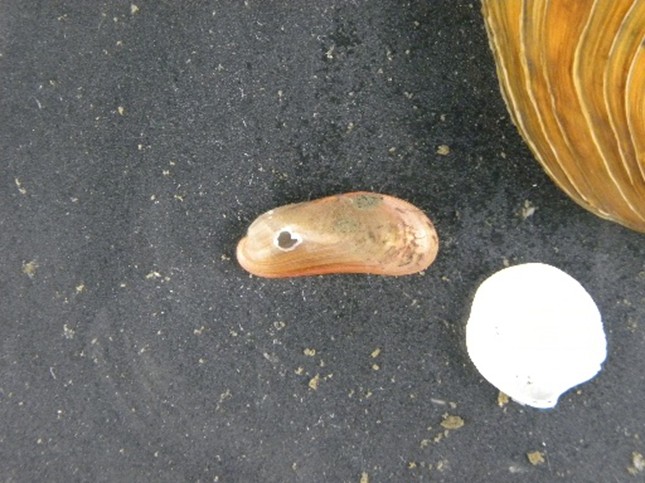
This species is assigned to the genus Idas based on the small, elongate mytiliform shell typical of bathymodioline mussels associated with chemosynthetic environments. The shell is thin, smooth, and elongated with a slightly curved ventral margin and reduced hinge structures typical of seep-associated bathymodiolines. It differs from other described species of Idas by its small size, slender shell outline, and association with siboglinid tubeworm assemblages. No species of Idas have been formally described from the southwestern Atlantic, although the genus has been reported from other deep-sea chemosynthetic habitats worldwide.
Discovery registered on
10/04/2026
Description of Material
Small bathymodioline mussel with thin, elongate shell reaching only a few millimeters to about 1 cm in length. Shell mytiliform, smooth, and slightly curved, with a narrow anterior region and expanded posterior portion. Exterior light brown to translucent, with fine growth lines. The shell is relatively delicate compared to larger bathymodioline mussels.
Ecology
Only a few specimens were observed. Individuals were associated with dense aggregations of siboglinid tubeworms (Lamellibrachia sp.) in a chemosynthetic seep habitat, occurring within the tubeworm matrix and surrounding sediments together with other seep-associated bivalves such as lucinids and thyasirids. A small number of additional individuals were also found associated with the scleractinian coral Lophelia sp., suggesting that the species may occupy different hard-substrate microhabitats within the seep environment. Environmental conditions at the site include temperatures around 10.7 °C and salinity near 34.9 PSU
Distribution
Currently known from a deep-sea locality in the southwestern Atlantic Ocean at approximately 35.0449° S, 52.2741° W, at a depth of about 245–256 m.
Join the census
The Ocean Census Alliance unites national and philanthropic marine institutes, museums, and universities, backed by governments, philanthropy, business and civil society partners.


