











Species ID
OC-SP-0002652
Discovered
Phylum
Platyhelminthes
Species ID
OC-SP-0002652
Provisional Species Name
Theama sp_IRLBB_00736
Lowest Valid Taxon Name in WoRMS
Theama
Lowest Known Rank
Genus
Status
Discovered
Does the taxonomist(s) intend to work on this material further?
2. I/We already have plans to publish. (For marine invertebrates please know that SOSA could support you in this too - please click the button for more details).
Embargo
No
Kingdom
Animalia
Phylum
Platyhelminthes
Order
Polycladida
Family
Theamatidae
Genus
Theama
Taxonomic Remarks
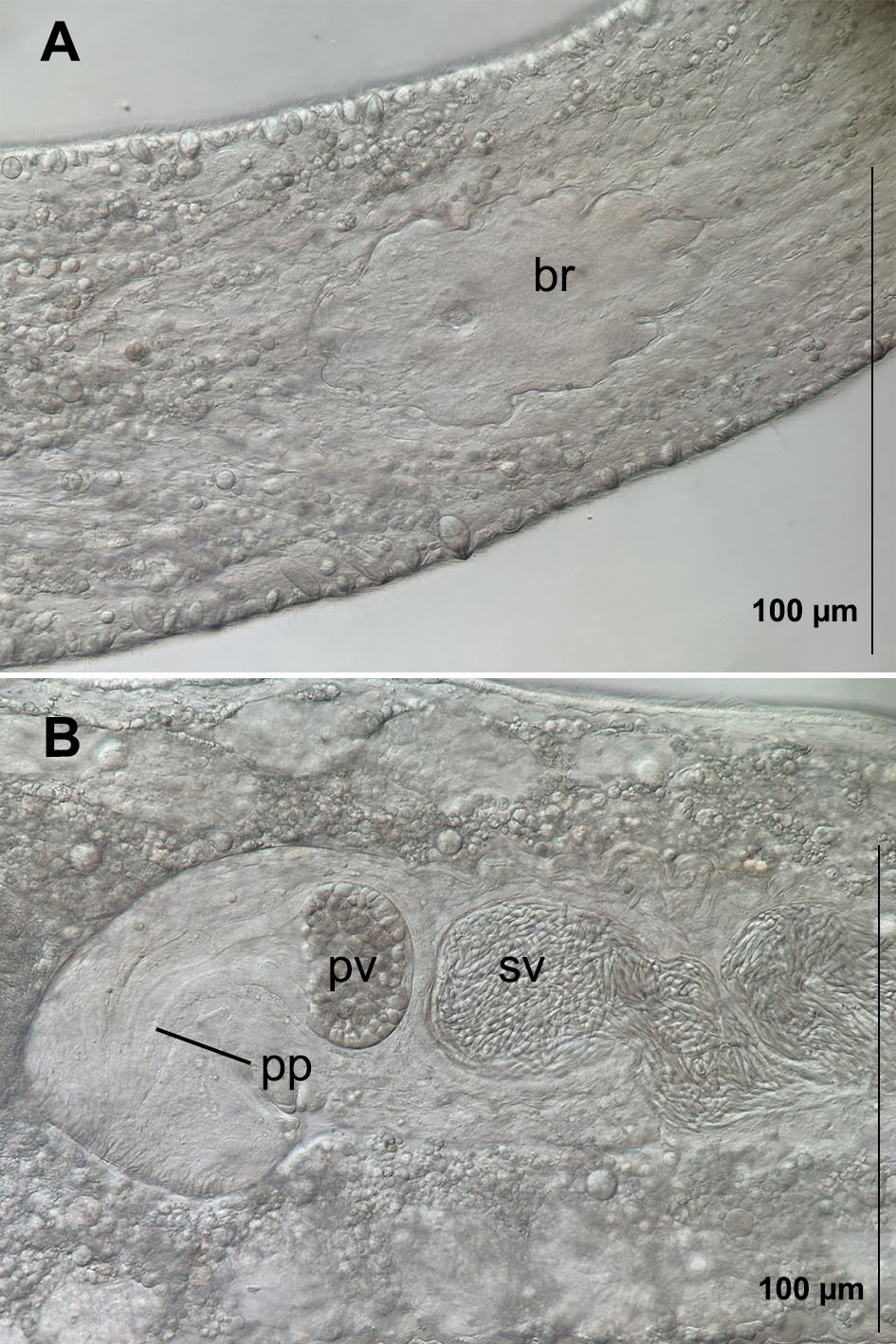
Thema sp.1 is included in the genus Thema because shows the diagnostic characters of both the genus and the family Theamatidae. The body is very elongated and narrow, without tentacles, the male copulatory organ is directed backwards, the prostate vesicle is interposed, a muscular penial papilla, testes located anterior to the copulatory organs and few ovaries posteriorly. The new species is unique because it is the only species of Thema without eyes, the brain present multiple lobulations, and the penial papilla is very elongated. Furthermore, in all the other five known species of Theama, the seminal vesicle is lines by a strong muscular sheath, whereas in Thema sp.1 the muscles surrounding the seminal vesicle are poorly developed.
Discovery registered on
01/04/2026
Description of Material
Species of Theama without eyes. The brain is well distinctive and shows 5 lobules on each the right and left sides. The pharynx is located and the end of the anterior body half. Two rows of testes lie from the anterior part of the male copulatory bulb to its posterior part. A single seminal vesicle, with poorly developed muscular sheath, collects the sperm. The posterior part of the seminal vesicle is housed inside the copulatory bulb, forming an internal seminal vesicle. The Prostate vesicle shows one type of coarse secretions. The penial papilla measures 57 µm long (n = 1). A single ovary is located posterior to the male bulb.
Ecology
Medium-grained and well-sorted sand, 10 m deep, salinity 37 ‰.
Distribution
United States of America, Florida, 6.75 km SE from the mouth of Fort Pierce Inlet, 27.429300; -80.241083.
Scientific Name Authorship
Diez, Yander L.
Join the census
The Ocean Census Alliance unites national and philanthropic marine institutes, museums, and universities, backed by governments, philanthropy, business and civil society partners.


