











Species ID
OC-SP-0002600
Discovered
Phylum
Arthropoda
Species ID
OC-SP-0002600
Provisional Species Name
Heteroserolis sp_MoV7422
Lowest Valid Taxon Name in WoRMS
Heteroserolis
Lowest Known Rank
Genus
Status
Discovered
Does the taxonomist(s) intend to work on this material further?
2. I/We already have plans to publish. (For marine invertebrates please know that SOSA could support you in this too - please click the button for more details).
Embargo
No
Kingdom
Animalia
Phylum
Arthropoda
Class
Malacostraca
Order
Isopoda
Family
Serolidae
Genus
Heteroserolis
Date Identified
12/11/2025
Taxonomic Remarks
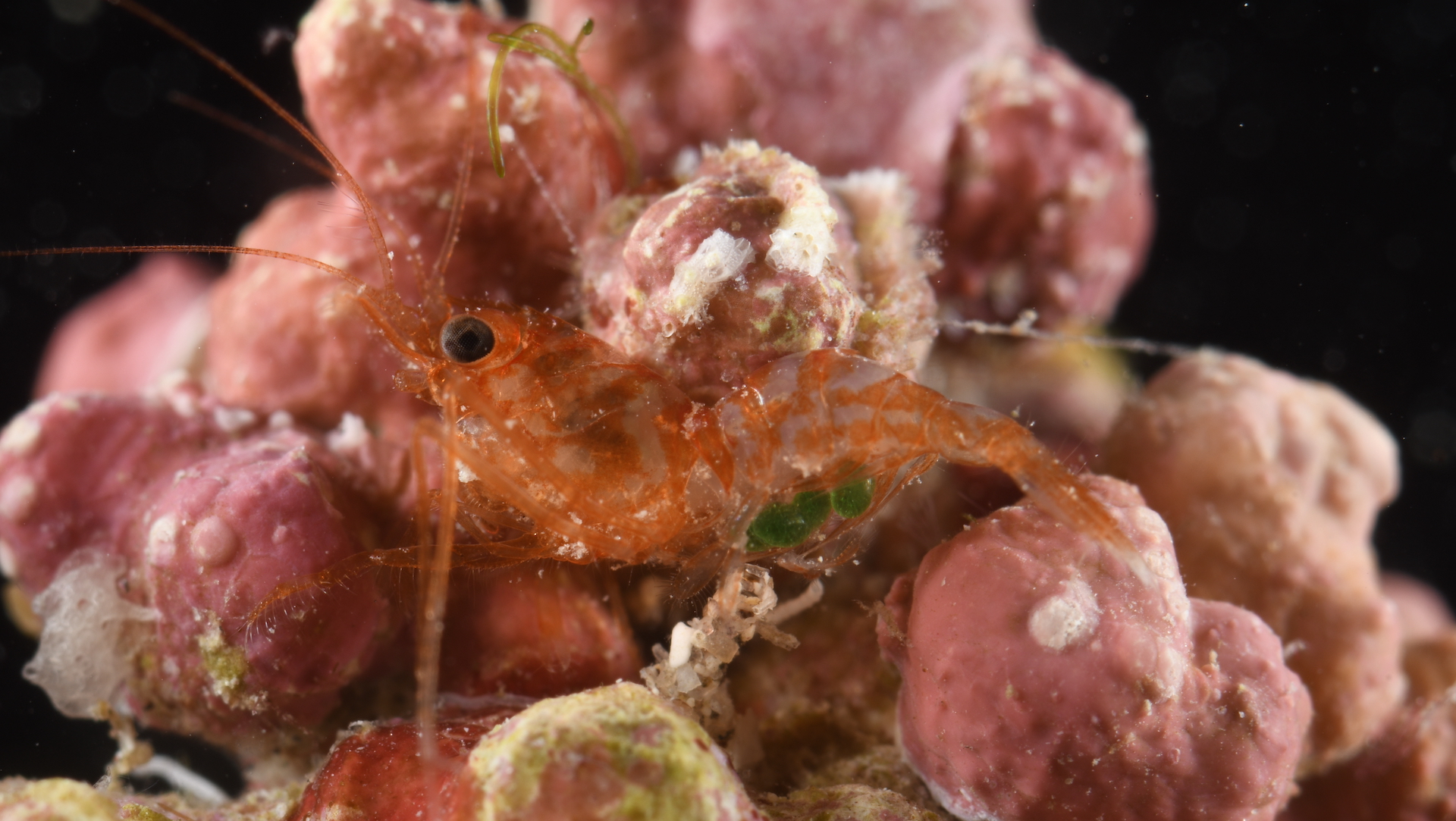
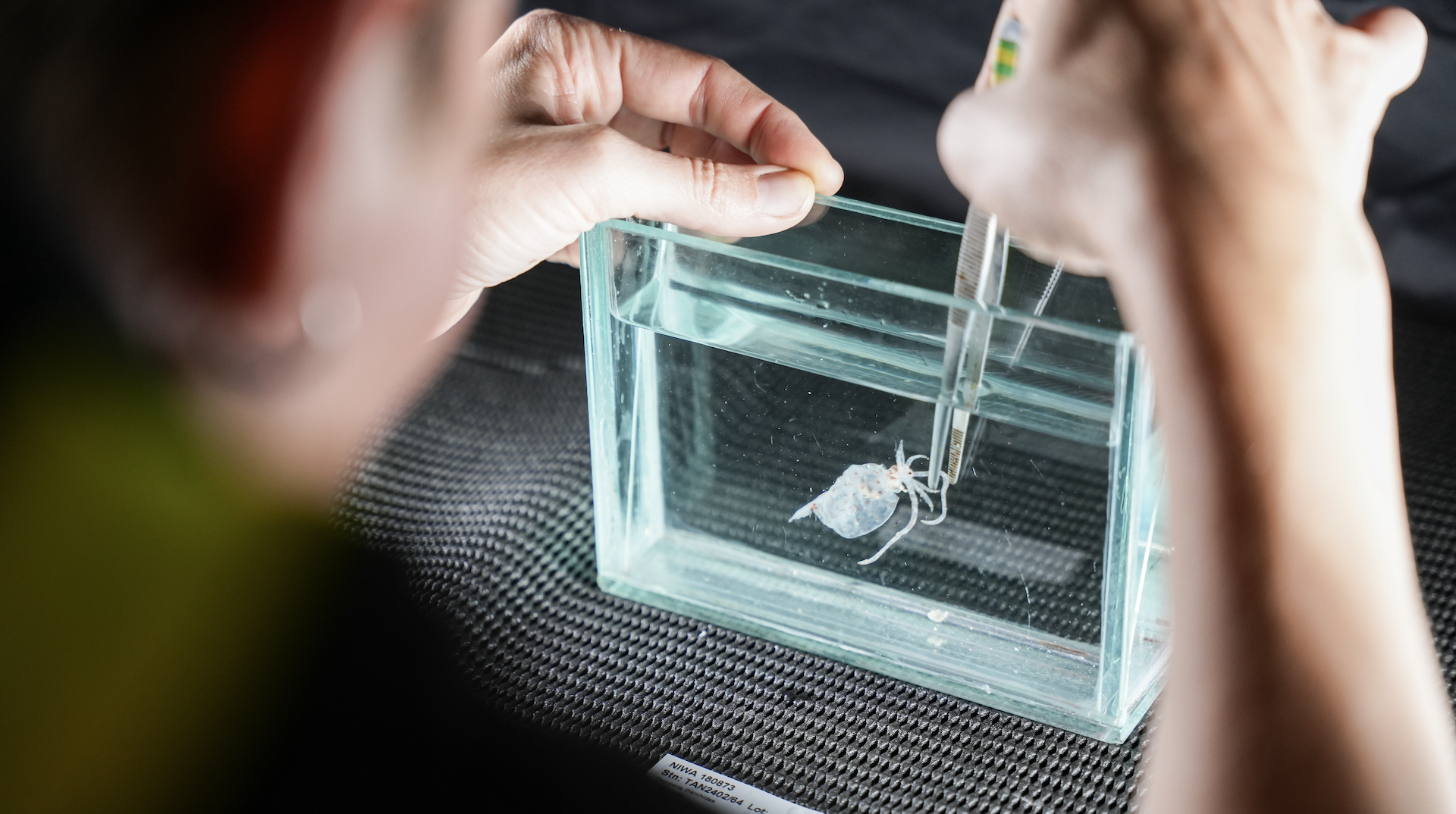
Heteroserolis MoV7422 is notable for the arrangement of dorsal sculpture: two rows of flat tubercles on the head, crenellate posterior margins of pereonites 1–6 and pleonites 1–3, and the flat sublateral plates on pereonites 1–4. The male is unknown. Interim diagnosis. Based on female only. Female 1.35 times as long as wide. Body dorsally not setose. Head with 3 pairs of flat plates with sharp posterior margins level with anterior margin of eye, posterior margin of head with 5 similar small plates each side of medial tubercle; pereonites 2–4, pleonites 1–3 each bearing erect median tubercle; pereonite tergites 1–6 posterior margins crenellate; pereonites 1–4 with sublateral elevated plates with crenellate margins, not continuous with posterior margins of pereonites; pleonite 1 with crenellate posterior margin; pleonites 2, 3 with crenellate submarginal row in female. Pereonite 1 anterolateral margins convex. Coxal dorsal plates 1–6 marginally contiguous except for step between plates 4 and 5; coxal dorsal plates 2–4 delimited from pereonite tergites by non-articulating suture; plate 6 just overlapping pleonal epimeron 2. Pleonites 2, 3 epimera margins squarish in dorsal view. Pleotelson tapering slightly over anterior half, triangular beyond; 0.8 times as long as wide; with median ridge over most of length, with sublateral ridge of rounded posteriorly-directed tubercles, of which pair near base of uropod are larger, with 2 pairs of small tubercles between these two; apex concave. Pleonite 1 sternite midventral keel overlapping and slotting into half of keel on pleonite 2; pleonite 2 keel just overlapping pleonite 3 keel; pleonite 3 with grooved keel as long as that on pleonite 2. Uropod attaching at about one-half length of pleotelson lateral margin; endopod reaching almost to pleotelson apex, tapering to rounded apex; exopod as long as endopod, apex rounded.
Discovery registered on
01/04/2026
Description of Material
The species is known from two ovigerous females, 10.9 and 12.2 mm long.
Ecology
Like all members of this family, Serolidae, the species is benthic living on the surface of the sediment.
Distribution
Australia, South Australia, Western Australia. IMCRA Spencer Gulf Shelf Province, Southwest Shelf Province; 2–22 m depth.
Join the census
The Ocean Census Alliance unites national and philanthropic marine institutes, museums, and universities, backed by governments, philanthropy, business and civil society partners.


