










Species ID
OC-SP-0002021
Discovered
Phylum
Porifera
Species ID
OC-SP-0002021
Provisional Species Name
Abyssocladia sp_OCSS0360
Lowest Valid Taxon Name in WoRMS
Abyssocladia
Lowest Known Rank
Genus
Status
Discovered
Does the taxonomist(s) intend to work on this material further?
2. I/We already have plans to publish. (For marine invertebrates please know that SOSA could support you in this too - please click the button for more details).
Embargo
No
Kingdom
Animalia
Phylum
Porifera
Class
Demospongiae
Order
Poecilosclerida
Family
Cladorhizidae
Genus
Abyssocladia
Date Identified
19/08/2025
Taxonomic Remarks
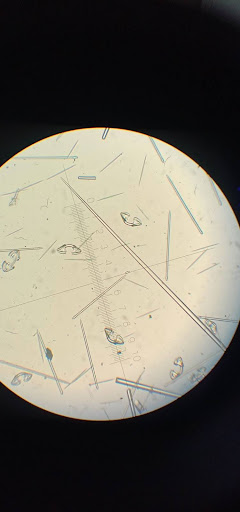
The species shares similar skeletal elements and measurements to Abyssocladia lanceolata, however, the external morphology appears to be quite different. Our specimen appears to have fine filaments on 90-120 degree angles along the stem, and the stem is not clear with limited flesh (once preserved), as is found with A. lanceolata. In addition, the internal microscleres are much larger, and include both large arcuate isochelae and cleistochelae. Other megascleres and microscleres share many similarities in shape and size to A. lanceolata. In particular, the polytylotic subtylostyles are sometimes similar, being occasionally lance-like in this specimen, as in A. lanceolata, which means that this feature may be common in several Southern Ocean species.
Discovery registered on
07/04/2026
Description of Material
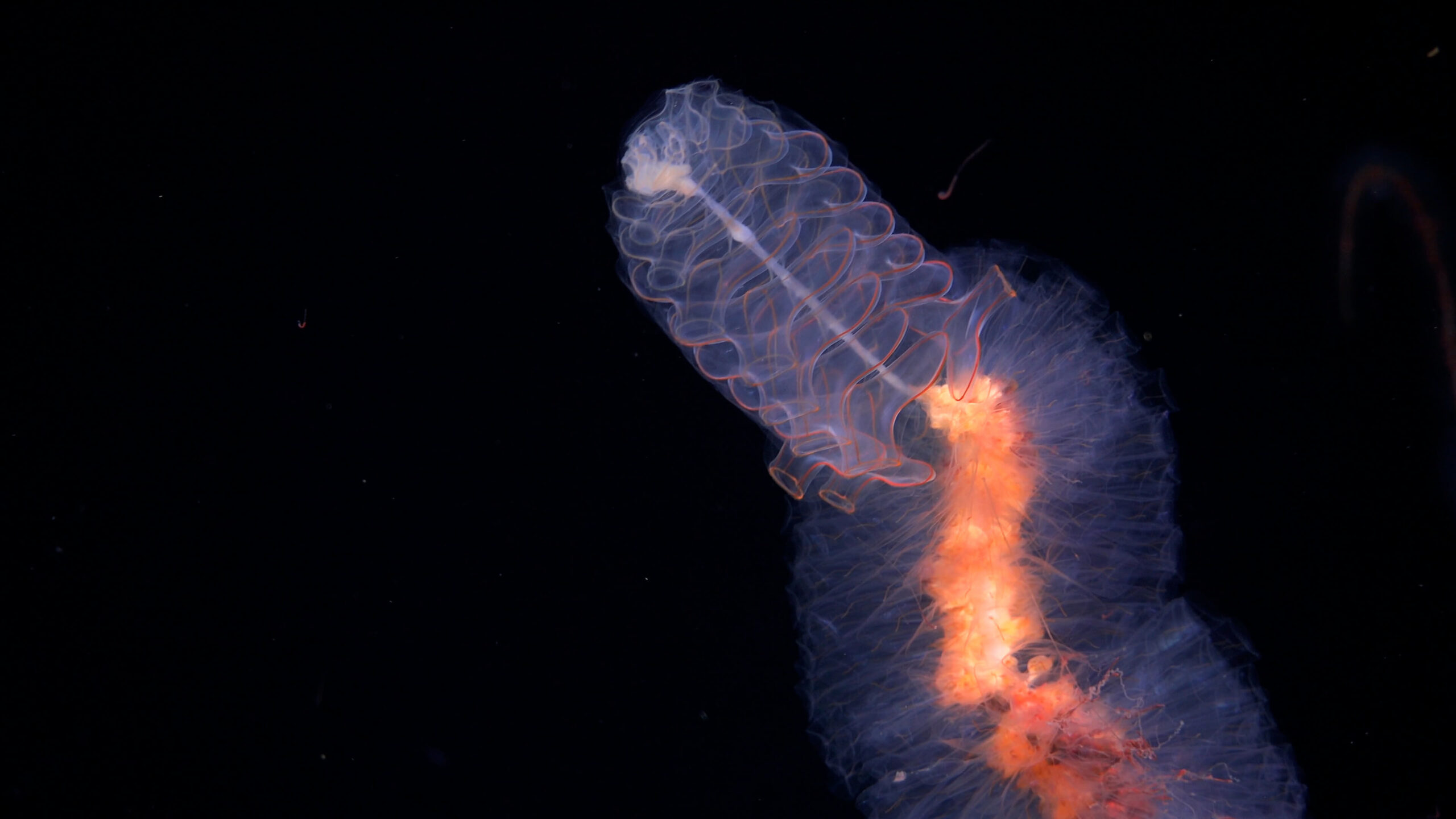
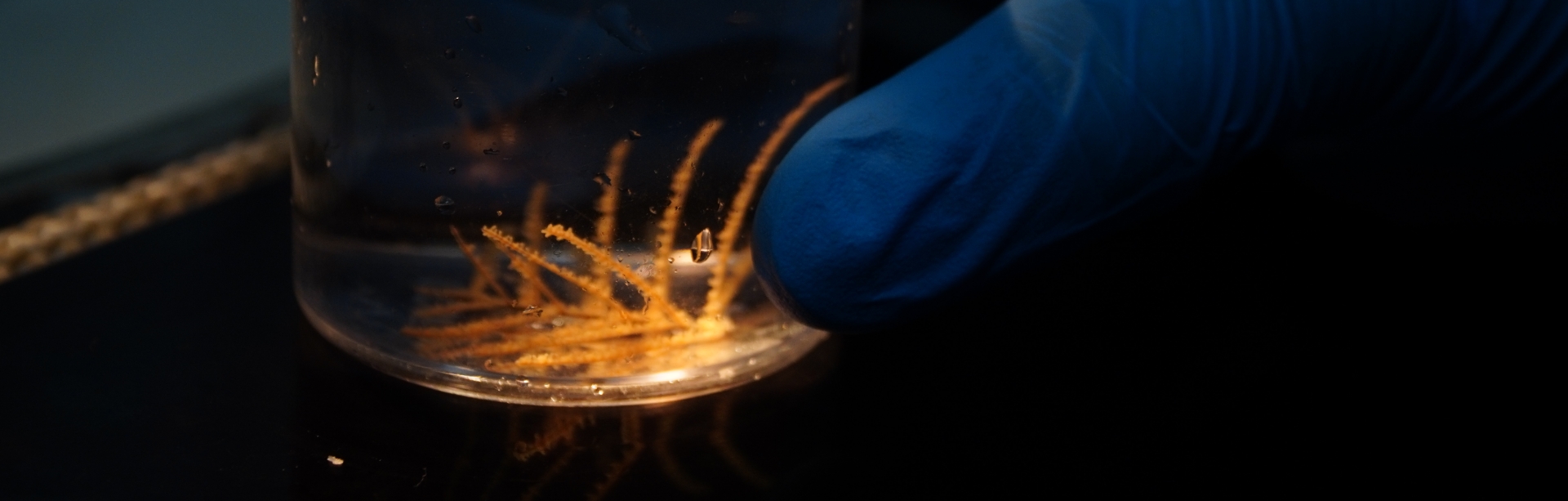
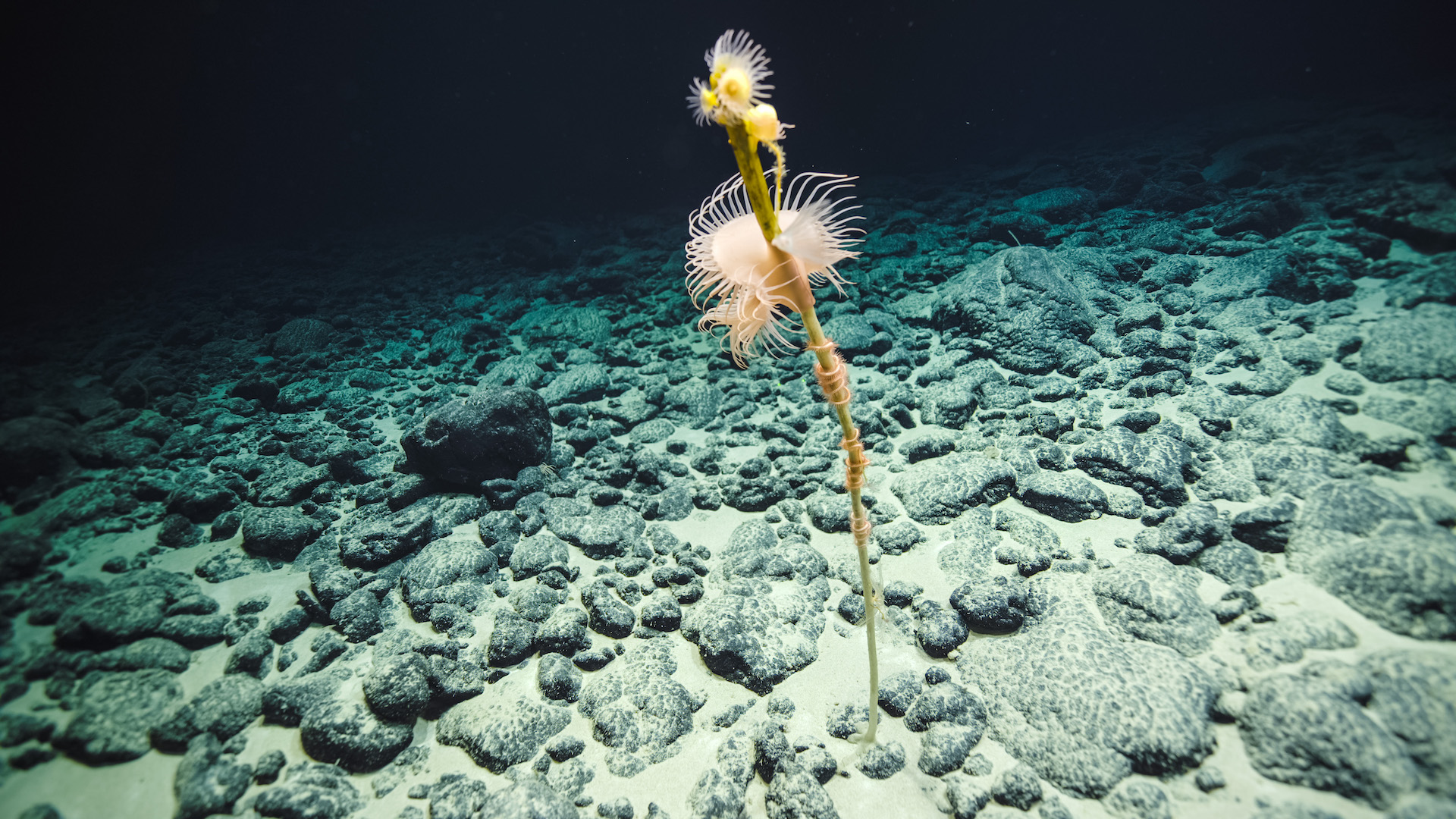
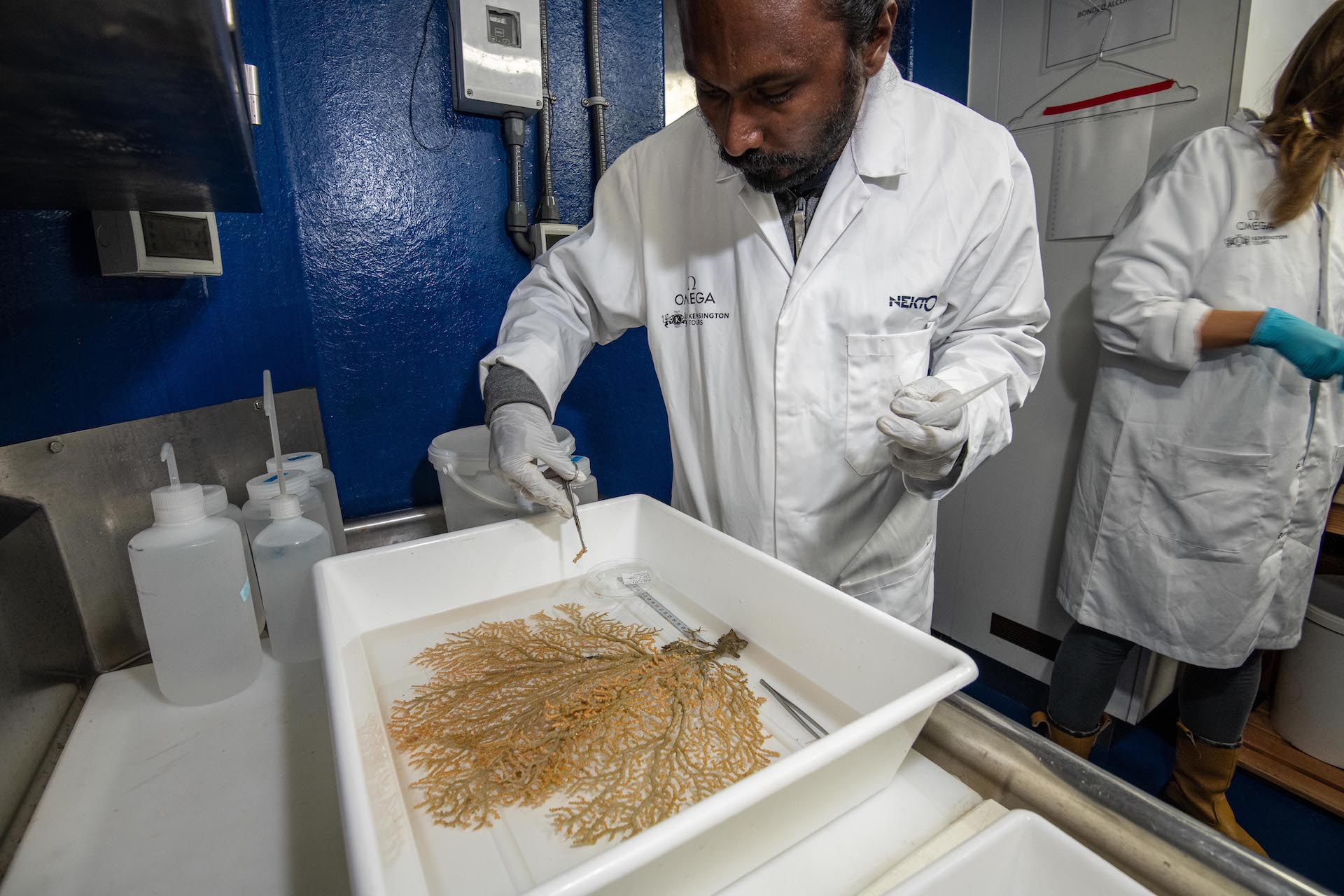
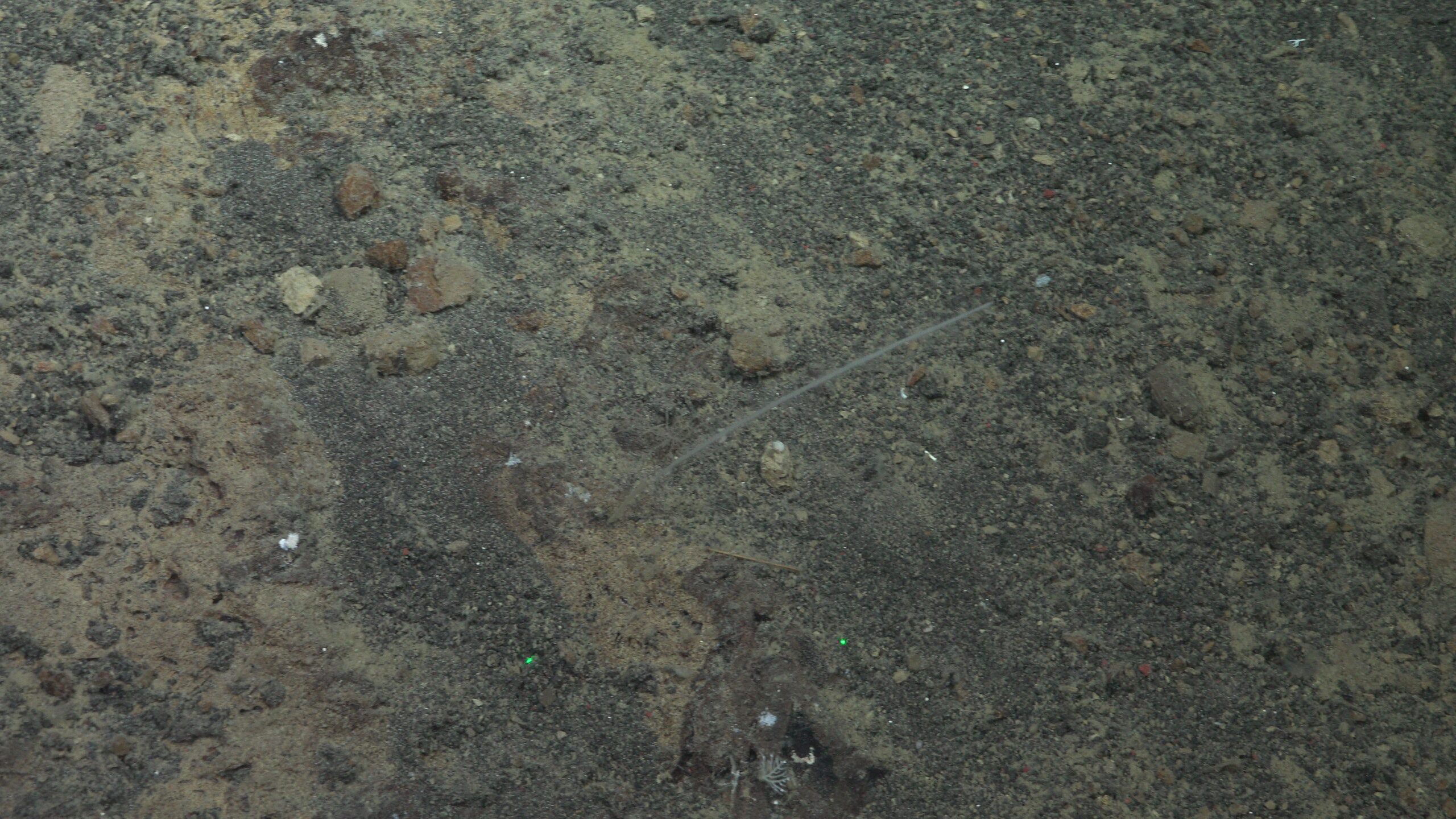
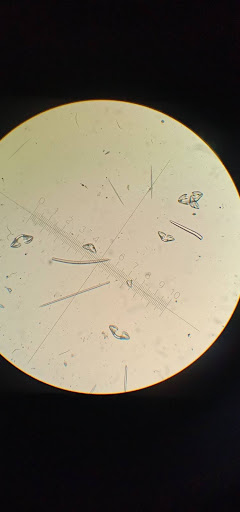
The specimen is a rigid, erect, slightly curved, and stalked sponge which is c. 20 cm in height. The stalk holds two lines of filaments at c. 90-120 degrees when alive, which are together once preserved. The specimen is white in colour when alive and preserved. Filaments appear throughout the whole stalk. The base was only partially recovered (strongyles found). Megascleres: Mycalostyles: 1500-2000+ μm, Subtylostyles: 400-430 μm (some slightly lanceolate, often slightly polytylotic in stem), Microxea: 120-170 μm (rougher looking when smaller), Strongyles 120-190 μm (sinuous), Strongyle-like style to tornote-like style: 740-790 μm, Acanthostyle: 90 μm (could be contaminant), Microscleres: Arcuate isochelae: 140-165 μm, Cleistochelae: 85-110 μm, Sigmancistra I: 15 μm, Sigmancistra II: 30 μm
Ecology
Carnivorous
Distribution
South Trench; Coordinates: -58.9, -24.933; Depth: 2908 m
Scientific Name Authorship
Rachel Downey
Join the census
The Ocean Census Alliance unites national and philanthropic marine institutes, museums, and universities, backed by governments, philanthropy, business and civil society partners.


