

























Species ID
OC-SP-0003291
Discovered
Phylum
Mollusca
Species ID
OC-SP-0003291
Provisional Species Name
Halicardia_FKt250812-838-Bag 2
Lowest Valid Taxon Name in WoRMS
Halicardia
Lowest Known Rank
Genus
Status
Discovered
Does the taxonomist(s) intend to work on this material further?
3. I/We are not sure yet. This is of course no problem, we will display your species info (if not embargoed) while you work out your species description plan.
Embargo
No
Kingdom
Animalia
Phylum
Mollusca
Class
Bivalvia
Family
Verticordiidae
Genus
Halicardia
Date Identified
16/11/2025
Taxonomic Remarks
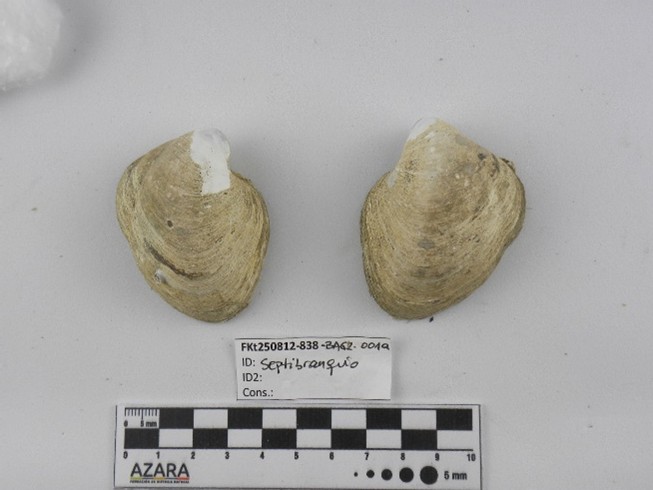
This specimen is assigned to the genus Halicardia based on its thick, inequilateral shell, strongly prosogyrate umbones, and well-developed radial sculpture. The shell shows a subtriangular to cordiform outline with prominent umbones positioned anterior to the midline and numerous radial ribs extending from the umbo to the ventral margin, intersected by concentric growth lines. It differs from closely related congeners by the combination of a compressed posterior margin, relatively smooth radial ribs lacking strong nodules, and a broadly rounded ventral margin. These characters together distinguish this specimen from other described species of Halicardia, suggesting it represents a distinct and potentially undescribed taxon pending further comparative and anatomical examination.
Discovery registered on
10/04/2026
Description of Material
Two articulated valves and isolated valve views examined from photographic material. shell small to medium sized (approximately 20–25 mm maximum length), thick, solid, and inequilateral. Outline subtriangular to cordiform. Umbones prominent, strongly prosogyrate, located anterior to the midline and projecting above the hinge line. Shell sculpture composed of numerous radial ribs originating at the umbo and extending toward the ventral margin. Ribs moderately broad and separated by shallow interspaces. Concentric growth lines intersect radial ribs, producing a roughened surface texture. Anterior margin rounded. Ventral margin broadly convex. Posterior margin compressed and slightly angular in dorsal view. Shell exterior pale beige to light tan with weathered appearance. Interior smooth, glossy white to cream colored. No pallial sinus visible. Maximum shell height approximately similar to shell length.
Ecology
The specimen was found isolated on a step of a submarine canyon wall where a small accumulation of sand was present. This suggests the species may inhabit microhabitats with thin sediment pockets deposited over hard substrates along steep canyon topography. No associated organisms were observed.
Distribution
The genus is firstly recorded for Southwestern Atlantic and the species heavily differs from all the other co-generic species
Join the census
The Ocean Census Alliance unites national and philanthropic marine institutes, museums, and universities, backed by governments, philanthropy, business and civil society partners.


