











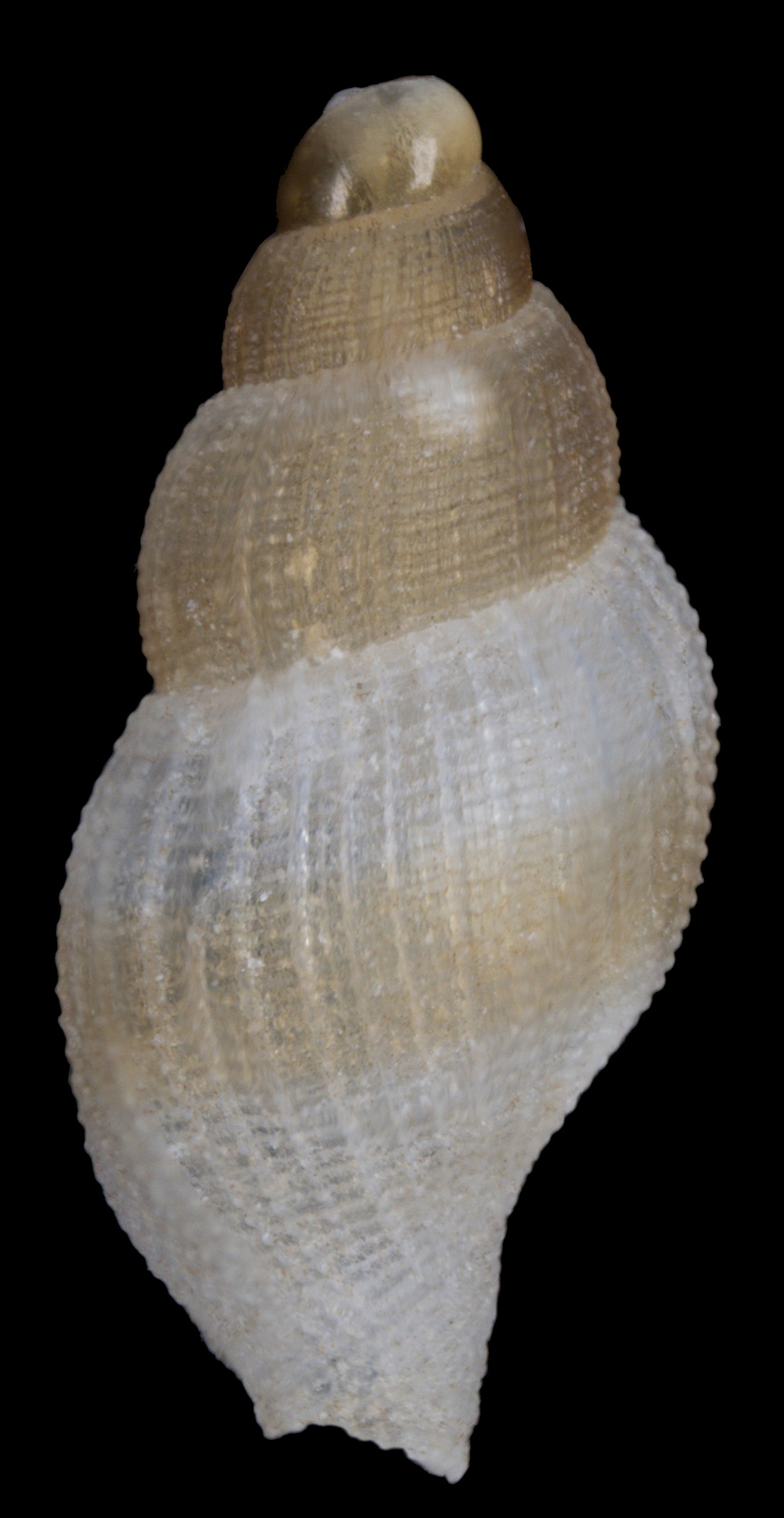
Stacked from 35 images. Method=B (R=8,S=4)
Stacked from 26 images. Method=B (R=8,S=4)
Species ID
OC-SP-0002586
Discovered
Phylum
Mollusca
Species ID
OC-SP-0002586
Provisional Species Name
Retizafra sp_MNHN_IM_2000_40356
Lowest Valid Taxon Name in WoRMS
Retizafra
Lowest Known Rank
Genus
Status
Discovered
Does the taxonomist(s) intend to work on this material further?
2. I/We already have plans to publish. (For marine invertebrates please know that SOSA could support you in this too - please click the button for more details).
Embargo
No
Kingdom
Animalia
Phylum
Mollusca
Class
Gastropoda
Order
Neogastropoda
Family
Columbellidae
Genus
Retizafra
Taxonomic Remarks
The placement of this species in Retizafra is only tentatively made here. It shares the combination of axial and spiral sculpture with Retizafra, but this species has much weaker axial ribbing, a much higher amount of axial ribs and spiral cords, a much lighter shell structure and a slightly different aperture form. No other Columbellid genus is close. The preceding characters makes this species easy to identify.
Discovery registered on
01/04/2026
Description of Material
Shell of average for the genus, adult size up to 3.4 mm; fusifom with clearly rounded whorls. Suture slightly impressed. Slightly translucent. Protoconch paucispiral, consisting of about 1.4 smooth whorls. Transition to teleoconch clearly visible. Teleoconch consisting of about 2.9-3 whorls. Axial sculpture of about 32-36 very weak ribs on all whorls. The last axial ribs close to the aperture are slightly stronger. Spiral sculpture consisting of of about 10-12 weak rather flat cords with very narrow interspaces, which overrun the axial ribs on the first two whorls. On the last whorl there are about 27 of these spiral cords, going over in the basal cords abapically. Basal cords clearly present, ventrally ranging to just belaow the adapical end of the columella. Aperture average width for the genus, about 53% of shell height. Outside of outer lip only very weakly thickened, with the continuation of the basal cords and spiral sculpture clearly present. Inside of outer lip with a very weak sinus on the adapical end and not denticulate. Columellar callus clearly present, slightly raised, inside without a ridge and not denticulate. Parietal callus clealy present. Siphonal canal short, open, slightly recurved. First two teleoconch whorls pale brown. Last whorl off-white with a pale brown spiral band at mid-whorl. The inside of the aperture also shows this band shining through the shell. Columella and parietal callus white. Protoconch semi-translucent yellowish. Height of holotype: 3.4 mm
Ecology
Direct developing species with paucispiral protoconch, so non planctotrophic larvae. Most likely endemic.
Distribution
SPANBIOS expedition MNHN: stn DW5166, 18°40’S, 163°16’E, 556-577m, 1 dd (holotype).
Scientific Name Authorship
Monsecour, Kevin
Stacked from 35 images. Method=B (R=8,S=4)
Stacked from 26 images. Method=B (R=8,S=4)
Join the census
The Ocean Census Alliance unites national and philanthropic marine institutes, museums, and universities, backed by governments, philanthropy, business and civil society partners.


