












Species ID
OC-SP-0002306
Discovered
Phylum
Arthropoda
Species ID
OC-SP-0002306
Provisional Species Name
Heteroserolis sp_MoV7409
Lowest Valid Taxon Name in WoRMS
Heteroserolis
Lowest Known Rank
Genus
Status
Discovered
Embargo
No
Kingdom
Animalia
Phylum
Arthropoda
Class
Malacostraca
Order
Isopoda
Family
Serolidae
Genus
Heteroserolis
Date Identified
21/09/2025
Taxonomic Remarks
The species differs from others in the genus by its narrow body (1.7 times as long as wide in the female), coxal dorsal plate 6 barely overlapping pleonal epimeron 2, small sublateral tubercles on the pleotelson, and the relatively short uropodal exopod
Discovery registered on
09/03/2026
Description of Material
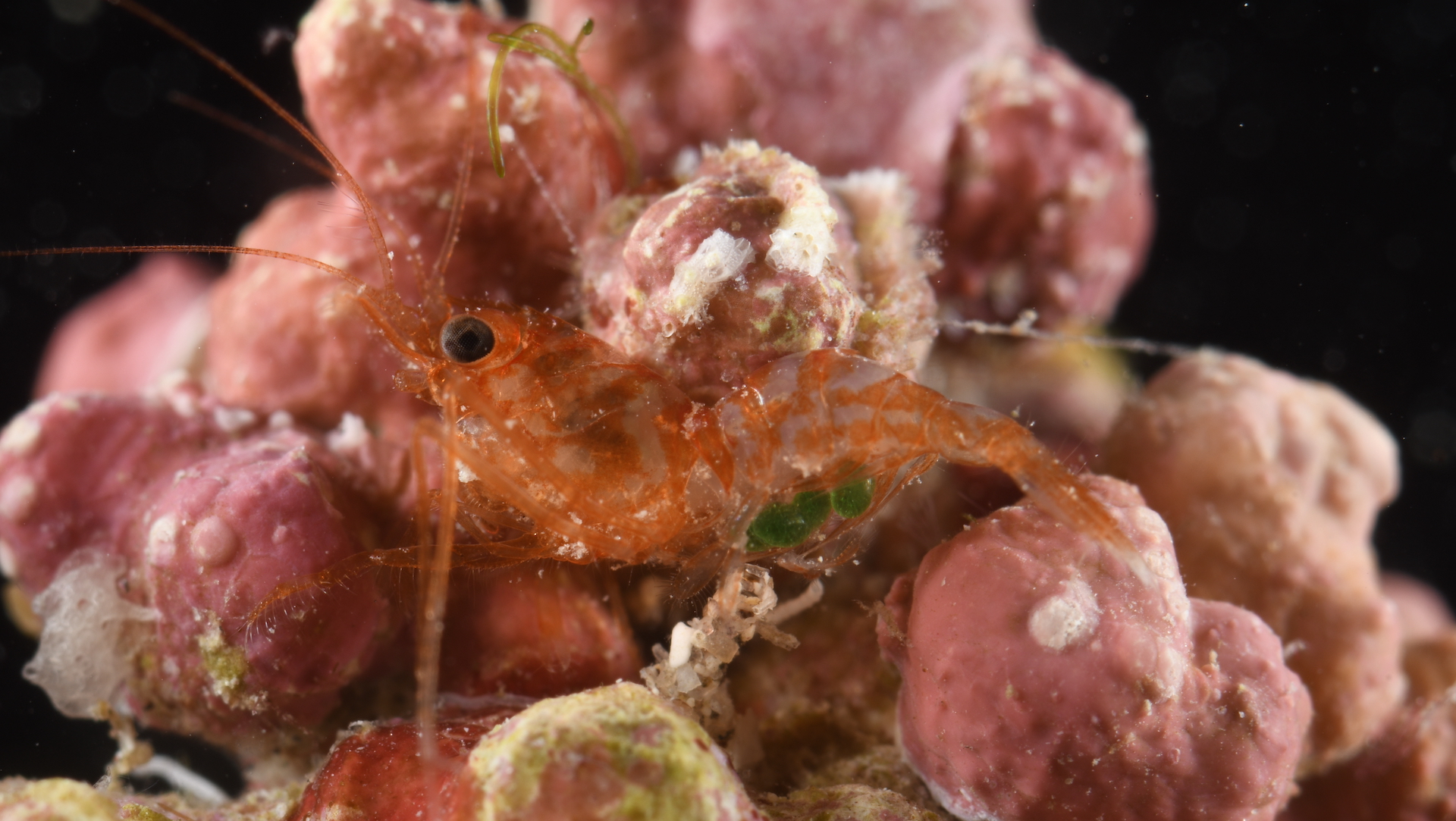
Diagnosis. Female. Female body 1.7 times as long as wide; head-pereonite 1 2.4 times as wide as long, head-pereonite 1 strongly tapering anteriorly; body dorsally not setose; head, pereonites 1–4, pleonites 1–3 each bearing long low median tubercle. Coxal dorsal plates 1–6 marginally contiguous, coxal dorsal plates 2–4 delimited from pereonite tergites by non-articulating suture; plate 6 just overlapping pleonal epimeron 2. Pleonites 2, 3 epimera squarish in dorsal view. Pleotelson 0.42 times as long as total length; anterior margin 0.6 times body width, 0.9 times as long as wide; tapering slightly to base of uropod, triangular beyond; with median ridge over most of length; with obsolete sublateral longitudinal ridge ending in small tubercle (not apparent in juveniles); apex rounded-truncate. Pleonite 1 sternite midventral keel extension reaching posteriorly to middle of that of pleon 2, erect, without longitudinal groove. Uropod attaching at 0.45 length of pleotelson lateral margin; endopod reaching almost to pleotelson apex, tapering to rounded apex; uropodal exopod half as long as endopod, as wide distally as endopod, with crenellate truncate distal margin. Male. Male body 1.53 times as long as wide. Pereon as in female. Pleotelson as in female. Coxal ventral plates 5–7 fused, with transverse ridge bearing medial tubercle plus second bilobed transverse ridge bearing 2 gonopores. The species is known from 192 specimens with maximum lengths of the male, 7.2 mm and the ovigerous female, 10.9 mm.
Ecology
Like all members of this family, Serolidae, the species is benthic living on the surface of the sediment. The samples included many adult males and ovigerous females.
Distribution
Australia, Western Australia, Northwest Shelf, between Dampier and Port Hedland, around 19–20 °S, 120 °E, between 30 and 134 m depth. Collected from 64 WHOI epibenthic sled samples.
Specimens
Additional Material
No Image yet…
NMV J76357
Phylum
Arthropoda
Family
Serolidae
Additional Material
No Image yet…
NMV J76358
Phylum
Arthropoda
Family
Serolidae
Additional Material
No Image yet…
NMV J76359
Phylum
Arthropoda
Family
Serolidae
Additional Material
No Image yet…
NMV J76361
Phylum
Arthropoda
Family
Serolidae
Additional Material
No Image yet…
NMV J76362
Phylum
Arthropoda
Family
Serolidae
Additional Material
No Image yet…
NMV J76363
Phylum
Arthropoda
Family
Serolidae
Additional Material
No Image yet…
NMV J76364
Phylum
Arthropoda
Family
Serolidae
Additional Material
No Image yet…
NMV J76365
Phylum
Arthropoda
Family
Serolidae
Additional Material
No Image yet…
NMV J76344
Phylum
Arthropoda
Family
Serolidae
Additional Material
No Image yet…
NMV J76345
Phylum
Arthropoda
Family
Serolidae
Join the census
The Ocean Census Alliance unites national and philanthropic marine institutes, museums, and universities, backed by governments, philanthropy, business and civil society partners.


