

















Species ID
OC-SP-0002249
Discovered
Phylum
Arthropoda
Species ID
OC-SP-0002249
Provisional Species Name
Salmoneus sp3
Lowest Valid Taxon Name in WoRMS
Salmoneus
Lowest Known Rank
Genus
Status
Discovered
Does the taxonomist(s) intend to work on this material further?
1. I/We would like support to publish my marine invertebrate species with SOSA - please click the button for more details.
Embargo
No
Kingdom
Animalia
Phylum
Arthropoda
Class
Malacostraca
Order
Decapoda
Family
Alpheidae
Genus
Salmoneus
Taxonomic Remarks
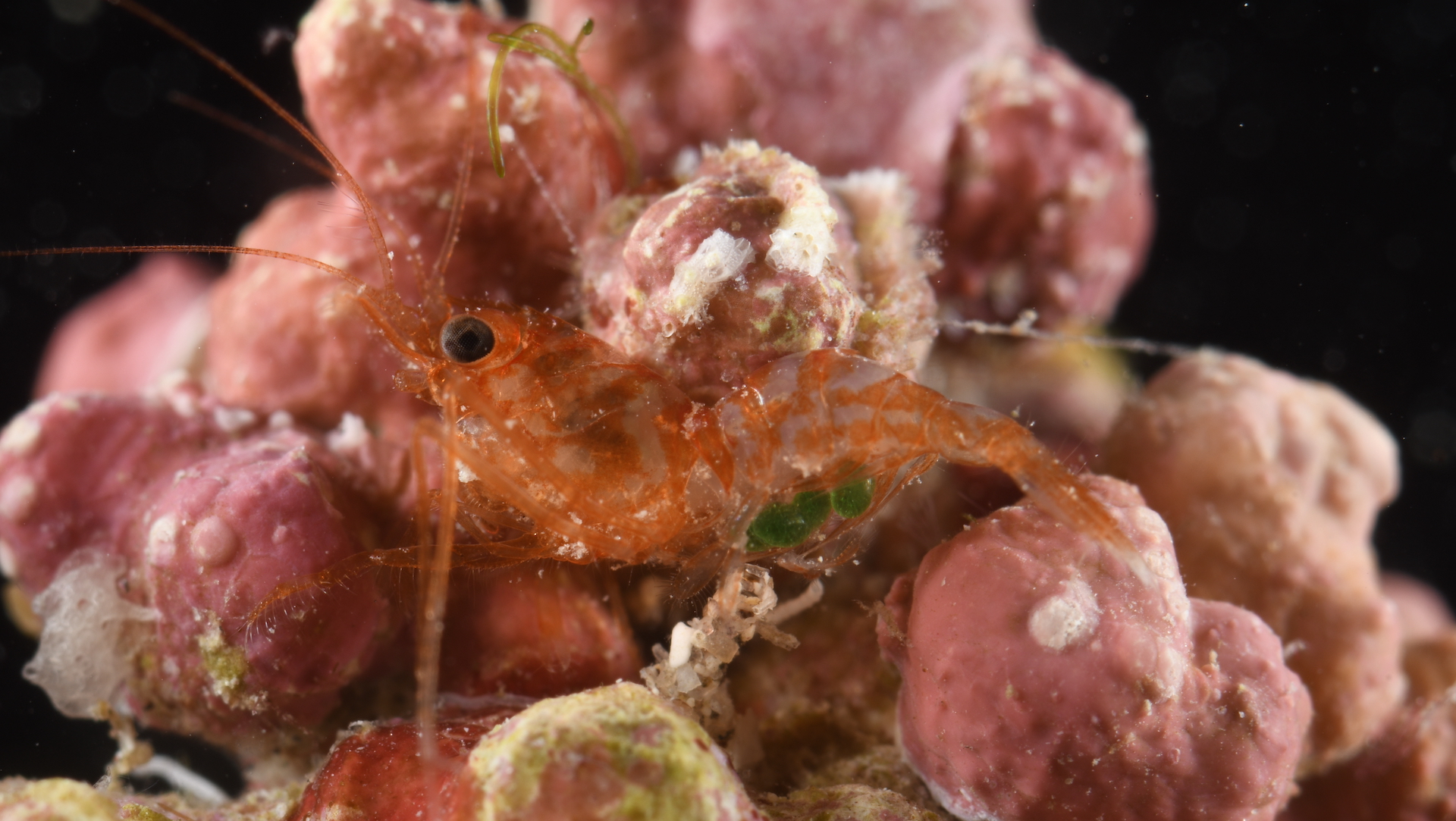
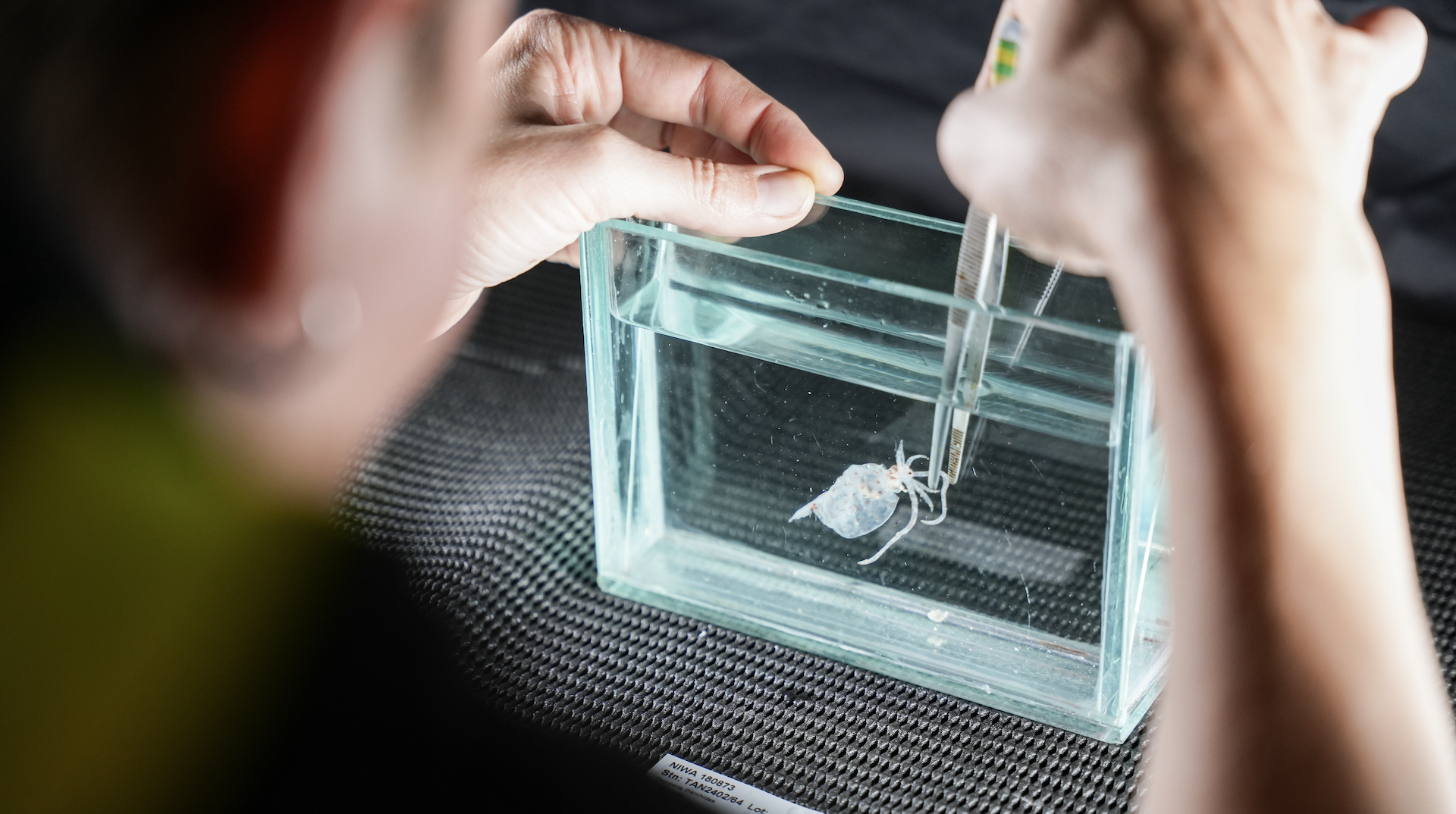
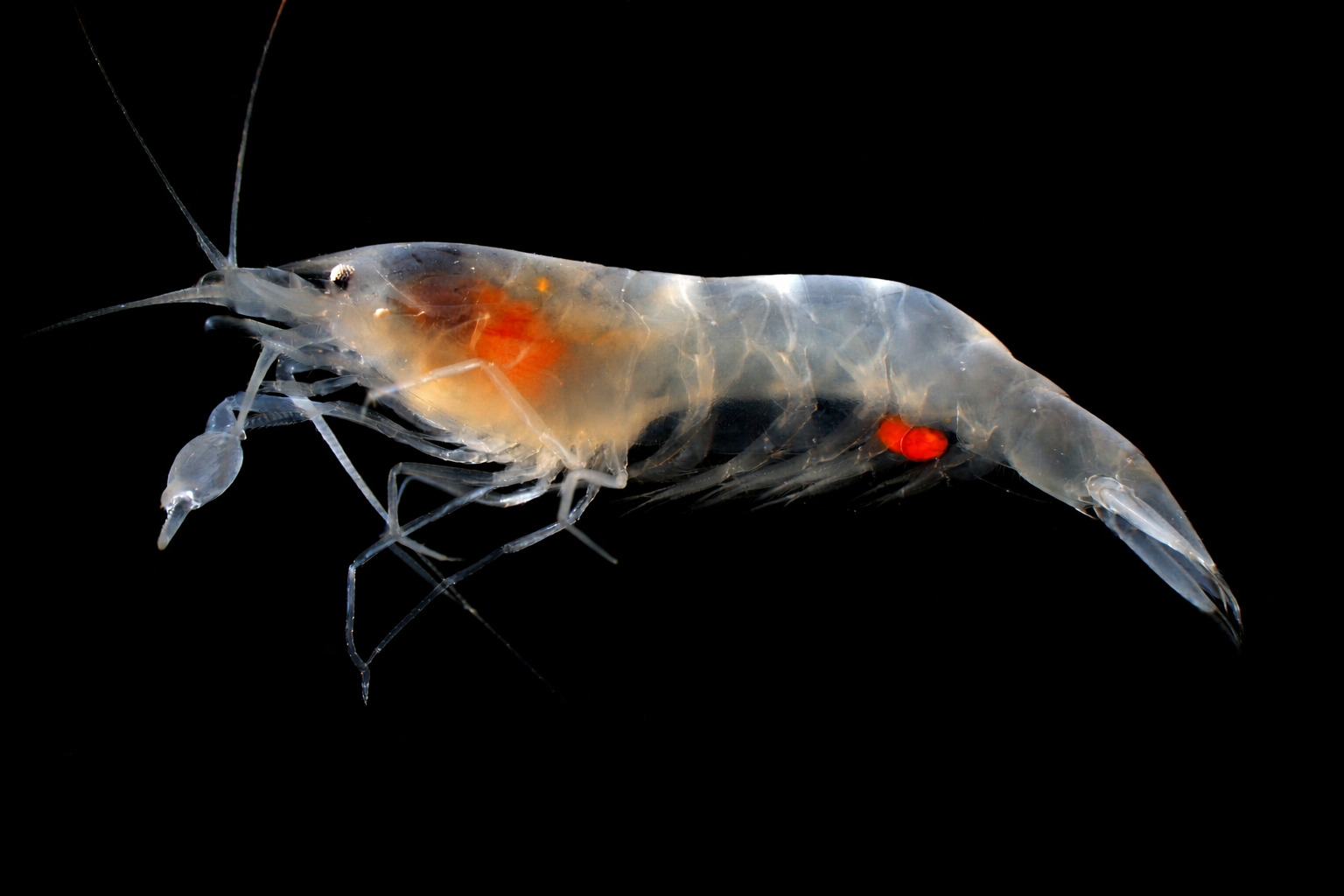
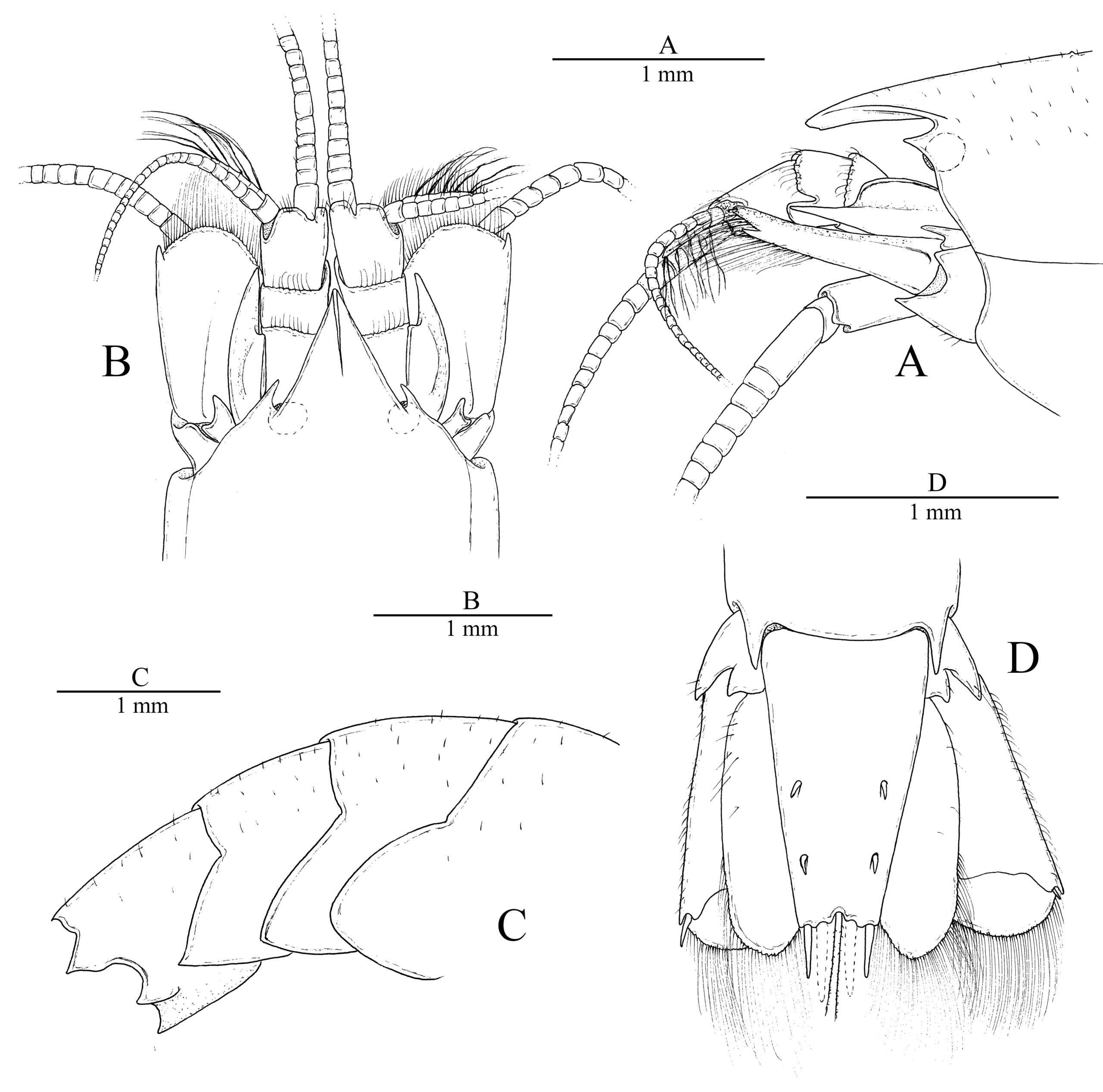
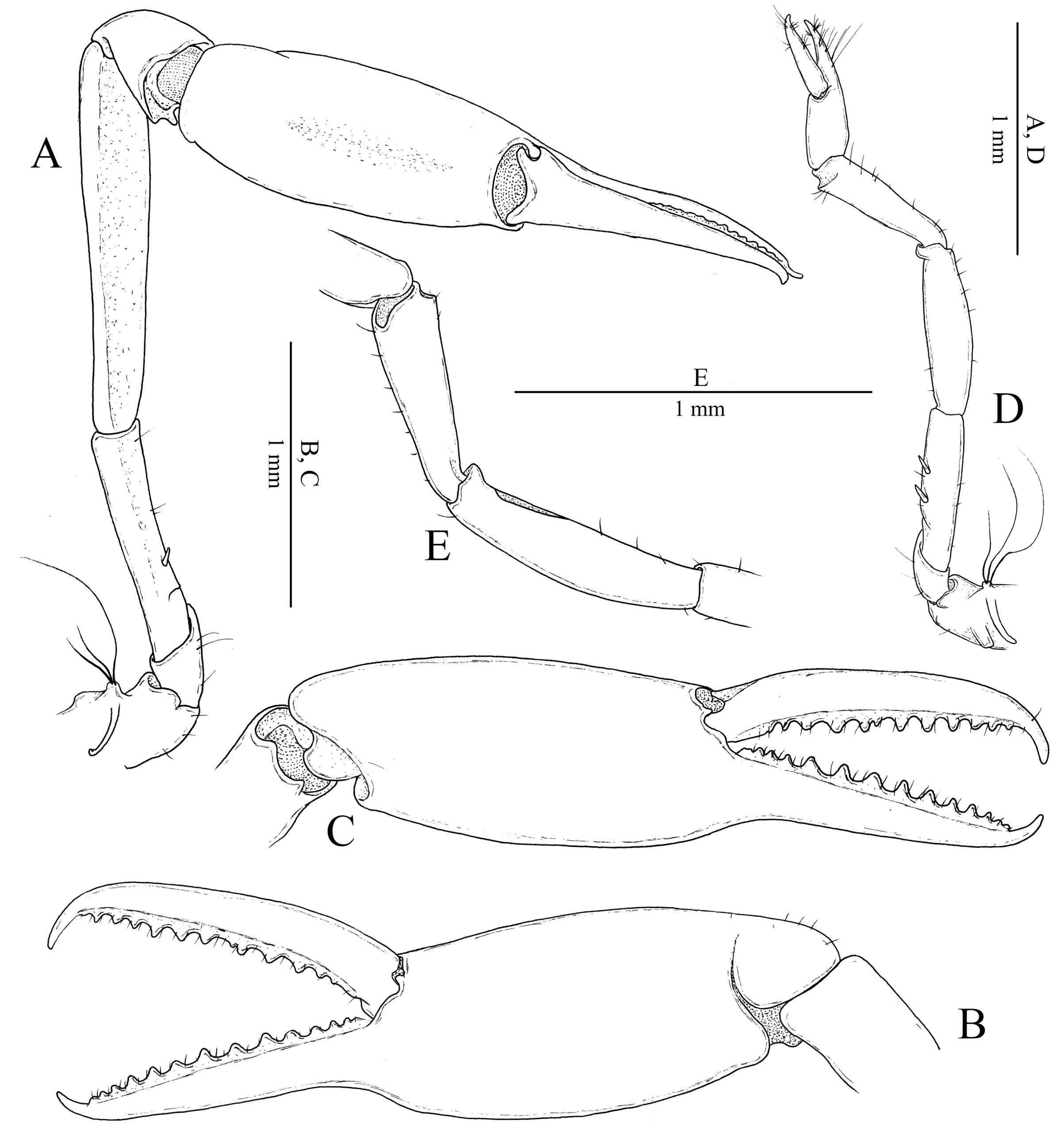
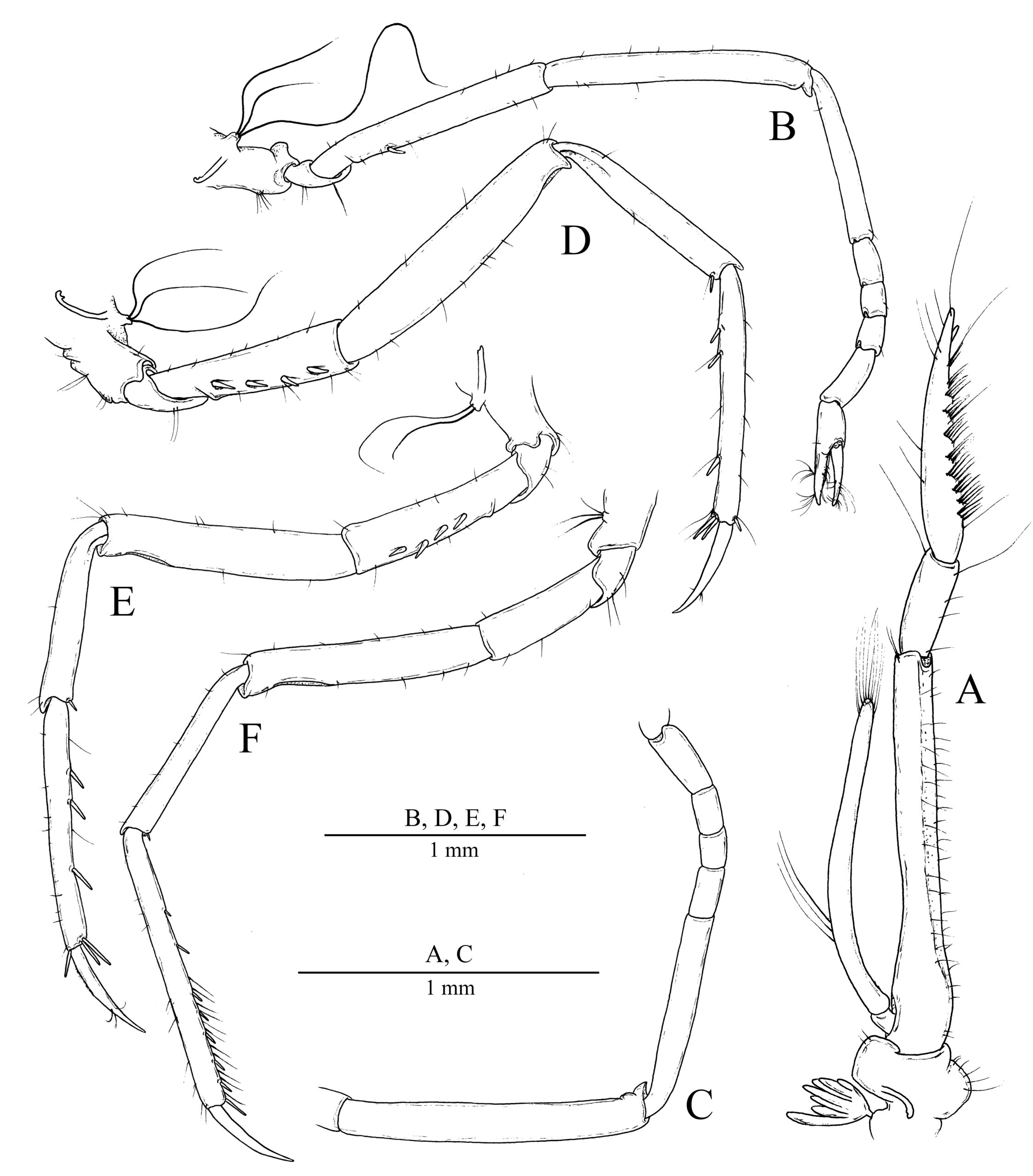
Salmoneus sp.3 belongs to the Salmoneus arabicus Anker, 2022, species complex. This complex is characterized as in follow: Carapace fully or partly covering eyes in both dorsal and lateral views. Rostrum broadly triangular, with obsolete carina in its anterior half, lateral margin straight or nearly straight, without concavity or convexity, almost reaching distal margin of second article of antennular peduncle. Telson with posterior margin bearing shallow median notch and armed with two pairs of spiniform setae, mesial stouter and longer than lateral. Antennule relatively stout; stylocerite reaching to distal margin of second article. Antennal scaphocerite broad, reaching to end of antennular peduncle. Third maxilliped with lateral plate subquadrate, with rounded angle laterally; arthrobranch reduced to various degrees. Chelipeds (= first pereiopods) asymmetrical in size and shape, with minor cheliped significantly weaker than major cheliped; ischium of both chelipeds armed with one (rarely two) spiniform seta on ventrolateral surface; major chela with shallow depression on mid-dorsal margin of palm; fingers slightly crossing near tips; dactylus and pollex with cutting edges armed with evenly distributed teeth, teeth near mid-length largest, decreasing in size towards both proximal and distal ends. Third and fourth pereiopod ischia armed with two to four spiniform setae on ventrolateral surface; fifth pereiopod propodus with reduced grooming brush, usually with 1–2 microserrulate setae per row, 3 setae at most. Within this complex, S. sp.3 can be separated by 1) presence of minuscule post-rostral tubercle, 2) ventro-subdistal margin of rostrum with small tooth, 3) quadrate lateral plate of the third maxilliped, 4) slightly reduced arthrobranch, 5) ventrodistal margin of meri of minor cheliped as well as second to fifth pereiopods with process preventing carpus from bending beyond 90°, 6) disto-ventral margin of the fifth pereiopod carpus armed with spiniform seta. Moreover, this species is the sole species within the complex with symbiotic lifestyle.
Discovery registered on
02/03/2026
Description of Material
Carapace scarcely covered with short setae, almost completely concealing eyes in dorsal and lateral views, with minute postrostral tubercle. Rostrum subtriangular, slightly longer than wide, with faint dorsal carina in anterior half; tip falling short of distal margin of second article of antennular peduncle; ventral margin armed with small subdistal tooth. Orbital teeth well developed, pointed somewhat mesially. Sixth pleonite without distinct posteroventral suture. Telson moderately broad, tapering; posterior margin with broad V-shaped incision furnished with two long plumose setae, lateral spiniform setae about 0.7 length of mesial spiniform setae. Second article of antennular peduncle much wider than long. Third maxilliped with squarish-rounded lateral plate; arthrobranch somewhat reduced. Chelipeds strongly unequal in size and asymmetrical in shape. Major cheliped with one spiniform seta on ischium; chela moderately swollen, with complex groove proximally; cutting edge of pollex armed with 12–14 teeth, that of dactylus with 10–12 teeth. Minor cheliped with two spiniform setae on ischium; merus with blunt distoventral projection; chela slightly shorter than carpus, not enlarged, finger cutting edges unarmed. Second pereiopod with one spiniform seta on ischium; merus with blunt distoventral projection; carpus with first subarticle equal in length to sum of others. Third pereiopod with ischium armed with three or four spiniform setae; merus with blunt distoventral projection. Fourth pereiopod similar to third. Fifth pereiopod with merus bulging distoventrally; propodus armed with seven spiniform setae along margin and one pair of spiniform setae adjacent to dactylus; distodorsal margin of propodus with small spiniform seta
Ecology
Specimens were collected using suction pump from burrows of unknown host.
Distribution
Moorea
Join the census
The Ocean Census Alliance unites national and philanthropic marine institutes, museums, and universities, backed by governments, philanthropy, business and civil society partners.


