











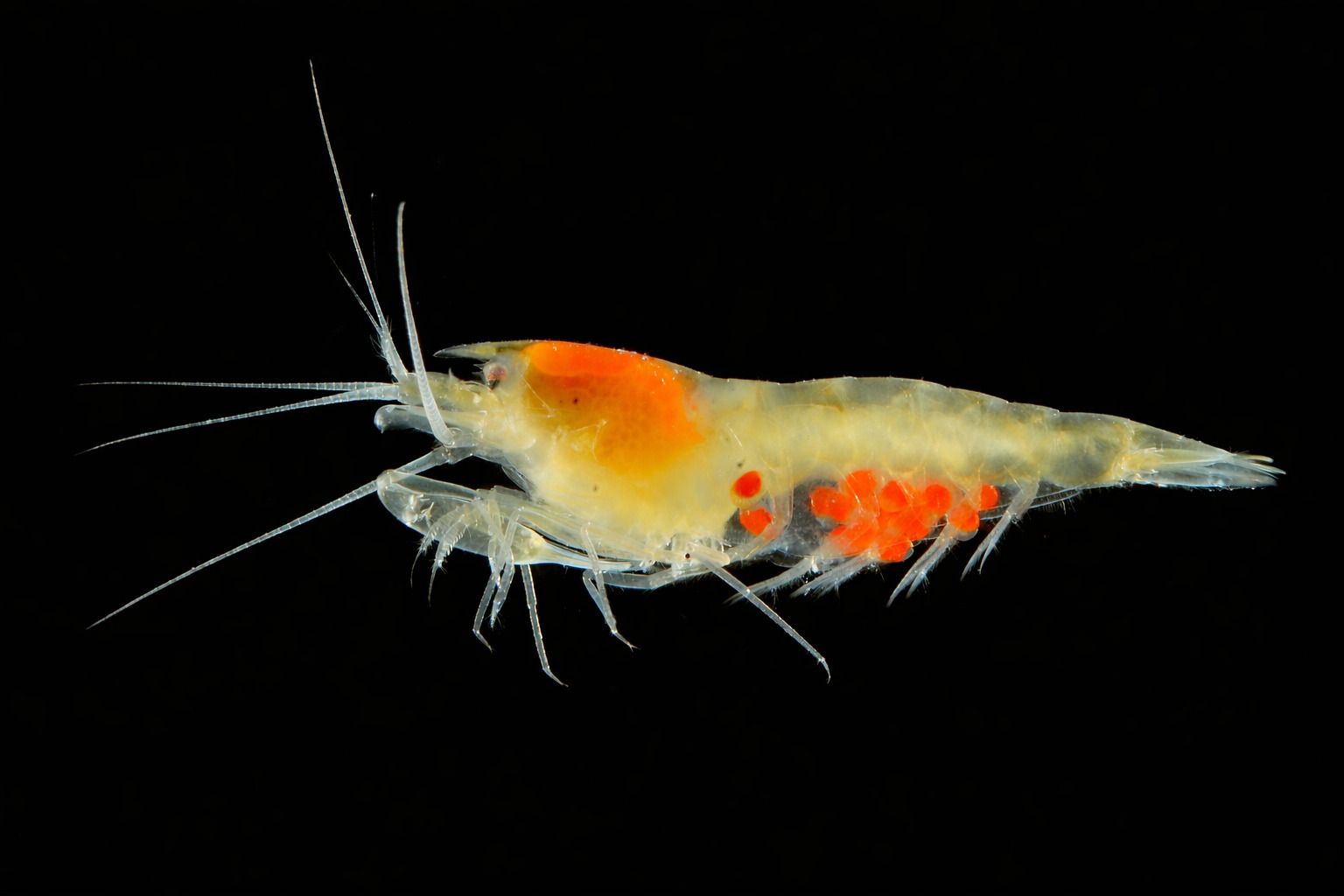
Species ID
OC-SP-0002247
Discovered
Phylum
Arthropoda
Species ID
OC-SP-0002247
Provisional Species Name
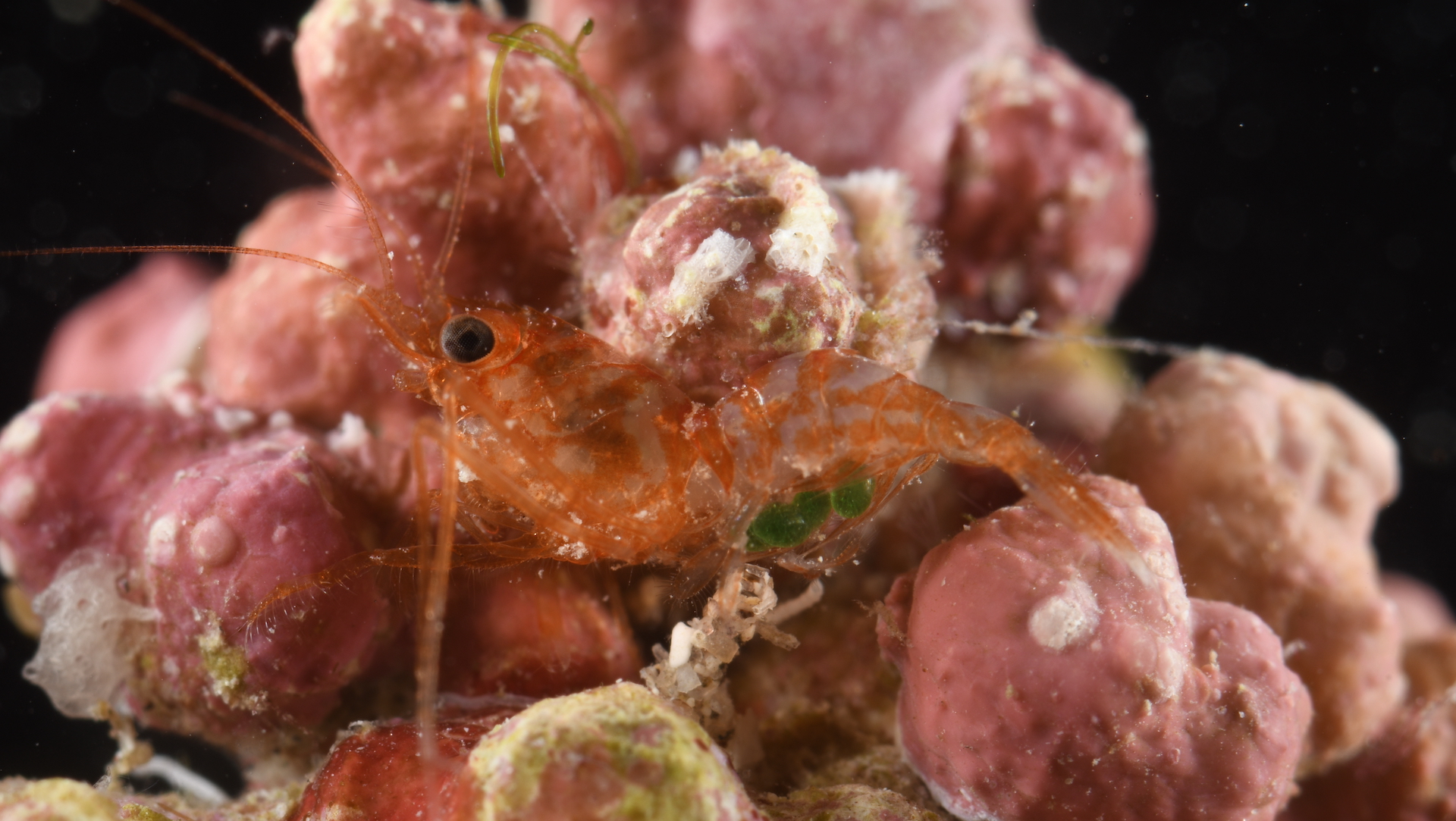
Salmoneus sp1
Lowest Valid Taxon Name in WoRMS
Salmoneus
Lowest Known Rank
Genus
Status
Discovered
Does the taxonomist(s) intend to work on this material further?
2. I/We already have plans to publish. (For marine invertebrates please know that SOSA could support you in this too - please click the button for more details).
Embargo
No
Kingdom
Animalia
Phylum
Arthropoda
Class
Malacostraca
Order
Decapoda
Family
Alpheidae
Genus
Salmoneus
Taxonomic Remarks
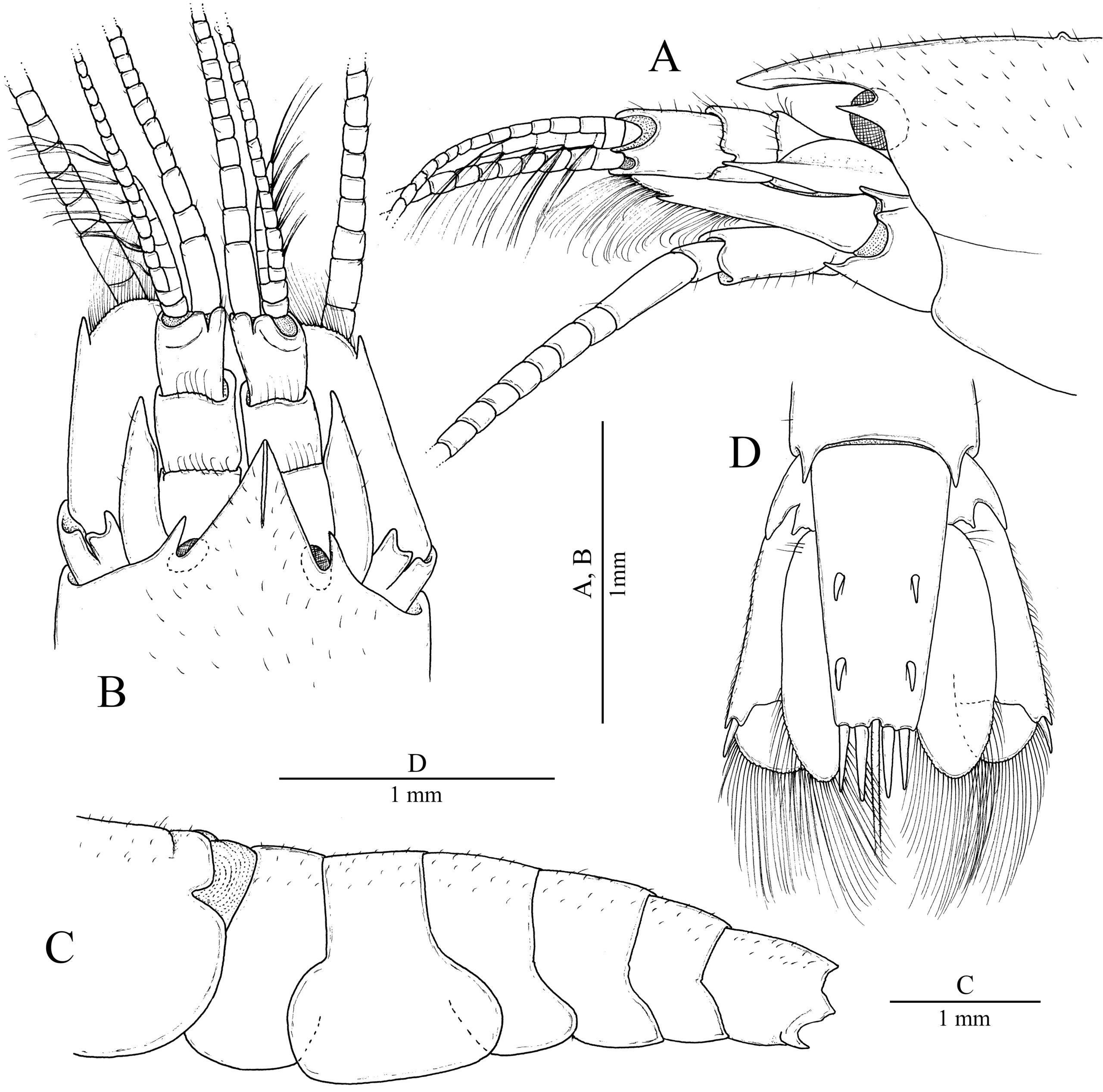
Salmoneus sp.1 belongs to the Salmoneus arabicus Anker, 2022, species complex. This complex is characterized as in follow: Carapace fully or partly covering eyes in both dorsal and lateral views. Rostrum broadly triangular, with obsolete carina in its anterior half, lateral margin straight or nearly straight, without concavity or convexity, almost reaching distal margin of second article of antennular peduncle. Telson with posterior margin bearing shallow median notch and armed with two pairs of spiniform setae, mesial stouter and longer than lateral. Antennule relatively stout; stylocerite reaching to distal margin of second article. Antennal scaphocerite broad, reaching to end of antennular peduncle. Third maxilliped with lateral plate subquadrate, with rounded angle laterally; arthrobranch reduced to various degrees. Chelipeds (= first pereiopods) asymmetrical in size and shape, with minor cheliped significantly weaker than major cheliped; ischium of both chelipeds armed with one (rarely two) spiniform seta on ventrolateral surface; major chela with shallow depression on mid-dorsal margin of palm; fingers slightly crossing near tips; dactylus and pollex with cutting edges armed with evenly distributed teeth, teeth near mid-length largest, decreasing in size towards both proximal and distal ends. Third and fourth pereiopod ischia armed with two to four spiniform setae on ventrolateral surface; fifth pereiopod propodus with reduced grooming brush, usually with 1–2 microserrulate setae per row, 3 setae at most. Within this complex, S. sp.1 can be separated by 1) presence of post-rostral tubercle, 2) ventro-subdistal margin of rostrum with small process, 3) more or less quadrate-shaped lateral plate of the third maxilliped, 4) slightly reduced arthrobranch, 5) ventrodistal margin of meri of minor cheliped as well as second to fifth pereiopods without any process, 6) disto-ventral margin of the fifth pereiopod carpus armed with spiniform seta.
Discovery registered on
02/03/2026
Description of Material
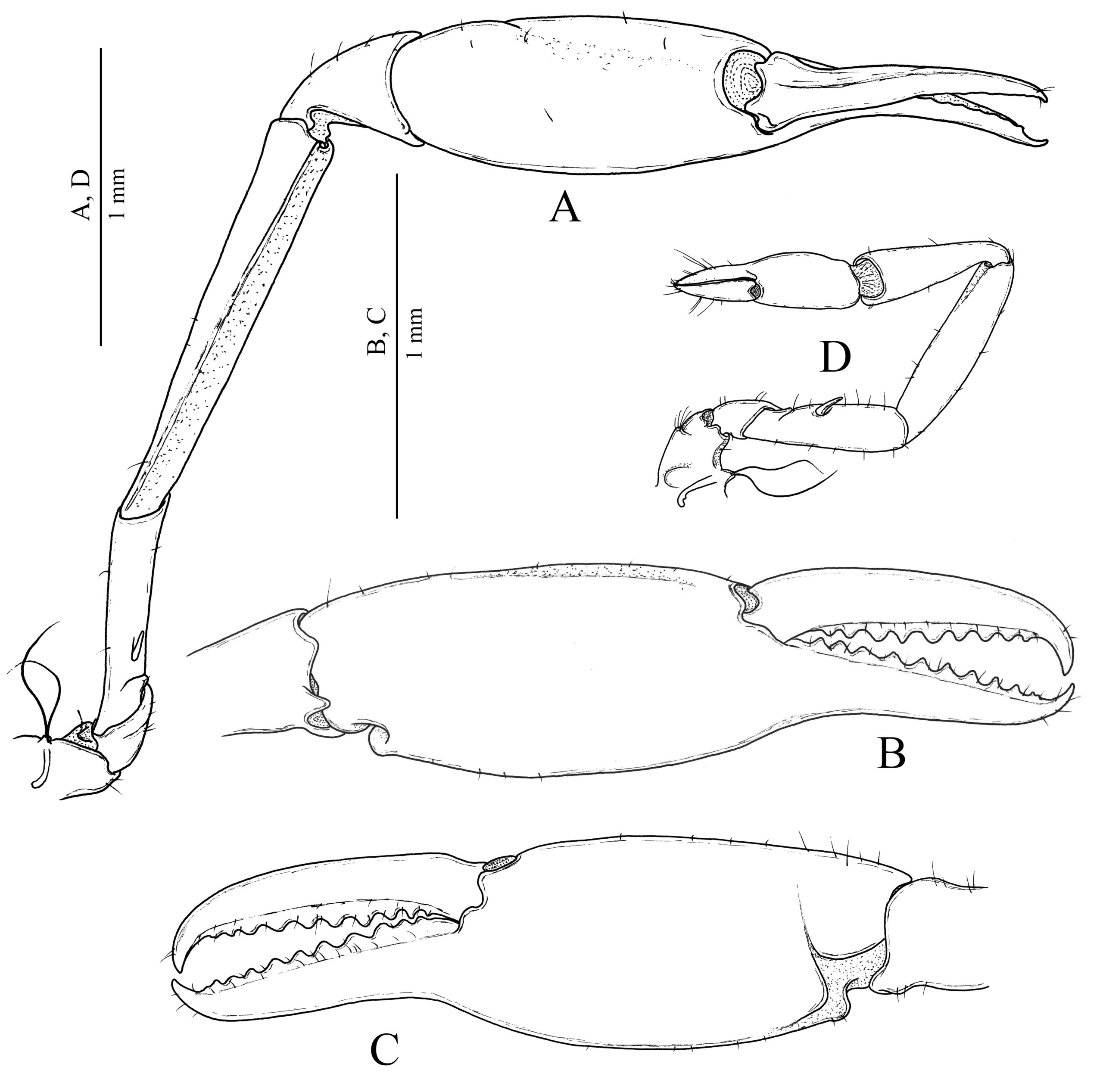
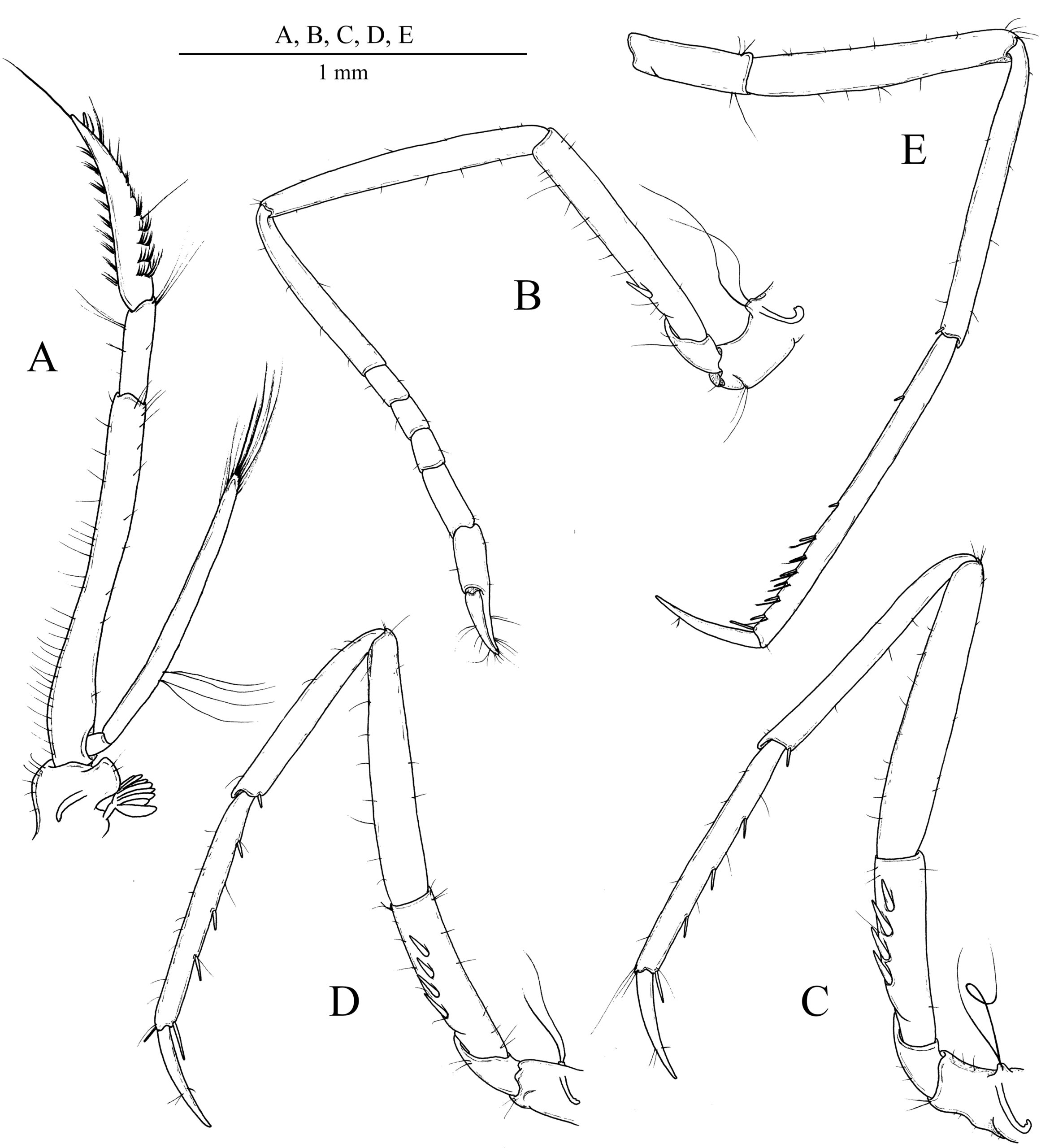
Carapace sparsely covered by short setae, with small postrostral tubercle; orbital hood almost completely concealing eyes in dorsal view, partly so in lateral view; anterolateral suture present; pterygostomial angle broadly rounded, cardiac notch deep. Rostrum broadly triangular in dorsal view, approximately as long as broad, with faint carina limited to anterior two-thirds of rostral length; lateral margins almost straight; tip subacute, reaching mid-length of second article of antennular peduncle; ventral margin with small subdistal convexity, without distinct tooth. Orbital teeth well developed, subacute, directed somewhat mesially, about twice as long as broad. Pleon covered with short setae dorsally and dorsolaterally; pleura of first to third pleonites posteroventrally rounded; fourth and fifth pleura posteroventrally subangular, posteroventral angle of fifth pleuron more produced; sixth pleuron with subtriangular projection flanking each side of telson and incomplete posteroventral suture; preanal plate subrounded, with median depression Telson subrectangular, slightly tapering distally, about 3.1 times as long as distal width; dorsal surface with two pairs of spiniform setae located at about 0.5 and 0.8 telson length, respectively; posterior margin with small central notch furnished with two long plumose setae and flanked by two pairs of stout spiniform setae, lateral slightly shorter than mesial and about three times as long as dorsal spiniform setae. Antennule with relatively stout peduncle; first article approximately as long as broad; stylocerite relatively slender, with subacute tip, latter reaching or almost reaching distal margin of second article; second article subquadrate, about as long as wide; lateral antennular flagellum biramous, fused portion with two subdivisions, accessory ramus well developed, long, with five or six groups of aesthetascs. Antenna with basicerite relatively stout, distoventral tooth well developed, subacute; scaphocerite broad, ovate, reaching or slightly exceeding distal margin of antennular peduncle, distolateral tooth subacute, falling short of distal margin of blade; carpocerite stout, cylindrical, reaching to end of second article of antennular peduncle and reaching well beyond mid-length of scaphocerite; flagellum not particularly thickened. Third maxilliped with coxa bearing strap-like epipod and sort of subrectangular lateral plate; antepenultimate article slender, about eight times as long as proximal part; penultimate article relatively short, about a fourth of antepenultimate article; ultimate article about 2.5 times as long as penultimate article, distally armed with small subapical spiniform seta; exopod slender, falling short of distal margin of antepenultimate article; arthrobranch somewhat reduced, multilamellate. Chelipeds = first pereiopods very unequal in size and asymmetrical in shape. Major cheliped relatively robust, carried flexed under body when not in use; ischium approximately five times as long as proximal width, armed with one spiniform seta on ventrolateral surface; merus about twice as long as ischium, ventral surface somewhat depressed; carpus short, cup-shaped; chela enlarged, as long as combined lengths of basis, ischium and merus; palm moderately swollen, about twice as long as wide, with deep complex groove proximally and shallow groove mid-dorsally; fingers slender, about 0.8 times as long as palm, not particularly twisted, with crossing fingertips, not gaping when closed; pollex with cutting edge armed with 10–11 small, subtriangular, evenly distributed teeth, teeth near pollex mid-length largest, decreasing in size towards both proximal and distal ends, distal teeth smallest; dactylus with cutting edge armed with 9–10 small teeth similar to those on pollex. Minor cheliped significantly smaller and weaker than major cheliped; ischium about four times as long as broad, armed with spiniform seta on ventrolateral surface; merus slender, slightly longer than ischium; carpus slightly shorter than merus, widening distally; chela simple, slightly longer than carpus; palm slightly longer than fingers, latter with unarmed cutting edges. Second pereiopod relatively slender; ischium about eight times as long as wide, armed with one spiniform seta on ventrolateral surface; merus slightly longer than ischium; carpus 1.3 times as long as merus, with five subarticles, proximal subarticle longest, subequal to combined length of others; chela about 0.3 times as long as carpus; palm and fingers subequal in length. Third pereiopod moderately slender; ischium slightly widening distally, about four times as long as wide, with four spiniform setae on ventrolateral surface; merus about 1.6 times as long as ischium; carpus slightly shorter than merus, nine times as long as wide, with slender spiniform seta on distoventral margin; propodus subequal to carpus, ventral margin armed with three spiniform setae in addition to distal pair of longer spiniform setae flanking dactylar base; dactylus simple, moderately slender, slightly curved, about 0.4 times as long as propodus. Fourth pereiopod generally similar to third pereiopod, somewhat more slender. Fifth pereiopod (Fig. 4E) longer and more slender than third and fourth pereiopods; ischium unarmed; carpus slightly longer than merus; propodus slightly longer than carpus, bearing two short, widely separated spiniform setae on proximal two-thirds of ventral margin, six longer spiniform setae, more close to each other, in distal third of ventral margin, and one pair of spiniform setae adjacent to dactylar base, transverse rows of grooming setae on distal third of ventral margin reduced, composed of one or sometimes two microserrulate setae. Uropod with lateral and mesial lobes of protopod subacutely produced distally; exopod ovate, with small distolateral tooth adjacent to stout spiniform seta, diaeresis almost complete, with blunt lobe mesial to spiniform seta; endopod slightly longer than exopod, narrowly ovoid, without specific features.
Ecology
Specimens were found under coral rubble.
Distribution
Guam, Moorea, Popua New Guinea
Join the census
The Ocean Census Alliance unites national and philanthropic marine institutes, museums, and universities, backed by governments, philanthropy, business and civil society partners.


