




















Species ID
OC-SP-0002643
Discovered
Phylum
Platyhelminthes
Species ID
OC-SP-0002643
Provisional Species Name
Promesostoma sp_S_1644
Lowest Valid Taxon Name in WoRMS
Promesostoma
Lowest Known Rank
Genus
Status
Discovered
Does the taxonomist(s) intend to work on this material further?
2. I/We already have plans to publish. (For marine invertebrates please know that SOSA could support you in this too - please click the button for more details).
Embargo
No
Kingdom
Animalia
Phylum
Platyhelminthes
Order
Rhabdocoela
Family
Promesostomidae
Genus
Promesostoma
Taxonomic Remarks
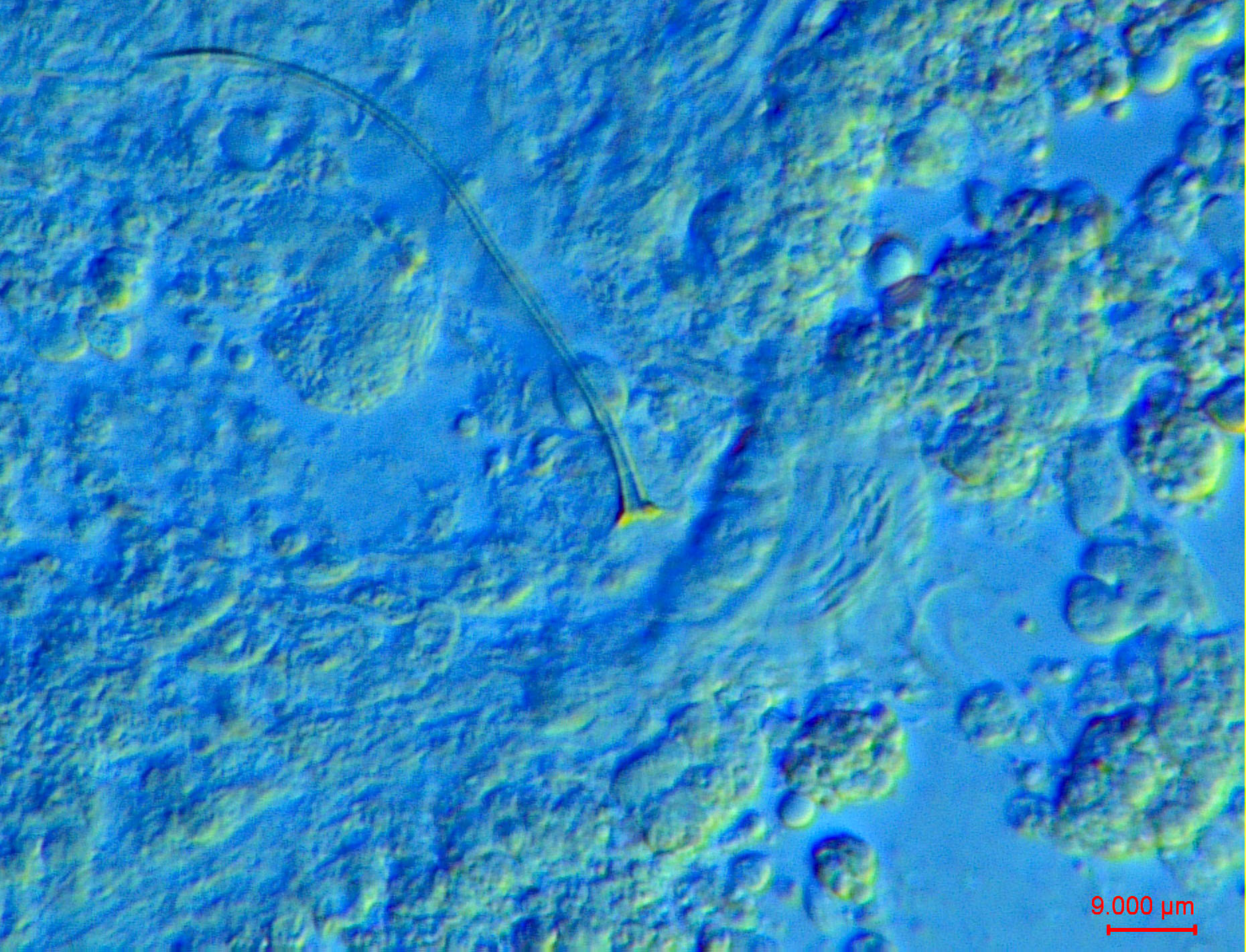
A remarkable trait of Promesostoma sp.4 is its very small body (250 µm long), which is by far one of the smaller (if not the smallest) rhabdocoel. All other species of Promesostoma are longer than 500 µm, except for the previously described Promesostoma sp.3 (385 µm long). The stylet of Promesostoma sp.4 is similar to that of P. biliniatum, P. serpentistylum, and P. gallicum because they are simple, without proximal or distal ornamentations and are curved but do nor form laps. However, P. biliniatum and P. gallicum are easily excluded from the comparison because they show dorsal pigmented stripes, which lack in P. serpentistylum and Promesostoma sp.4. Promesostoma serpentistylum shows two seminal vesicles and stylet is curved proximally and distally, whereas there is a single seminal vesicle in Promesostoma sp.4 and the stylet curves only distally. Furthermore, the male copulatory bursa is poorly developed in the anterior part of the male atrium in Promesostoma sp.4, which also present a second posterior dilatation, whereas the bursa is well-developed and opens into the male duct via a stalk, and there is no second dilatation of the male duct in P. serpentistylum.
Discovery registered on
01/04/2026
Description of Material
Species of Promesostoma 250 µm long, with eyes. Male copulatory bursa present, small, located on the proximal part of the stylet and beside the pharynx. There is a second, smaller dilatation of the male duct posterior to the male bursa. Stylet situated beside the pharynx, needle shaped, with a proximal funnel and tapering to a distal sharp tip, 71–75 µm long (x¯ = 73 µm; n = 3). The proximal funnel is 4–5 µm wide and the tubular part is 1 µm wide at midpoint. The prostate and the single seminal vesicles are oriented backwards; prostate vesicle situated beside the pharynx and the seminal one latero-posteriorly.
Ecology
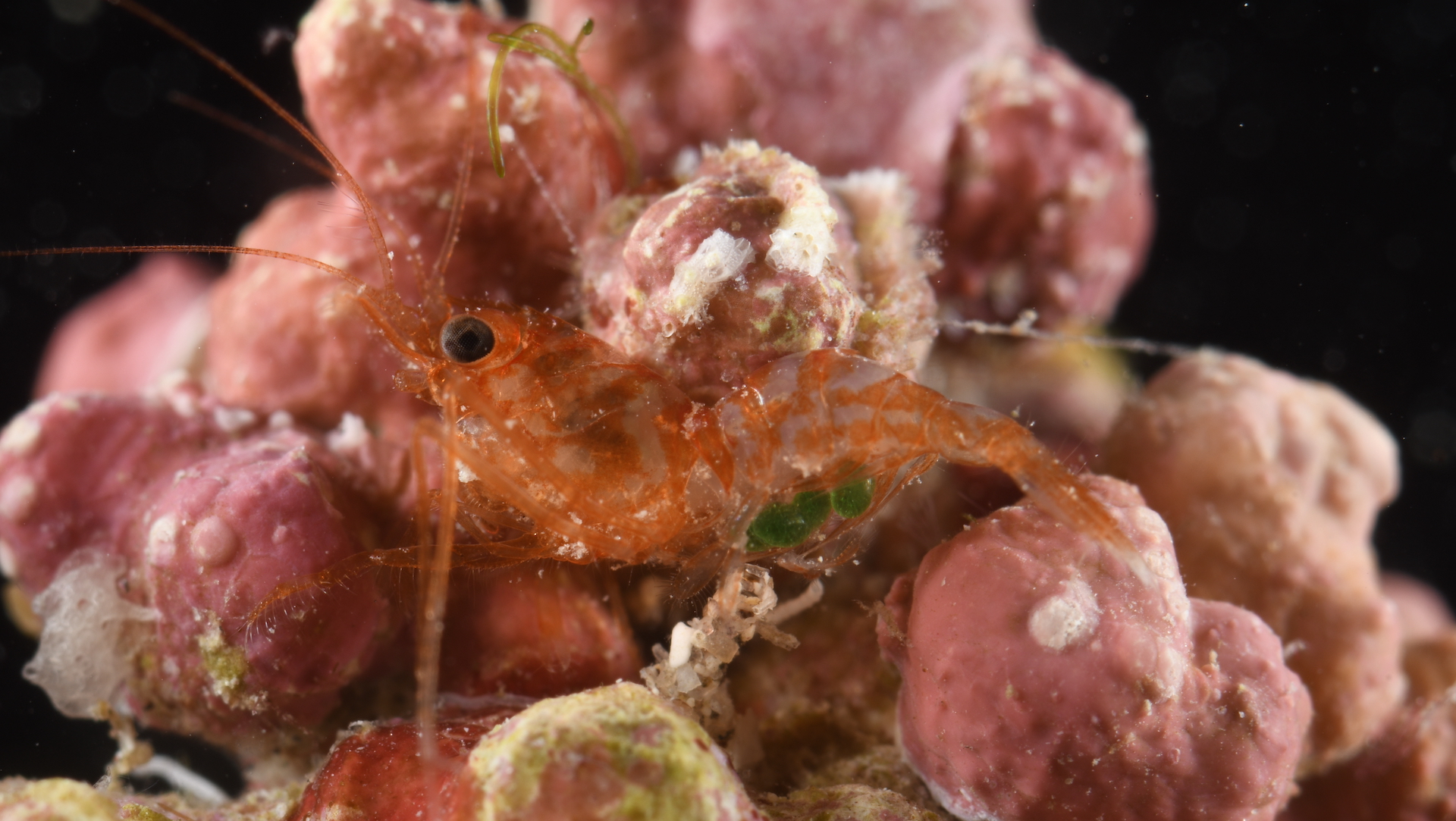
Silty red algae, intertidal oyster reef, salinity 35 ‰.
Distribution
United States of America, Florida, Fort Pierce, Jack Island, 27.488697; -80.315050.
Scientific Name Authorship
Diez, Yander L.
Join the census
The Ocean Census Alliance unites national and philanthropic marine institutes, museums, and universities, backed by governments, philanthropy, business and civil society partners.


