




















Species ID
OC-SP-0002619
Discovered
Phylum
Platyhelminthes
Species ID
OC-SP-0002619
Provisional Species Name
Ceratopera sp_S_1889
Lowest Valid Taxon Name in WoRMS
Ceratopera
Lowest Known Rank
Genus
Status
Discovered
Does the taxonomist(s) intend to work on this material further?
2. I/We already have plans to publish. (For marine invertebrates please know that SOSA could support you in this too - please click the button for more details).
Embargo
No
Kingdom
Animalia
Phylum
Platyhelminthes
Order
Rhabdocoela
Family
Trigonostomidae
Genus
Ceratopera
Taxonomic Remarks
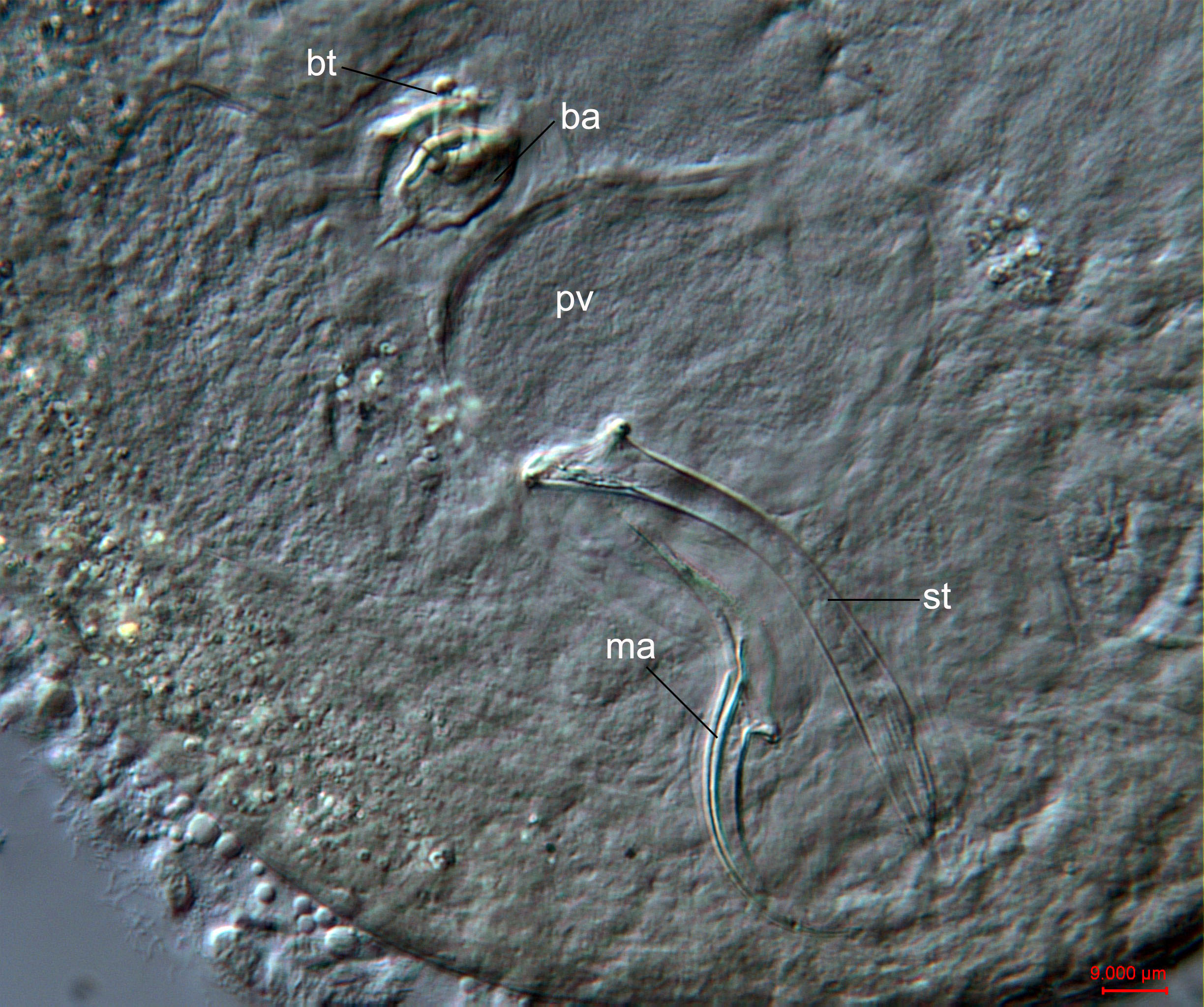
The taxonomic status of the genus Messoplana has been questioned based on molecular analyses, and in databases such as WORMS, the genus has been synonymized with Ceratopera. However, I had the opportunity to check both molecular and material of the type species, M. falcata, collected in the North Sea. Such, consider that the genus Messoplana is valid, and also supported by the morphology of Messoplana sp.1 here described. The general habitus and morphology of the male atrial organs are almost identical in the three species now recognized within the genus: M. falcata, M. roscoffensis, and Messoplana sp.1. However, the bursal appendage exhibits sufficient variability to allow species differentiation. The bursal appendage of Messoplana sp.1 (18 µm long) is the smallest between species of Messoplana (M. falcata: ~26 µm in Sylt specimens, ~32 µm in the Canary Islands, and ~36 µm in Faro; and M. roscoffensis: 30–32 µm). In addition, in the previously known species the distal tubes of the bursal appendage measure more than the half of the total length of the appendage, whereas they are much smaller in Messoplana sp.1. Distinguishing, the distal rim of the tubes of the bursal appendage are thickened in Messoplana sp.1, a characteristic not found in the other species of the genus.
Discovery registered on
01/04/2026
Description of Material
The stylet measures 69–86 µm in length (x¯ = 75 µm; n = 4), accompanied by a mantle 75–90 µm long (x¯ = 84 µm; n = 4). The bursal appendage is 14–21 µm long (x¯ = 18 µm; n = 4) and shows a middle ring and spine. The distal tubes show thickened rims and measure 7–10 µm long (x¯ = 9 µm; n = 4).
Ecology
Fine-grained, silty sand, 0.5 m deep, salinity 35 ‰.
Distribution
United States of America, Florida, Fort Pierce, Old Ford Park, 27.437535; -80.319533.
Scientific Name Authorship
Diez, Yander L.
Specimens
Primary Voucher
S_1889
Phylum
Platyhelminthes
Family
Trigonostomidae
Additional Material
No Image yet…
S_1889a
Phylum
Platyhelminthes
Family
Trigonostomidae
Additional Material
No Image yet…
S_1889b
Phylum
Platyhelminthes
Family
Trigonostomidae
Additional Material
No Image yet…
S_1889c
Phylum
Platyhelminthes
Family
Trigonostomidae
Join the census
The Ocean Census Alliance unites national and philanthropic marine institutes, museums, and universities, backed by governments, philanthropy, business and civil society partners.


