


















Species ID
OC-SP-0002527
Discovered
Phylum
Cnidaria
Species ID
OC-SP-0002527
Provisional Species Name
Thouarella sp_NIWA66313
Lowest Valid Taxon Name in WoRMS
Thouarella
Lowest Known Rank
Genus
Status
Discovered
Does the taxonomist(s) intend to work on this material further?
4. I/We are not going to publish.
Embargo
No
Kingdom
Animalia
Phylum
Cnidaria
Class
Octocorallia
Order
Scleralcyonacea
Family
Primnoidae
Genus
Thouarella
Taxonomic Remarks
Small keel on marginal scales places this species within Thouarella. However the modest state of the marginal keel means this species could easily be mistaken for Plumarella; more so given its alternate pinnate branching. However, Plumarella from New Zealand (checklist in Cairns 2021) have paired polyps (Plumarella (Faxiella) delicatula (Thomson & Rennet, 1931), or polyps that are truly appressed (Plumarella (Dicholaphis) cordilla, Cairns 2016). Within the Thouarella there are a number of species with modestly pointed marginal scales – T. koellikeri, T. viridis, T. hicksoni, T. pendulina, T. crenelata, T. pseudochilensis. All of these species differ in that they lack the tall opercular cone seen in T. nov. sp. 1.
Discovery registered on
30/03/2026
Description of Material
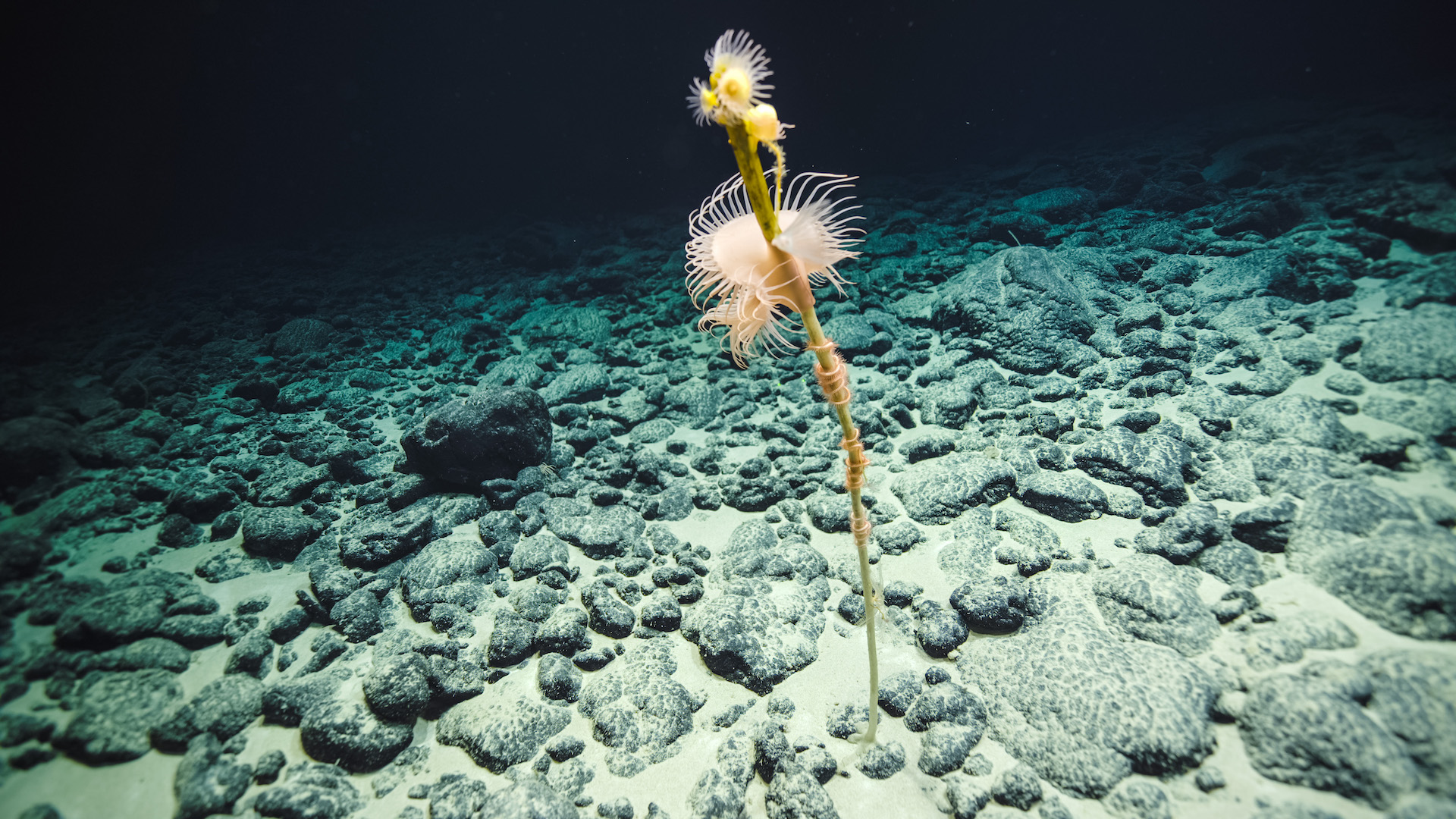
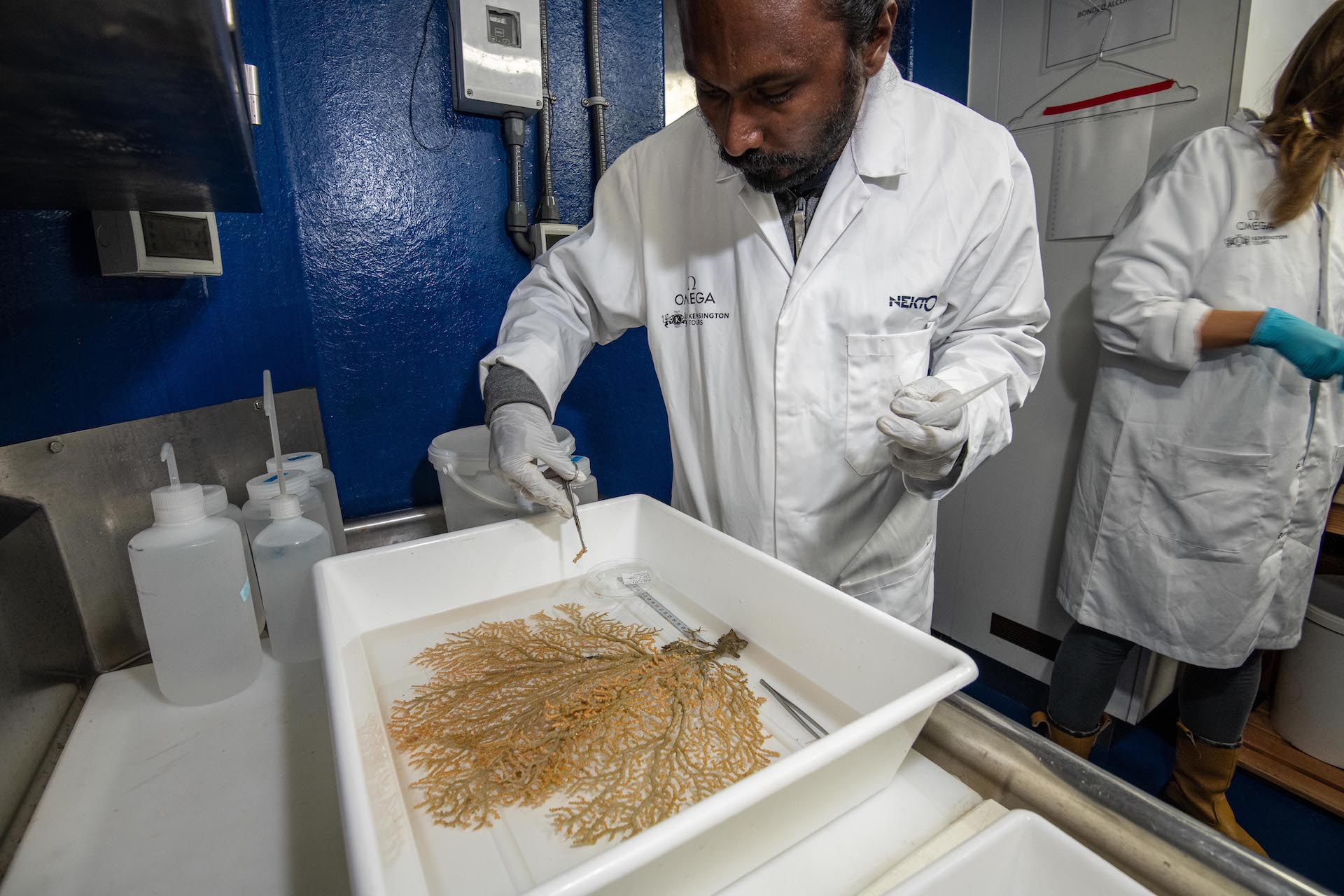
Simple bifurcate branched colony, 26 cm tall, axis a woody texture, overall light brown colouring. Holotype broken in four sections. Robust and inflexible main axis, mostly naked on two planes as branchlets mostly alternately pinnate, although bending of branchlets causes colony to look bottlebrush. Branchlets around 3-3.5cm long, rarely bifurcate, flexible with either relatively sparse polyp placement (~10 / cm), or dense placement (~20/cm). Polyps upward facing at a 40 angle, nearly appressed, isolated, ~1.1mm tall, slightly distally flared, with 5 abaxial longitudinal scales, 3 adaxially (due to polyp appressed) and a tall incomplete opercular. Opercular scales tall, thin lanceolate-shaped scales with multi-keel. Marginal scales non-spinose, with modest distal point, small keel on abaxial marginal scales and sometimes adjacent lateral marginal scales.
Join the census
The Ocean Census Alliance unites national and philanthropic marine institutes, museums, and universities, backed by governments, philanthropy, business and civil society partners.


