










Species ID
OC-SP-0002526
Discovered
Phylum
Cnidaria
Species ID
OC-SP-0002526
Provisional Species Name
Primnoeides gianni nov. sp.
Lowest Valid Taxon Name in WoRMS
Primnoeides
Lowest Known Rank
Genus
Status
Discovered
Does the taxonomist(s) intend to work on this material further?
1. I/We would like support to publish my marine invertebrate species with SOSA - please click the button for more details.
Embargo
No
Kingdom
Animalia
Phylum
Cnidaria
Class
Octocorallia
Order
Scleralcyonacea
Family
Primnoidae
Genus
Primnoeides
Taxonomic Remarks
The distinct bottlebrush morphology of this species often leads to such specimens being misclassified as Thouarella. This species lacks a keel on the inner surface of marginals making it distinct from Thouarella. Plumarella also lacks marginal keels however species within this genera have marginal scales that do not fold over the operculum. Primnoella has compressed polyps, often with a naked adaxial side (Bayer, 1996), whereas polyps of Primnoeides are clavate and rounded, angled away from the branchlet, allowing for scales on all polyp sides. Convexella also has polyps in whorls as do most species of Primnoeides however these polyps are trumpeted rather than clavate and have elongated marginal scales. Polyps of some Metafannyella species could be easily mistaken for Primnoeides as their polyps are often in whorls (albeit mostly irregular), however, Metafannyella have weakly ascus scales, differing from those small, smooth circular sclerites found in Primnoeides. Within the genus Primnoeides this novel species, P. gianni nov. sp., differs by being the only species with solitary polyps. It has differentiated opercular scales that are pointed, similar to those of P. brochi; other species either have undifferentiated opercular i.e. round (P. sertularoides), or digitate (P. kuekenthali), or tongue-shaped like P. flagellum.
Discovery registered on
30/03/2026
Description of Material
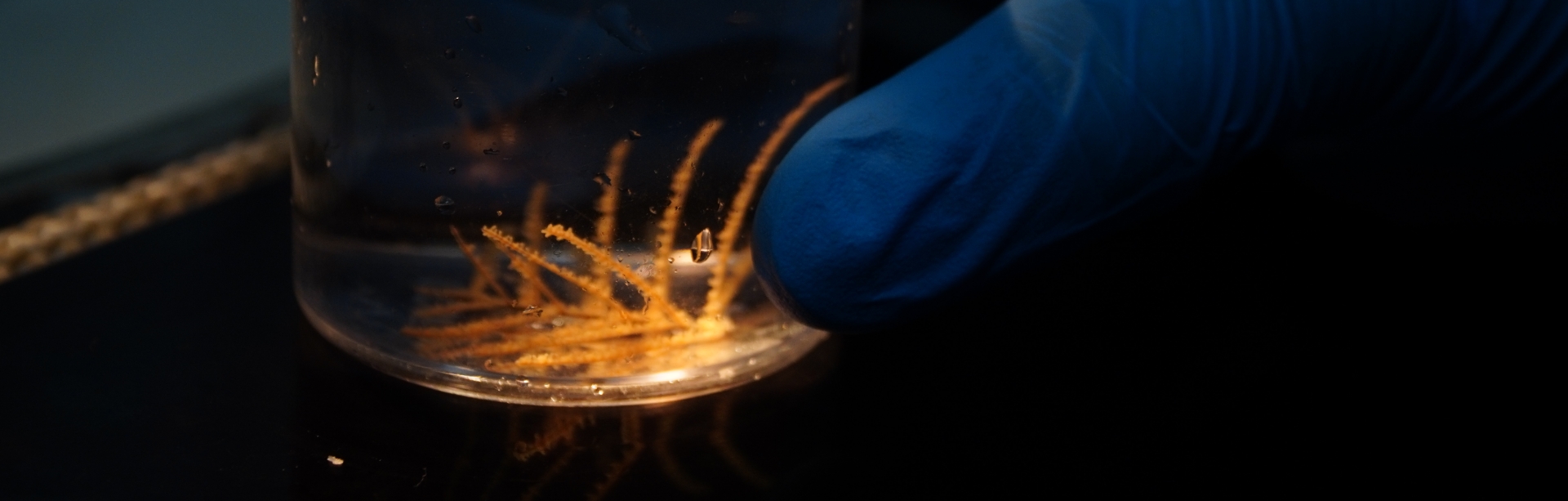
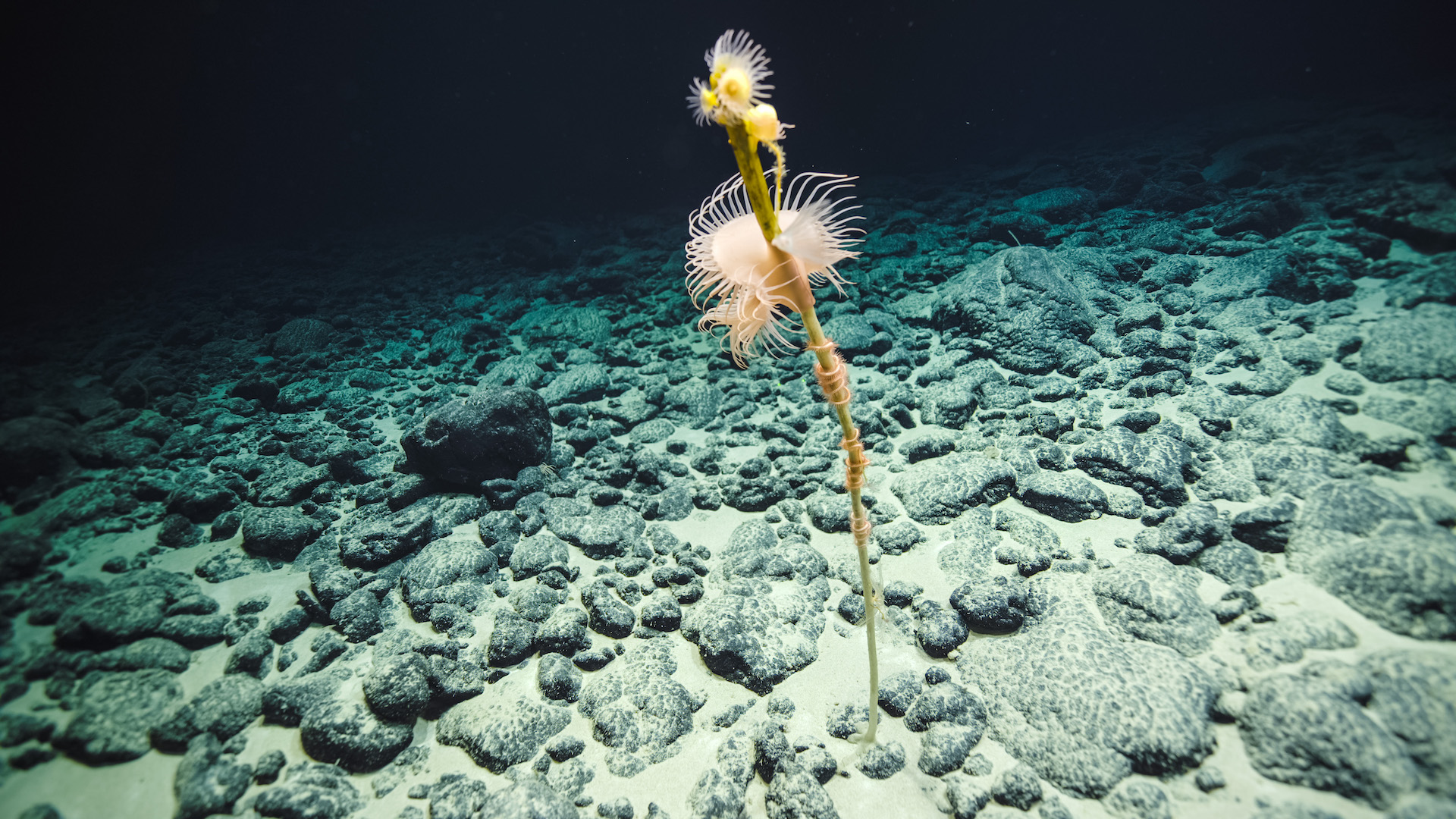
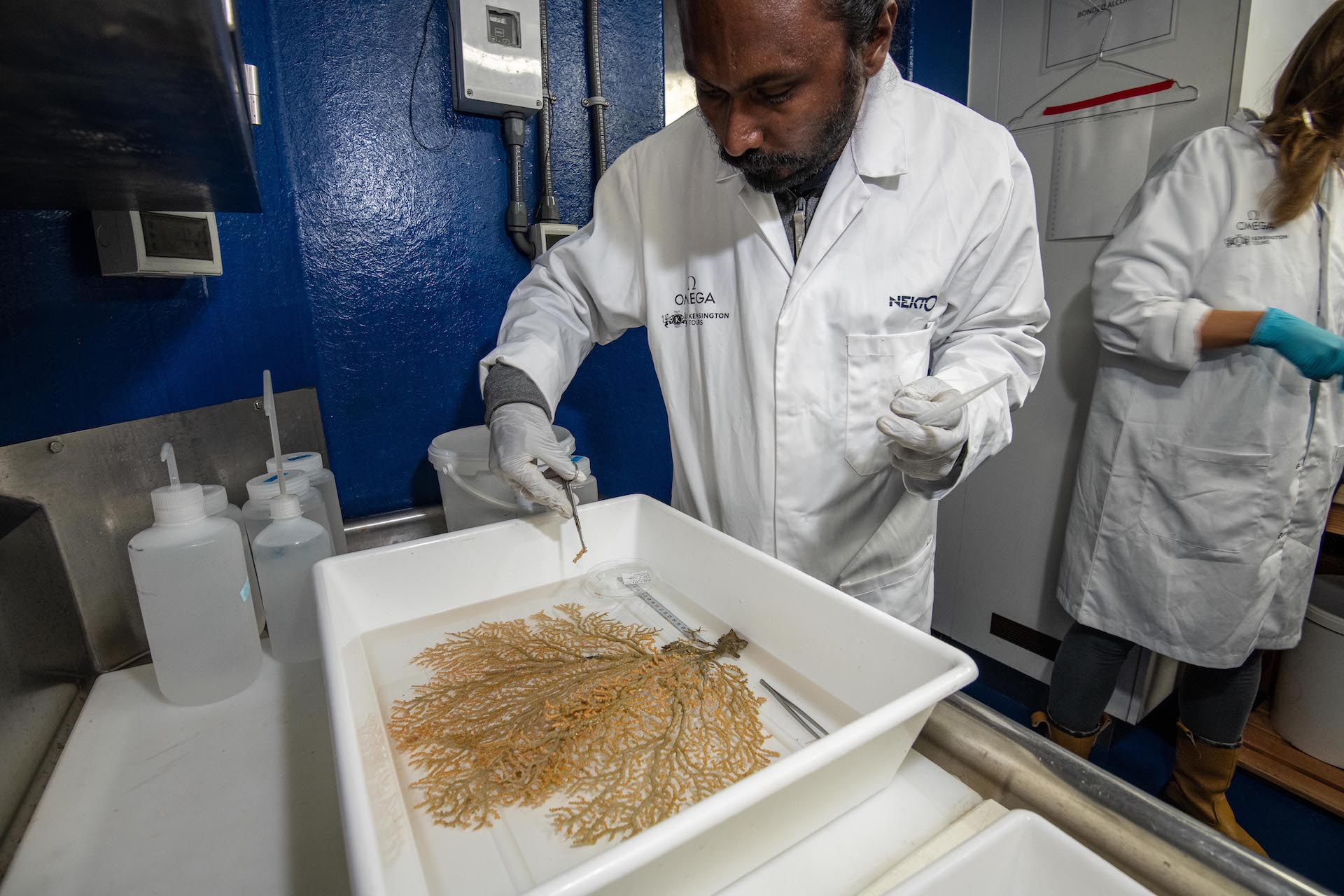
Bottlebrush colony, sometimes with rare main branching. Branches have simple branchlets leaving axis in all directions. ~5 polyps / cm, placed on one side of branchlet in a line
Distribution
Argentine Basin to South Georgia, sub-Antarctic.
Join the census
The Ocean Census Alliance unites national and philanthropic marine institutes, museums, and universities, backed by governments, philanthropy, business and civil society partners.


