












Diseño sin título - 1
Species ID
OC-SP-0002176
Discovered
Phylum
Cnidaria
Species ID
OC-SP-0002176
Provisional Species Name
Scolanthus sp_OCCNI07
Lowest Valid Taxon Name in WoRMS
Scolanthus
Lowest Known Rank
Genus
Status
Discovered
Does the taxonomist(s) intend to work on this material further?
2. I/We already have plans to publish. (For marine invertebrates please know that SOSA could support you in this too - please click the button for more details).
Kingdom
Animalia
Phylum
Cnidaria
Class
Hexacorallia
Order
Actiniaria
Family
Edwardsiidae
Genus
Scolanthus
Date Identified
19/01/2026
Taxonomic Remarks
The genus Scolanthus currently comprises 13 species recognized as valid. These species differ primarily in characters of the column and the periderm covering it, in the size and distribution of nematibomes, in the arrangement of the mesenteries and their associated musculature, as well as in their cnidom and their geographic and bathymetric distribution. Scolanthus sp. differs from the other species of the genus in the following characters: S. intermedius, S. curacaoensis, S. triangulus, S. isei, and S. shrimp have a column with a striated periderm, bearing well-marked longitudinal grooves corresponding to the mesenterial insertions; in contrast, Scolanthus sp. has a thin and delicate periderm in which neither mesenterial insertions nor nematibomes are distinguishable. Additionally, S. shrimp has very conspicuous nematibomes, visible to the naked eye, whereas S. isei has trichome-like structures. Although, due to its state of preservation, the exact number of tentacles in Scolanthus sp. could not be clearly determined, it likely comprises a total of 16, inferred from the number of mesenterial pairs present, as occurs in most species of the genus. Nevertheless, exceptions exist, such as S. ena and S. isei, which both have 20 tentacles that are semitransparent with white and brownish spots. Furthermore, species such as S. kopepe and S. armatus have capitate tentacles, whereas the remaining species of Scolanthus have tentacles with pointed tips. Scolanthus sp. is among the species that possess microbasic p-mastigophores in their cnidom, whereas species such as S. triangulus, S. crypticus, S. callimorphus, S. mediterraneus, and S. shrimp possess only spirocysts and basitrichs. S. triangulus and S. crypticus are distinguished by having relatively weak retractor muscles, with few processes and limited branching, as well as small, trianguloid parietal muscles. Daly and Ljubenkov (2008) mention that S. callimorphus is similar to S. triangulus, although with even more reduced musculature. Among the previously known species of Scolanthus, S. intermedius is the only one distributed in the South Atlantic and associated with subantarctic waters. Scolanthus intermedius differs from Scolanthus sp. in its bathymetric distribution: it has been recorded at shallow depths (i.e., between 6 and 30 m) and also between 100 and 300 m, whereas Scolanthus sp. occurs between 600 and 1031 m depth. Morphologically, S. intermedius has longitudinal grooves on the column, which are absent in Scolanthus sp. In addition, S. intermedius has diffuse retractor muscles and triangular parietal muscles, whereas in Scolanthus sp. the retractors are restricted and the parietals ovoid, in contrast to S. intermedius.
Received All Minimal Data for Discovery
20/02/2026
Description of Material
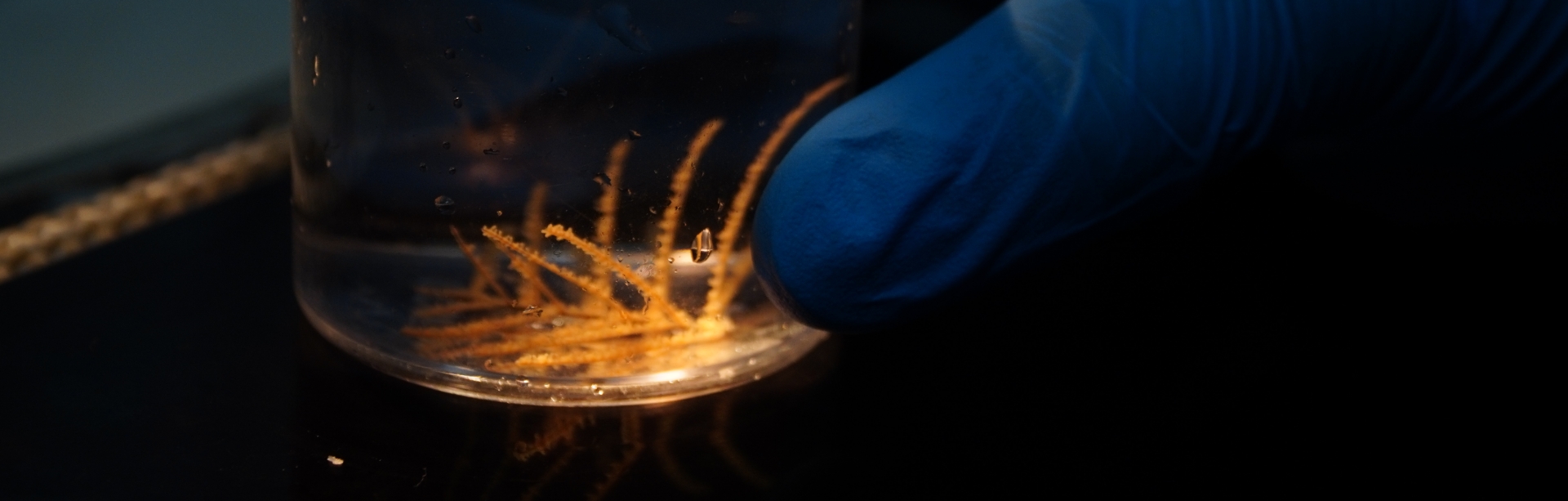
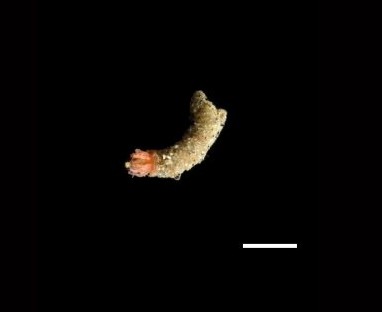
Small specimen. Proximal end rounded, not differentiated into a true physa. Column cylindrical, divisible into scapus and scapulus; in preserved material reaching up to 16 mm in length and 4 mm in diameter. Scapus covered by a thin periderm, granular in appearance with adhered sediment particles, extending over the scapus and the aboral region; in preserved material the periderm is partially lost. Nematibomes scattered, embedded in the mesoglea near the proximal end, not visible to the naked eye. Tentacles 8–16 in number, arranged in two cycles; all of equal length and not retractile into the column. Mesenteries arranged in eight well-developed macrocnemes extending along the entire length of the column; one pair of ventral directive mesenteries and one pair of dorsal directives are present. No differentiated siphonoglyphs observed. The remaining macrocnemes are arranged two on each side, with the retractor muscles oriented toward the ventral directives. Retractor musculature longitudinal, strong and restricted, with 15–20 processes varying in branching; one end divides into a tuft-like structure. Parietal musculature well developed and symmetrical on both sides of the mesentery, oval in shape. No development of microcnemes observed. Trilobate mesenterial filaments present in the gastrovascular cavity. No reproductive structures found. Column with thick mesoglea (139–396 µm) relative to the epidermis (24–39 µm) and gastrodermis (75–104 µm). Nematibomes containing basitrichs up to 115 µm in diameter, located in the mesoglea but always protruding toward the epidermis. Cnidom: spirocysts, basitrichs, p-mastigophores.
Distribution
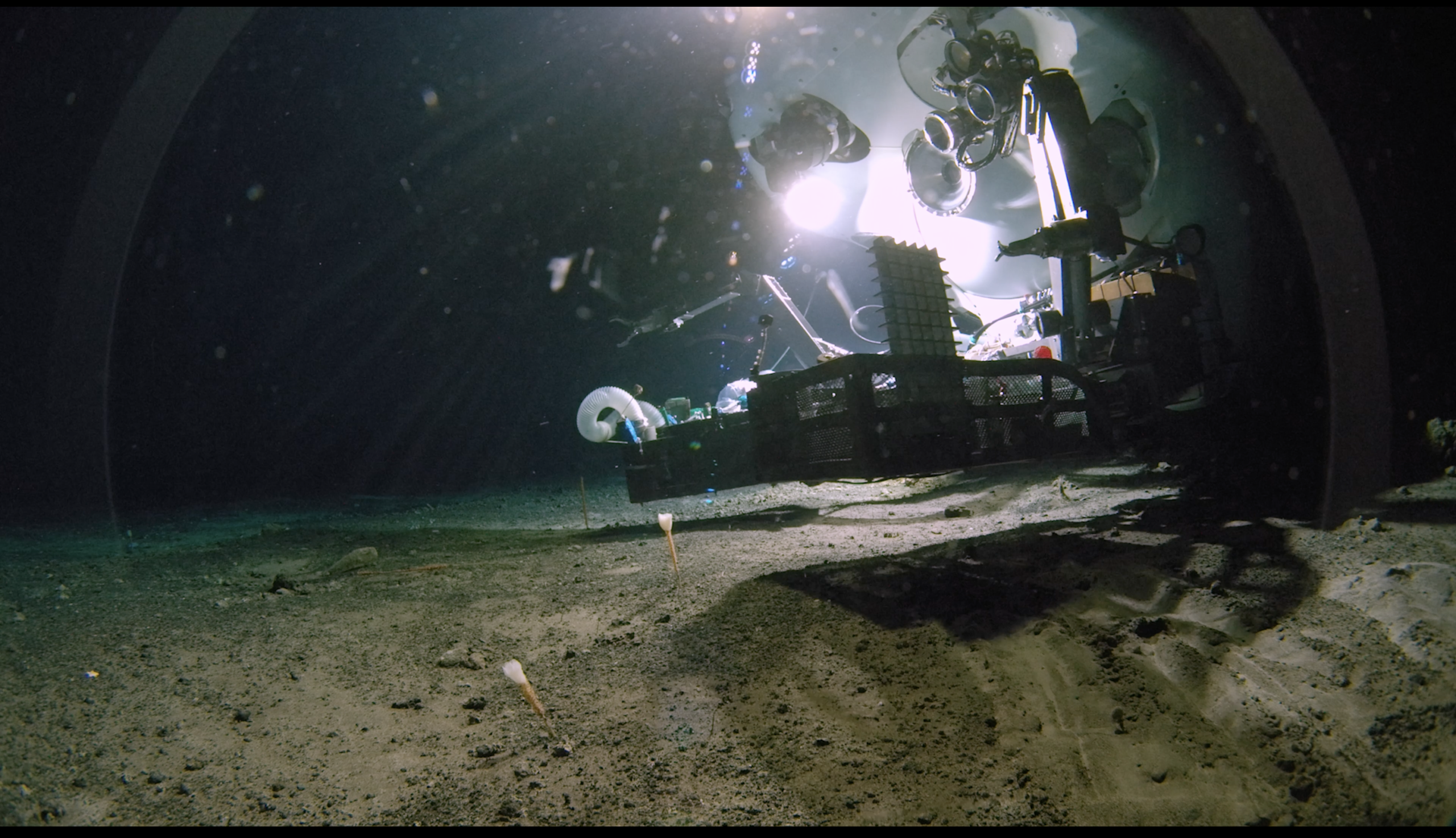
This species occurs within the Namuncurá–Burdwood Bank Marine Protected Area, between 600 and 1031 m depth, in Argentine waters of the South Atlantic.
Scientific Name Authorship
Camila Vasquez Sasali, Ricardo González Muñoz, Fabián H. Acuña & Agustín Garese
Diseño sin título - 1
Join the census
The Ocean Census Alliance unites national and philanthropic marine institutes, museums, and universities, backed by governments, philanthropy, business and civil society partners.


