






















Species ID
OC-SP-0002175
Discovered
Phylum
Cnidaria
Species ID
OC-SP-0002175
Provisional Species Name
Harenactis sp_OCCNI31
Lowest Valid Taxon Name in WoRMS
Harenactis
Lowest Known Rank
Genus
Status
Discovered
Does the taxonomist(s) intend to work on this material further?
2. I/We already have plans to publish. (For marine invertebrates please know that SOSA could support you in this too - please click the button for more details).
Kingdom
Animalia
Phylum
Cnidaria
Class
Hexacorallia
Order
Actiniaria
Family
Harenactidae
Genus
Harenactis
Date Identified
01/02/2026
Taxonomic Remarks
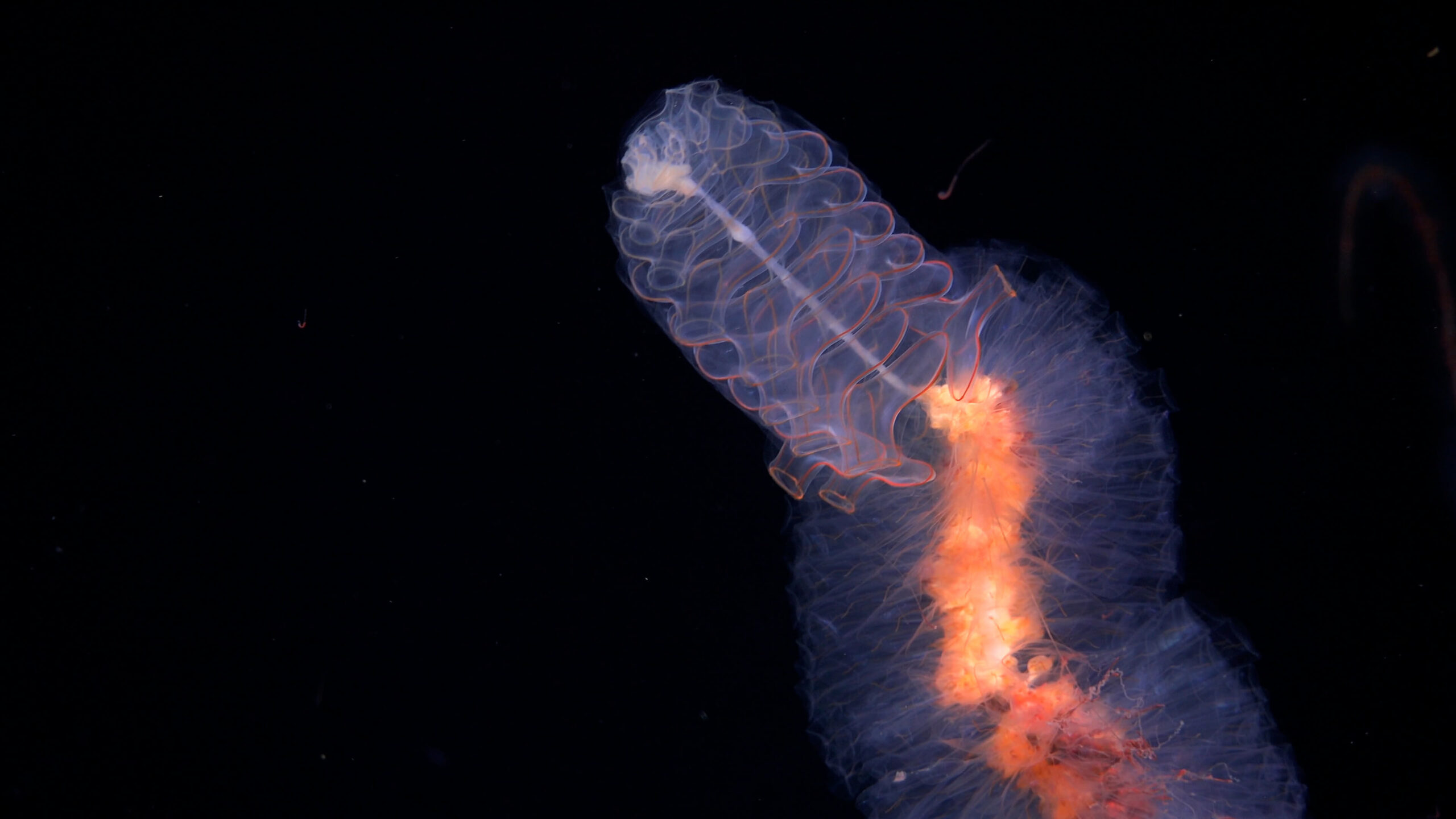
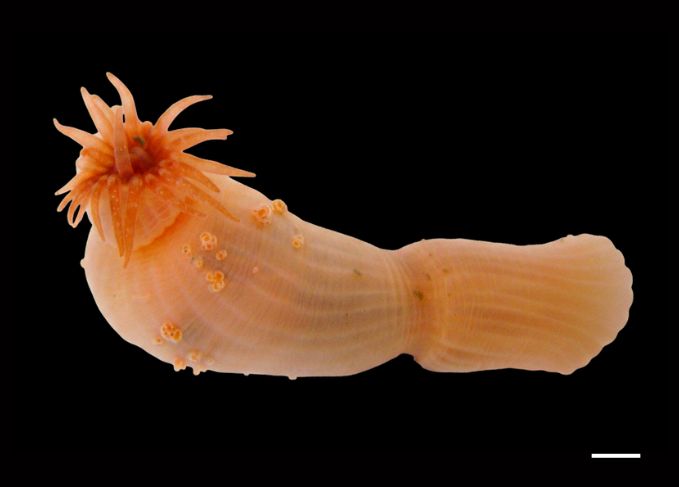
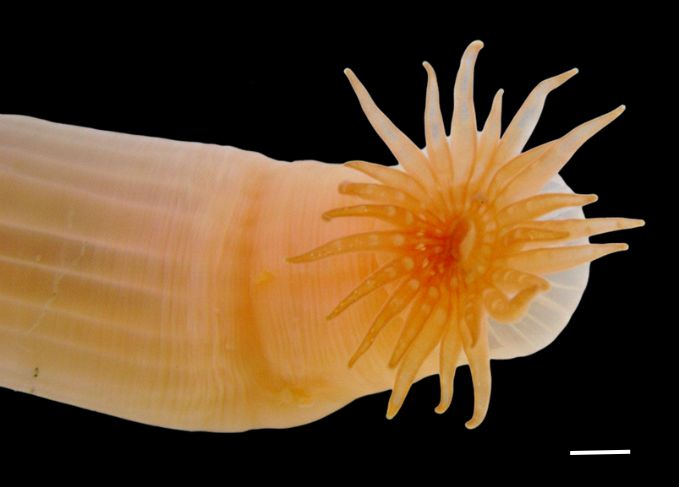
Currently, the genus Harenactis includes two valid species: H. argentina and H. attenuata. Harenactis sp. differs from the other species in the following characteristics: Harenactis sp. has pale orange tentacles, with some whitish, dot-like spots on their oral surface, arranged in regular rows from the base to almost the tips. This contrasts with H. attenuata, in which the tentacles are pale green with three or four whitish or grayish bands and a longitudinal line of fine dots on each side, and with H. argentina, in which the tentacles are brown with two small white V-shaped marks on the aboral side of the base. In addition, the tentacles of the outermost cycle in H. argentina exhibit a basal white area, also V-shaped. Harenactis sp. is similar in size to H. attenuata and is therefore three to four times larger than H. argentina. As in H. argentina, all mesenteries of Harenactis sp. are fertile, whereas in H. attenuata gametogenic tissue is only occasionally present in the second cycle. Regarding the cnidom, the three species of Harenactis are generally very similar, as is usual in the order Actiniaria. The only differences are that H. attenuata apparently lacks b-mastigophores in the filaments, unlike H. argentina and Harenactis sp., and that two size classes of basitrichs were observed in Harenactis sp., also in mesenteric filaments.
Received All Minimal Data for Discovery
20/02/2026
Description of Material
Proximal region rounded, physa-like slightly flattened, although not forming a well-developed pedal disc. Body elongate, vermiform; column with the distal end wider than the proximal end. Cinclides probably present in the upper part of the column (mesenteric filaments apparently extruded through cinclides in the upper first quarter of the column). Approximately 12 pairs of mesenteries (two cycles?), siphonoglyph apparently single. Twenty-four tentacles, short and conical; inner tentacles slightly shorter than the outer ones. Marginal sphincter absent. Tentacles and column pale orange, oral disc slightly darker; tentacles with light-colored dots from the base to almost the tips, arranged in regular rows. Mesenterial insertions visible on the column. Retractor muscles strong and restricted.
Ecology
Found buried in sand, solitary, in wide crevices on bottoms with fine sediment. Occurs in the lower intertidal to shallow subtidal zone.
Distribution
Braida Reef, San Julián Peninsula, lower intertidal zone.
Scientific Name Authorship
Agustín Garese, Ricardo González Muñoz, Camila Vasquez Sasali & Fabián H. Acuña
Join the census
The Ocean Census Alliance unites national and philanthropic marine institutes, museums, and universities, backed by governments, philanthropy, business and civil society partners.


