










News
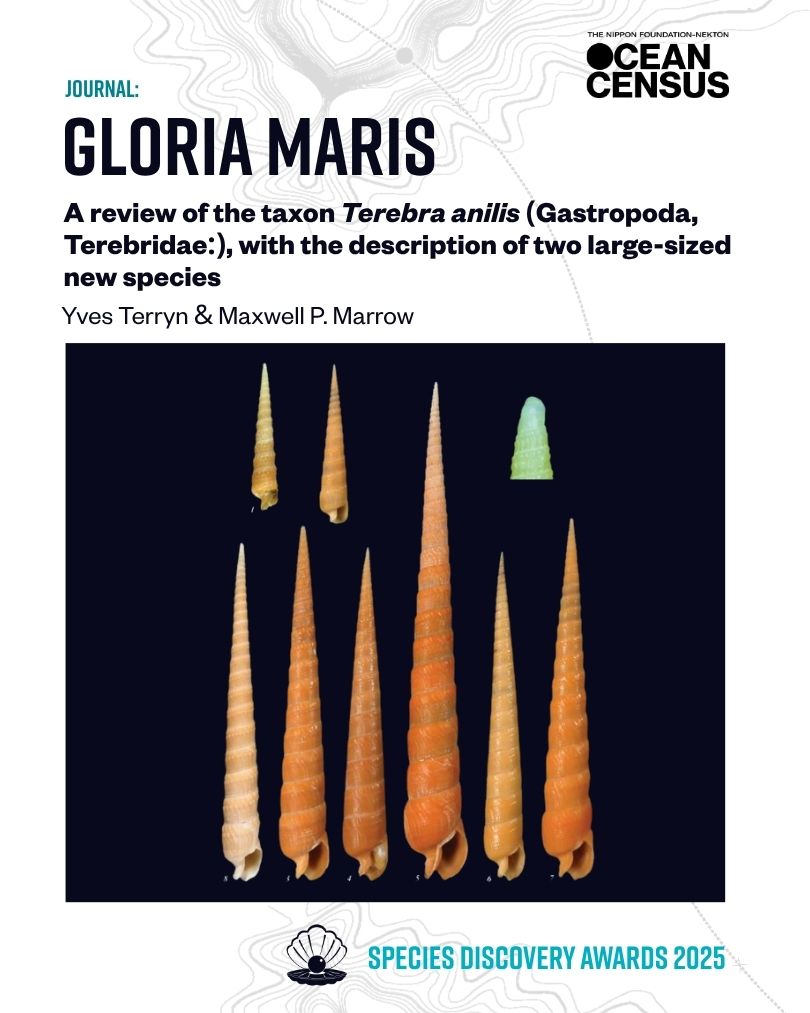
A review of the taxon Terebra anilis (Gastropoda, Terebridae:), with the description of two large-sized new species
A taxonomic reassessment of Terebra straminea clarifies species identities, validates two historical synonyms, describes two new large-bodied species, and supports the reinstatement of Terebra myuros as a distinct species, refining classification within the group.
04/04/26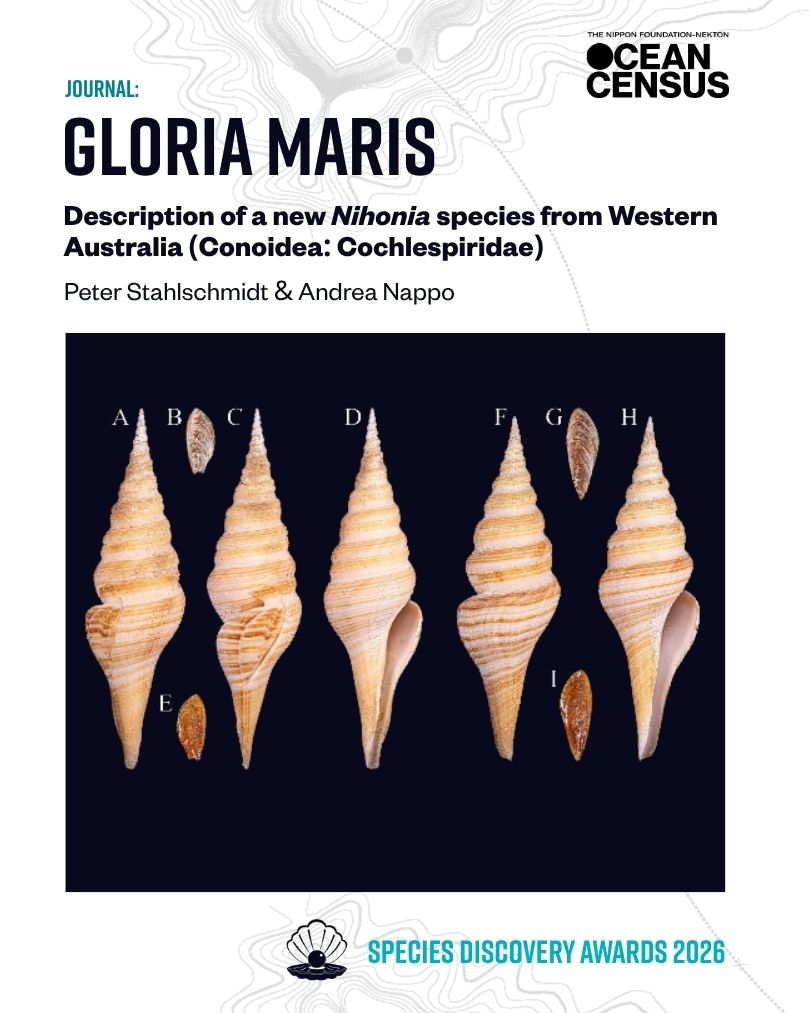
Description of a new Nihonia species from Western Australia (Conoidea: Cochlespiridae)
A new Nihonia species is described from Western Australia and compared with Nihonia maxima Sysoev, 1997, which was described from Indonesia.
04/04/26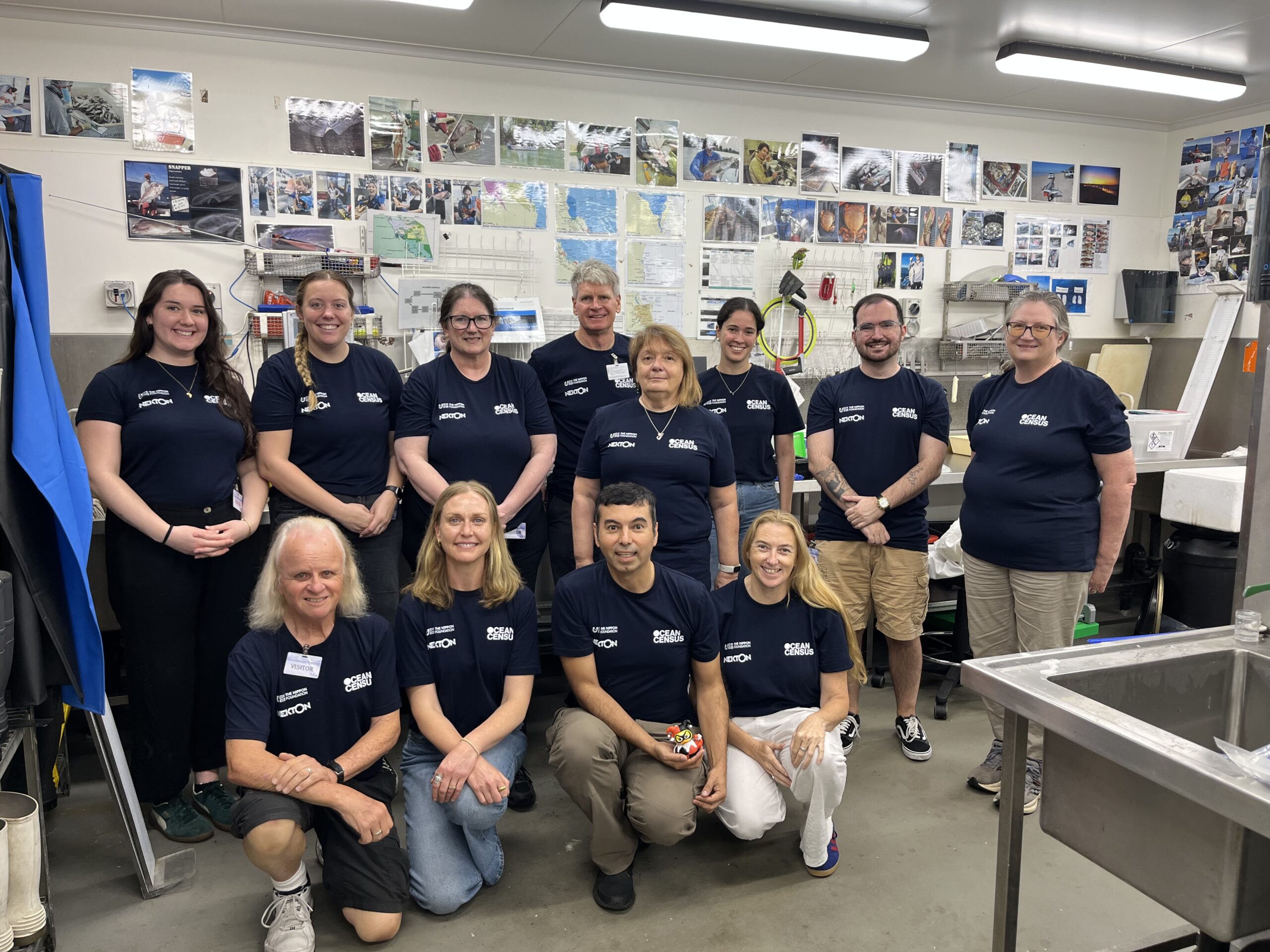
More than 110 new species from the Coral Sea Discovered
Marine taxonomists from CSIRO and the Ocean Census have identified more than 110 new fish and invertebrate species from the Coral Sea, with that number likely to exceed 200 as more cryptic species are identified.
01/04/26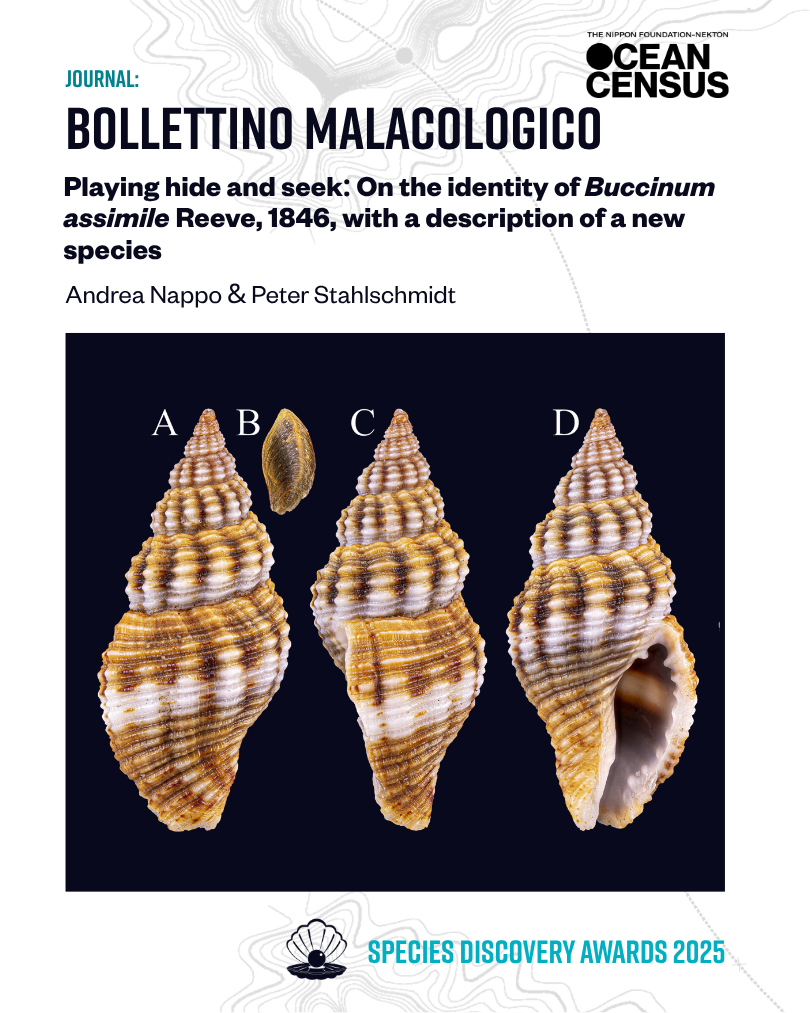
Playing hide and seek: On the identity of Buccinum assimile Reeve, 1846, with a description of a new species
Re-examination of the Buccinum assimile syntype revealed a long-standing misidentification, leading to the description of Aplus dissimilis sp. nov. and the synonymisation of B. assimile with Aplus scacchianus, clarifying species identities.
31/03/26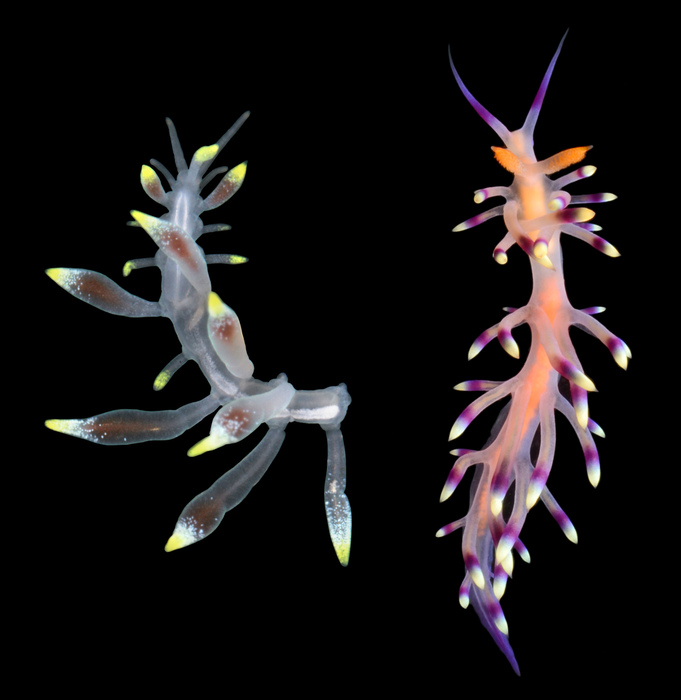
WoRMS announces Top 10 Marine Species of 2025
As for previous years, the World Register of Marine Species (WoRMS) has again released its annual list of the top-ten marine species described by researchers during the past year to coincide with World Taxonomist Appreciation Day on March 19th.
19/03/26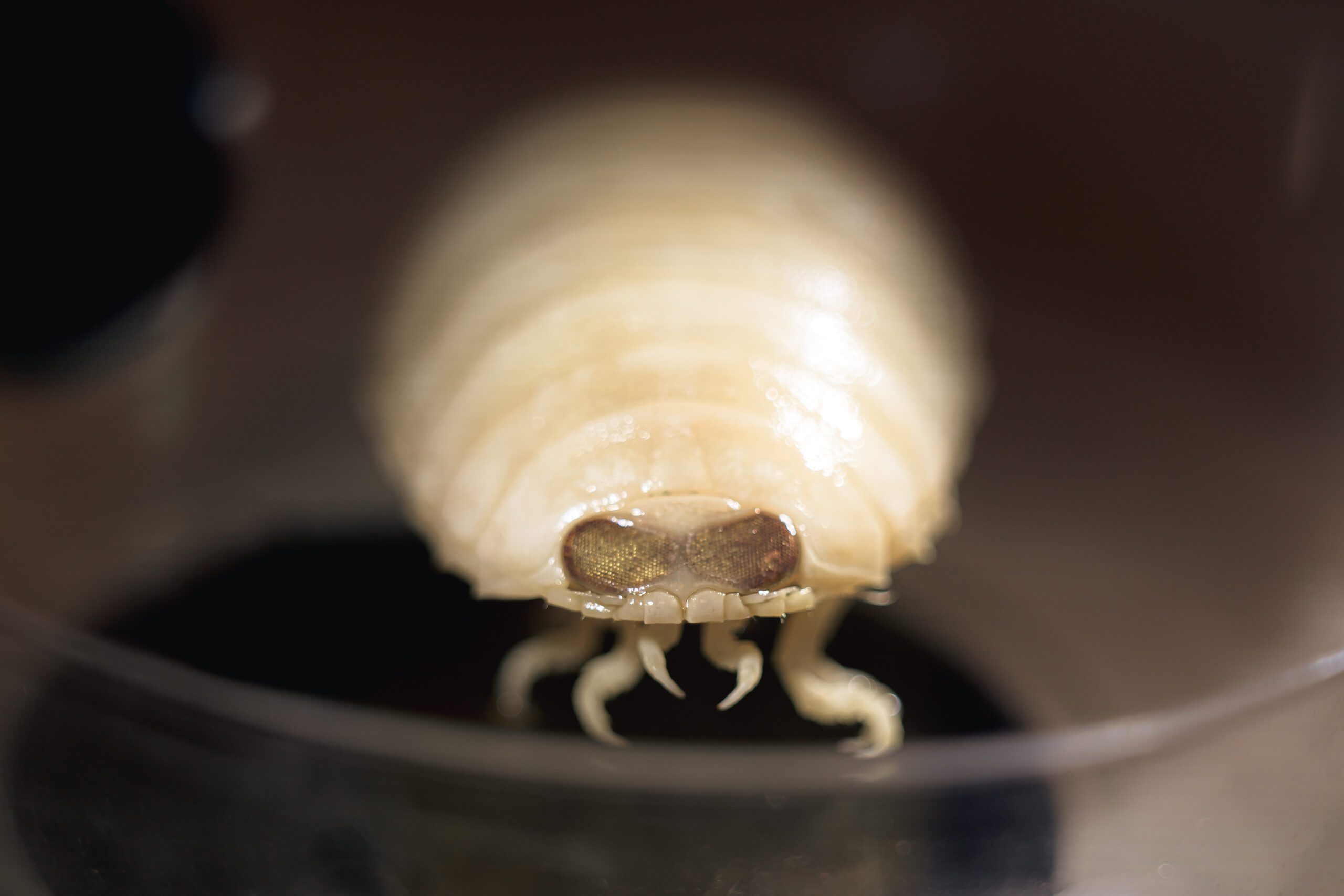
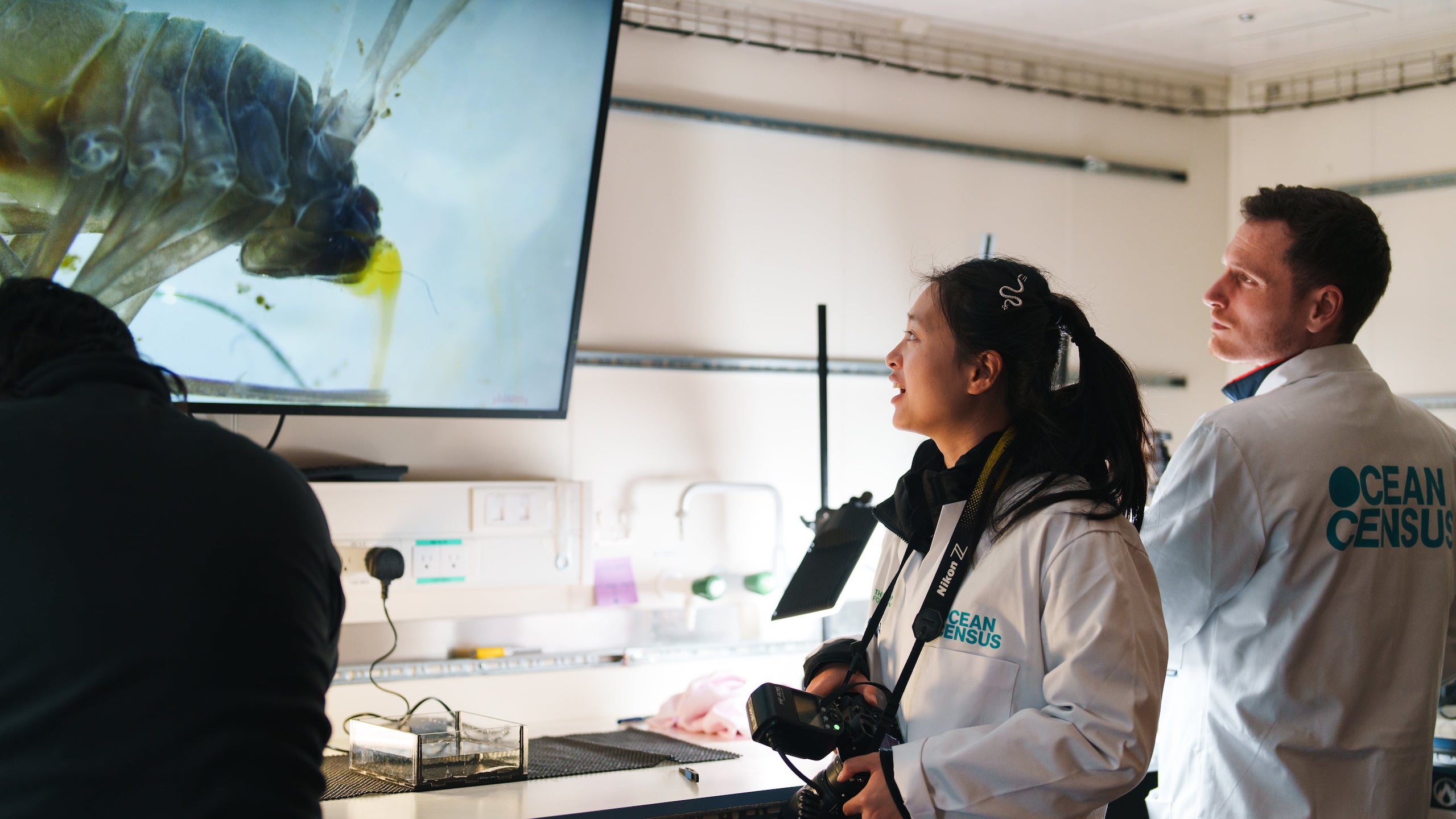
Streamlining species discovery: More than 100 new species of isopods discovered in just two weeks
Over two weeks, participants of the Isopod species discovery workshop worked through hundreds of specimens collected from expeditions ranging from Madagascar and New Zealand to the Arctic. The results were astonishing!
18/03/26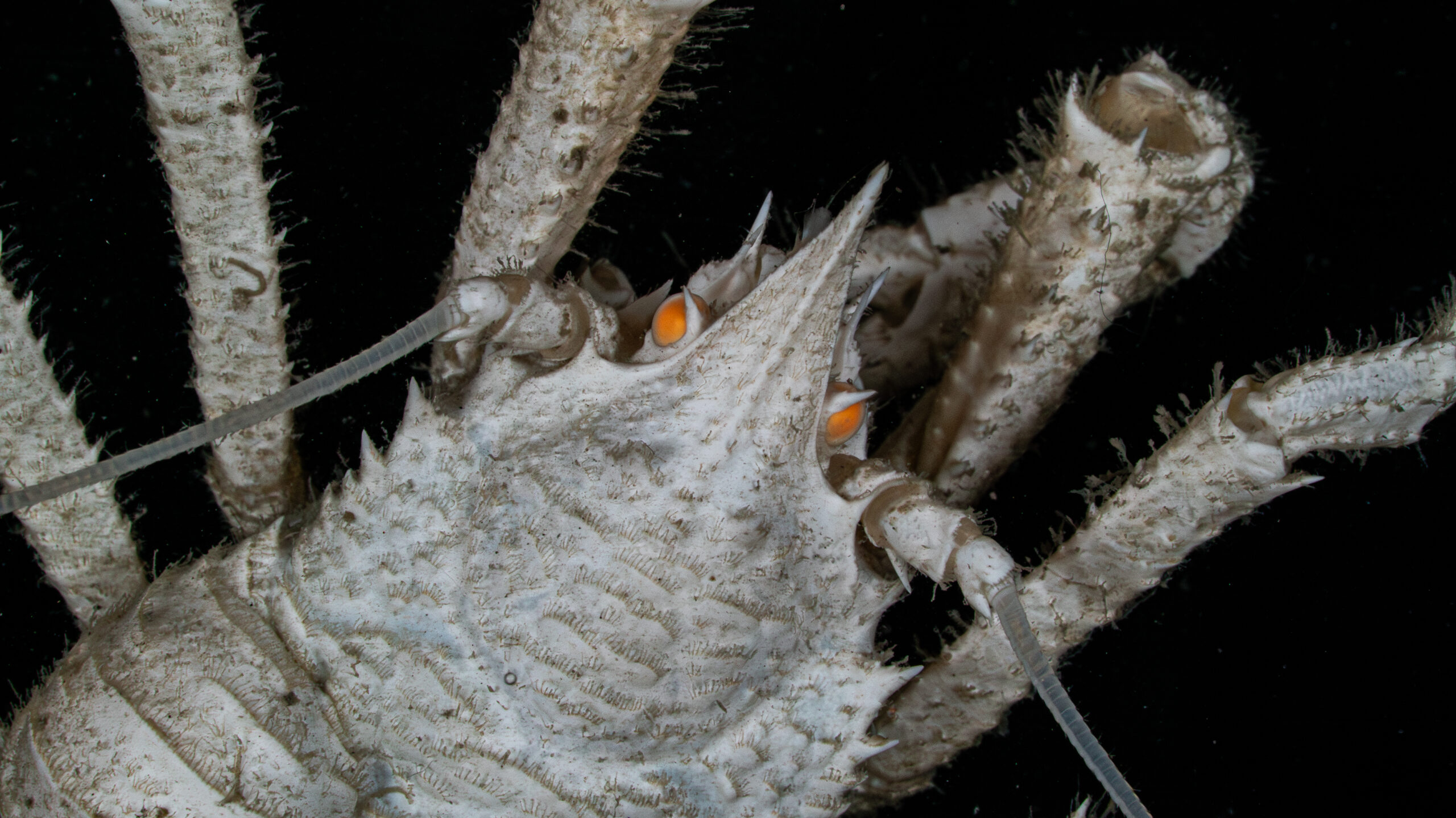
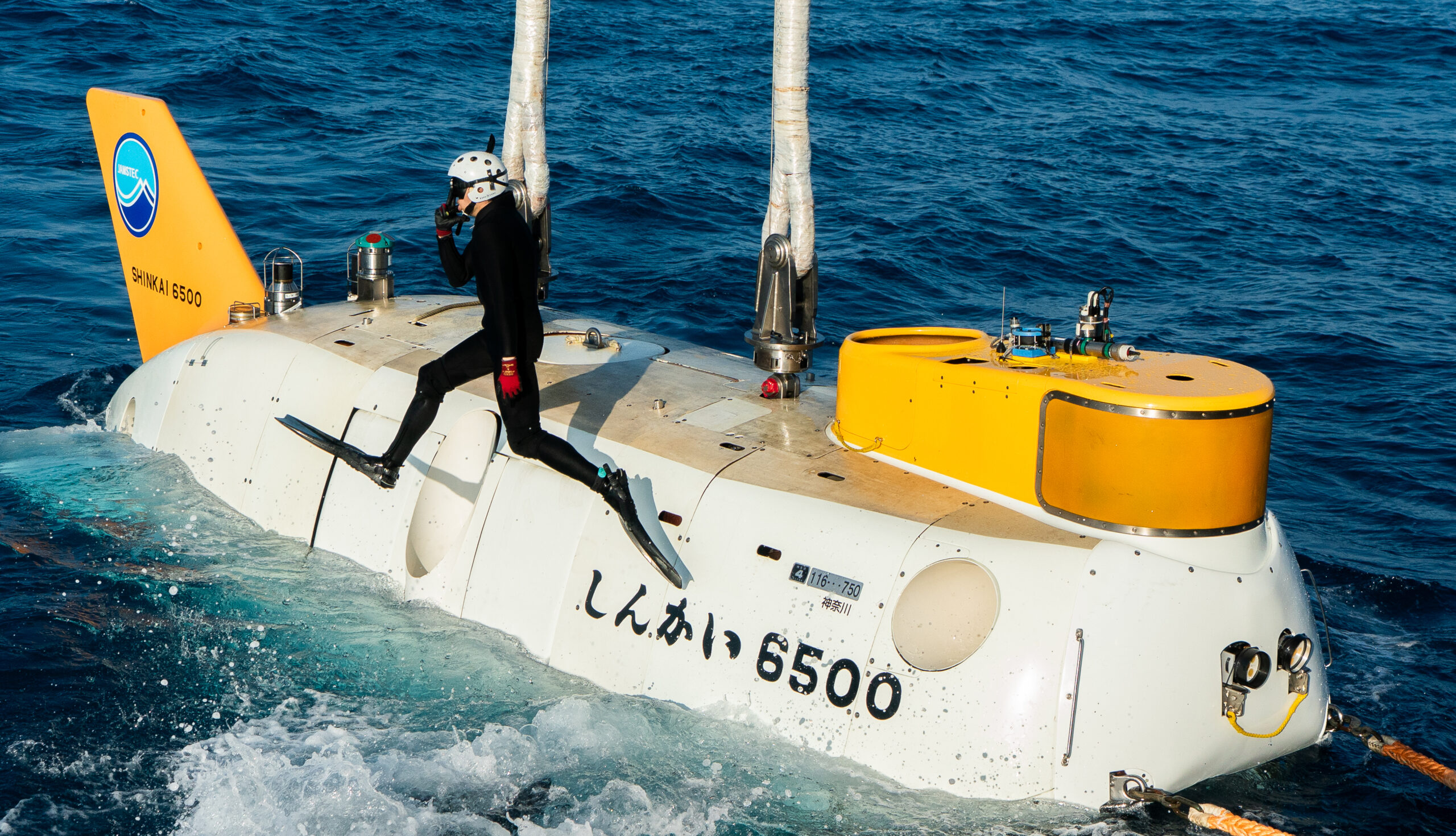
PRESS RELEASE: Japan’s Deep Ocean Reveals Dozens of New Species from Landmark 2025 Nippon Foundation–Nekton Ocean Census – JAMSTEC Expedition
Following the Ocean Census-JAMSTEC expedition, scientists have confirmed the discovery of 38 new species and identified 28 further potential new species across two of Japan’s most understudied deep-sea regions: the Nankai Trough and the Shichiyo Seamount Chain.
10/03/26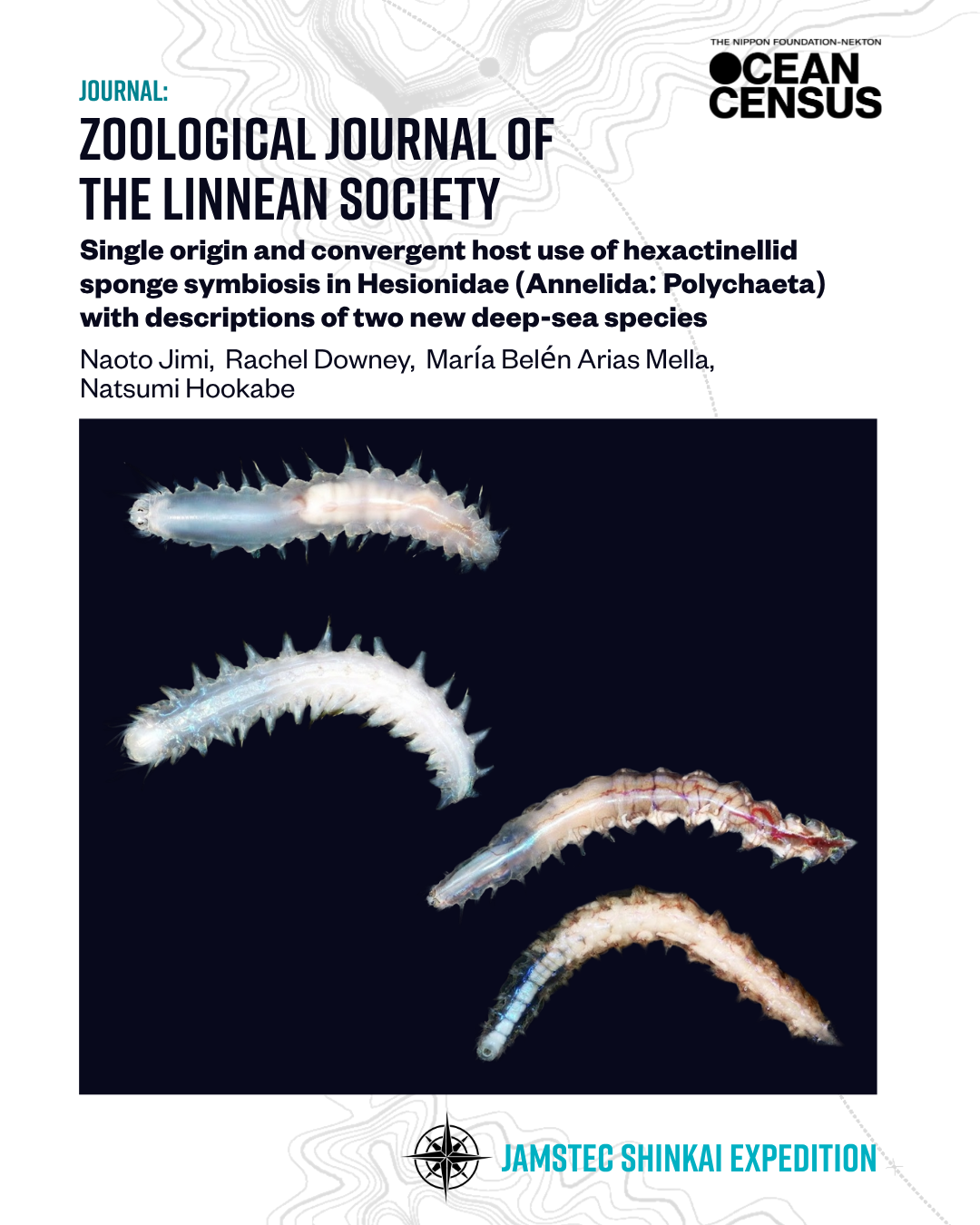
Single origin and convergent host use of hexactinellid sponge symbiosis in Hesionidae (Annelida: Polychaeta) with descriptions of two new deep-sea species
Researchers identified two new deep-sea hesionid species, Dalhousiella yabukii and Leocratides watanabeae, living symbiotically in the same hexactinellid sponge. Their findings reveal independent convergent adaptations to sponge hosts and provide new insights into the evolution and diversification of sponge symbiosis in Hesionidae.
09/03/26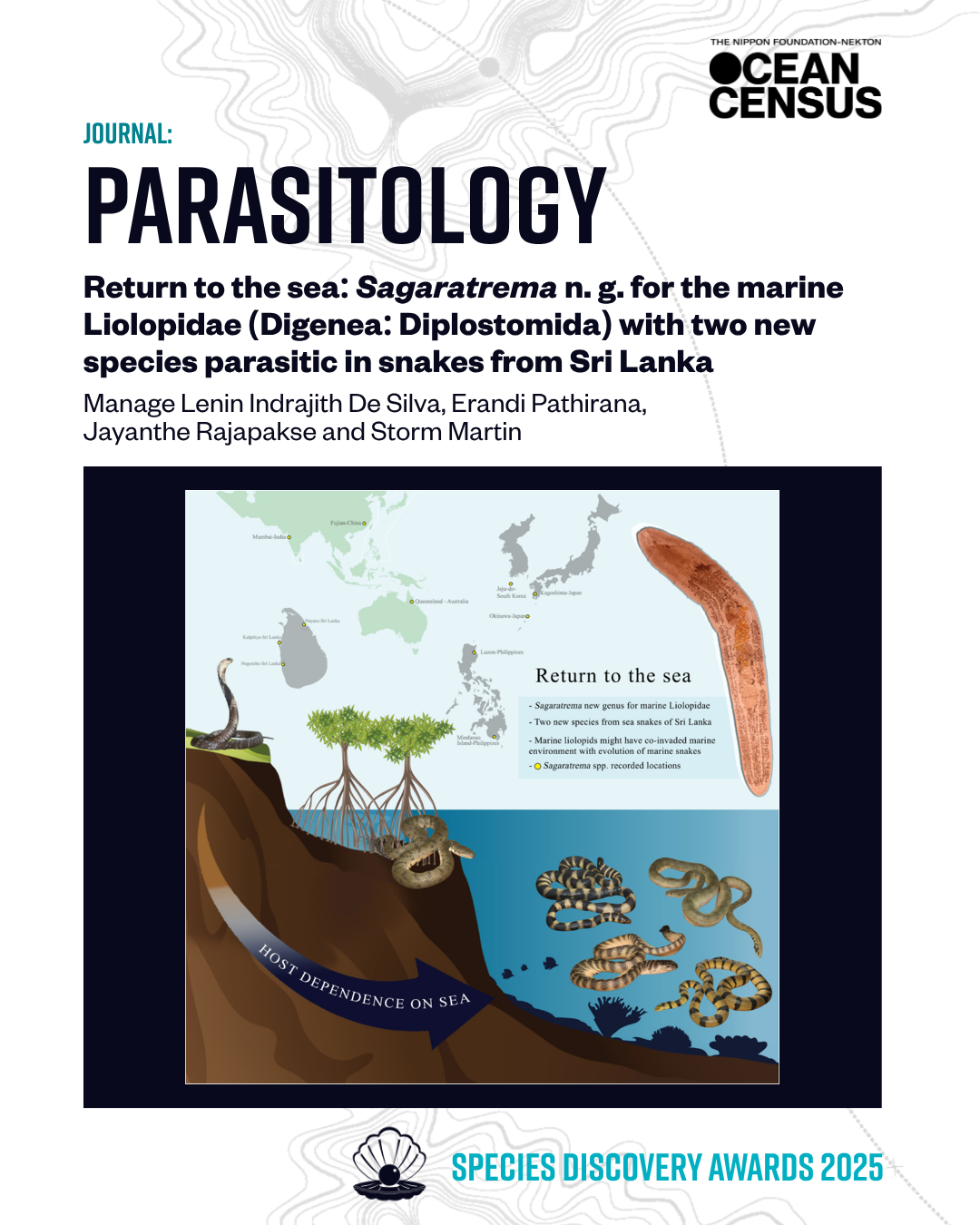
Return to the sea: Sagaratrema n. g. for the marine Liolopidae (Digenea: Diplostomida) with two new species parasitic in snakes from Sri Lanka
A new trematode genus, Sagaratrema, is proposed for liolopid parasites of marine snakes. Three new species from Sri Lanka are described alongside three reassigned species, while Harmotrema is revised. Genetic and morphological evidence supports their distinct evolutionary history and marine specialization.
04/03/26Expedition
Spotlight
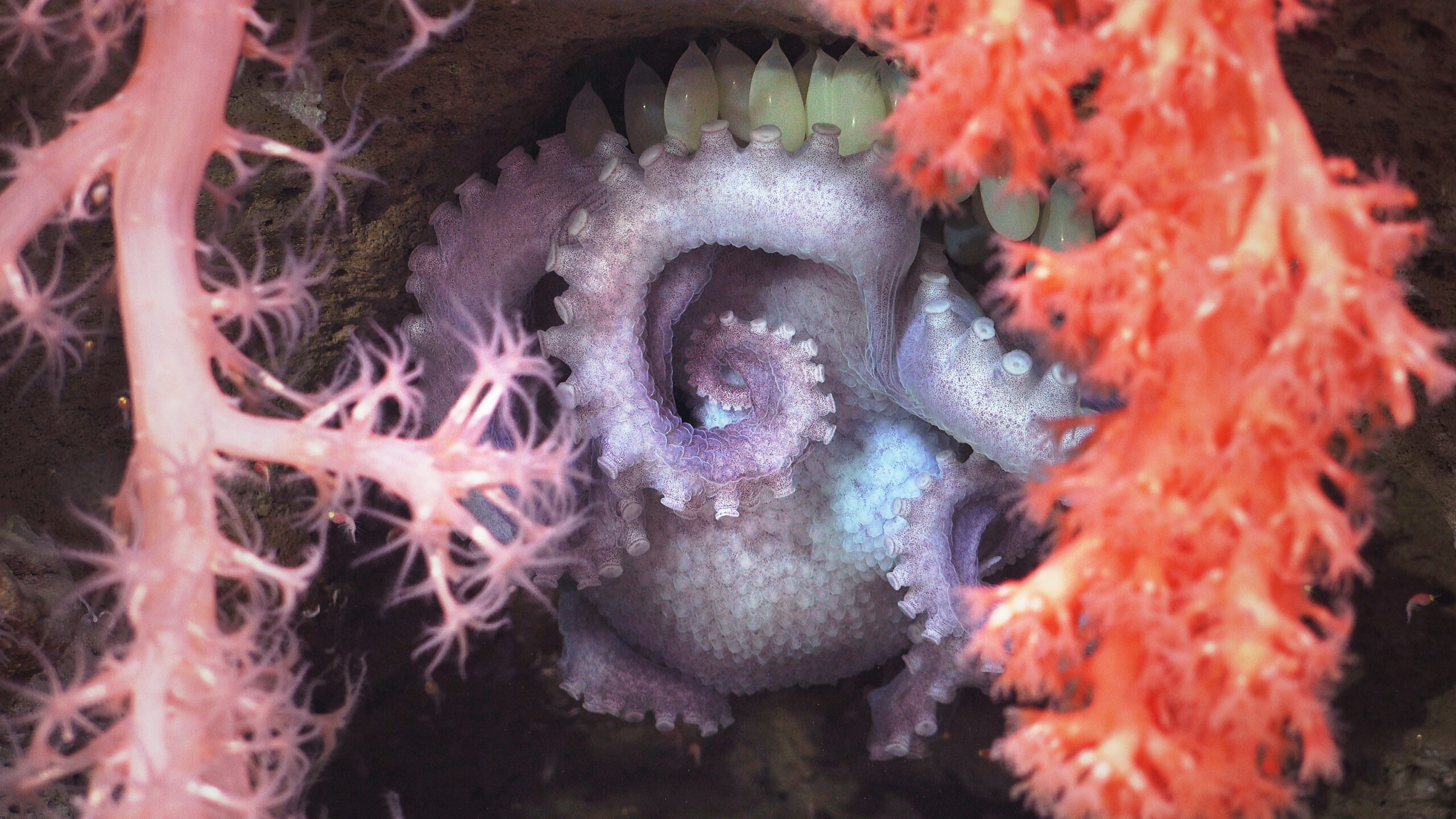
Mar Del Plata Canyon
23 July – 12 August 2025
2025 Ocean Census Expedition Awardee, Dr. Daniel Lauretta of Museo Argentino de Ciencias Naturales Bernardino Rivadavia, joined the Schmidt Ocean Institute as Chief Scientist on it’s Underwater Oases of the Mar Del Plata Canyon expedition.
Join the census
The Ocean Census Alliance unites national and philanthropic marine institutes, museums, and universities, backed by governments, philanthropy, business and civil society partners.


