












Publications
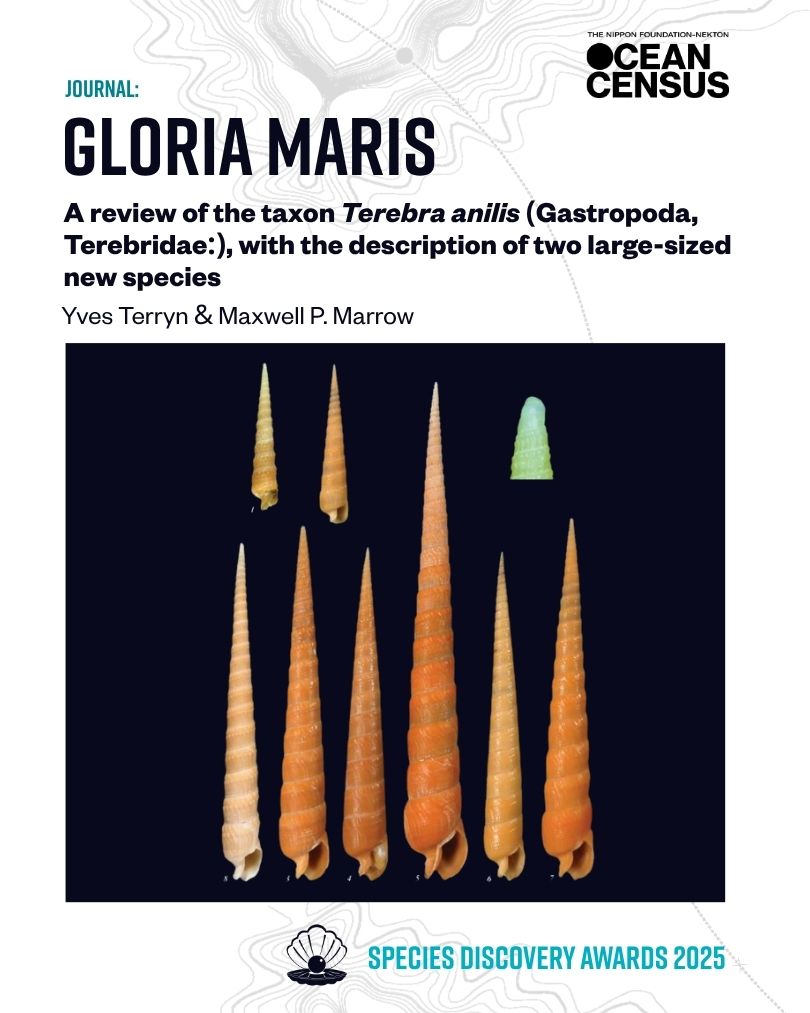
A review of the taxon Terebra anilis (Gastropoda, Terebridae:), with the description of two large-sized new species
A taxonomic reassessment of Terebra straminea clarifies species identities, validates two historical synonyms, describes two new large-bodied species, and supports the reinstatement of Terebra myuros as a distinct species, refining classification within the group.
04/04/26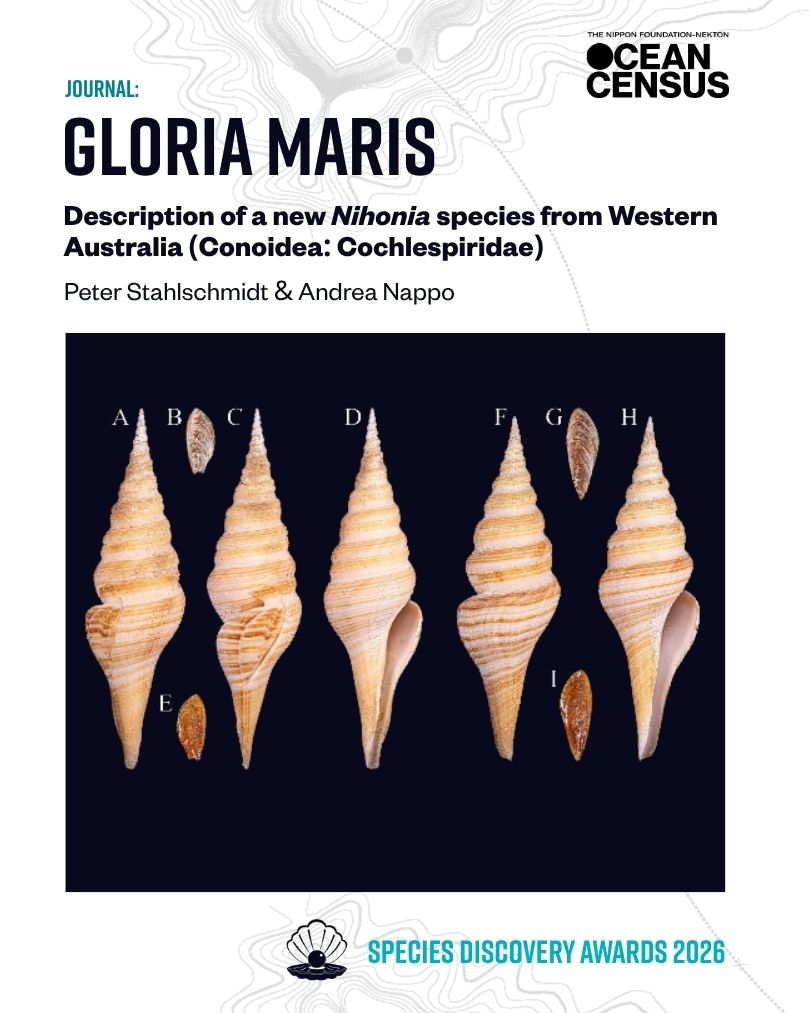
Description of a new Nihonia species from Western Australia (Conoidea: Cochlespiridae)
A new Nihonia species is described from Western Australia and compared with Nihonia maxima Sysoev, 1997, which was described from Indonesia.
04/04/26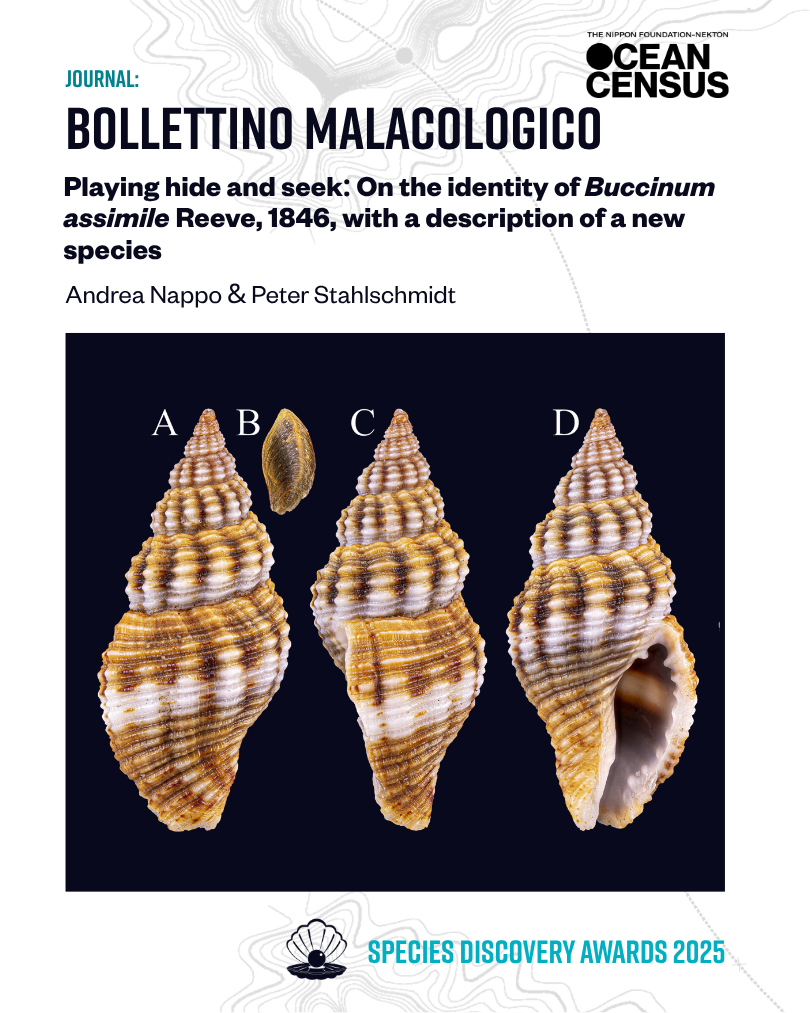
Playing hide and seek: On the identity of Buccinum assimile Reeve, 1846, with a description of a new species
Re-examination of the Buccinum assimile syntype revealed a long-standing misidentification, leading to the description of Aplus dissimilis sp. nov. and the synonymisation of B. assimile with Aplus scacchianus, clarifying species identities.
31/03/26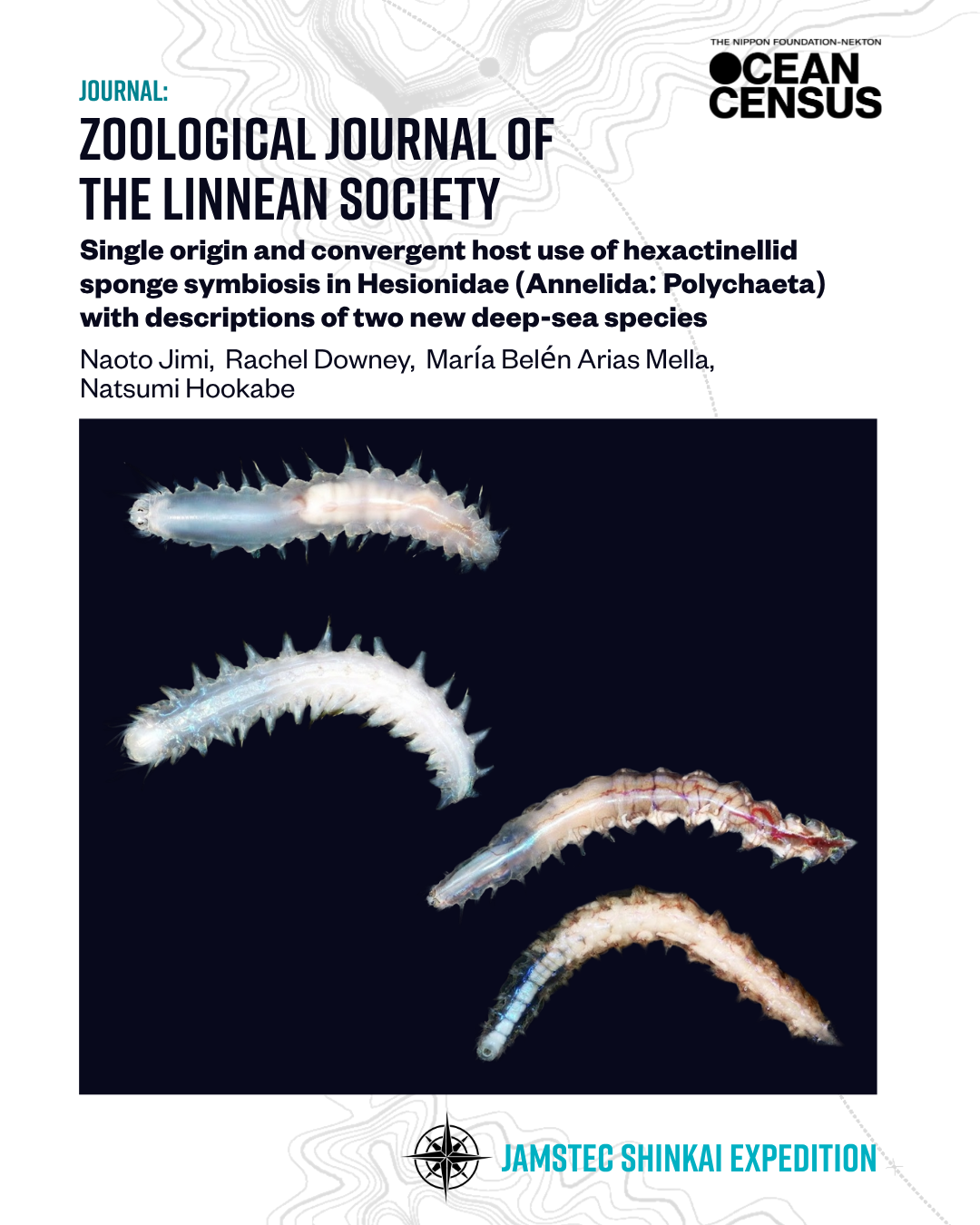
Single origin and convergent host use of hexactinellid sponge symbiosis in Hesionidae (Annelida: Polychaeta) with descriptions of two new deep-sea species
Researchers identified two new deep-sea hesionid species, Dalhousiella yabukii and Leocratides watanabeae, living symbiotically in the same hexactinellid sponge. Their findings reveal independent convergent adaptations to sponge hosts and provide new insights into the evolution and diversification of sponge symbiosis in Hesionidae.
09/03/26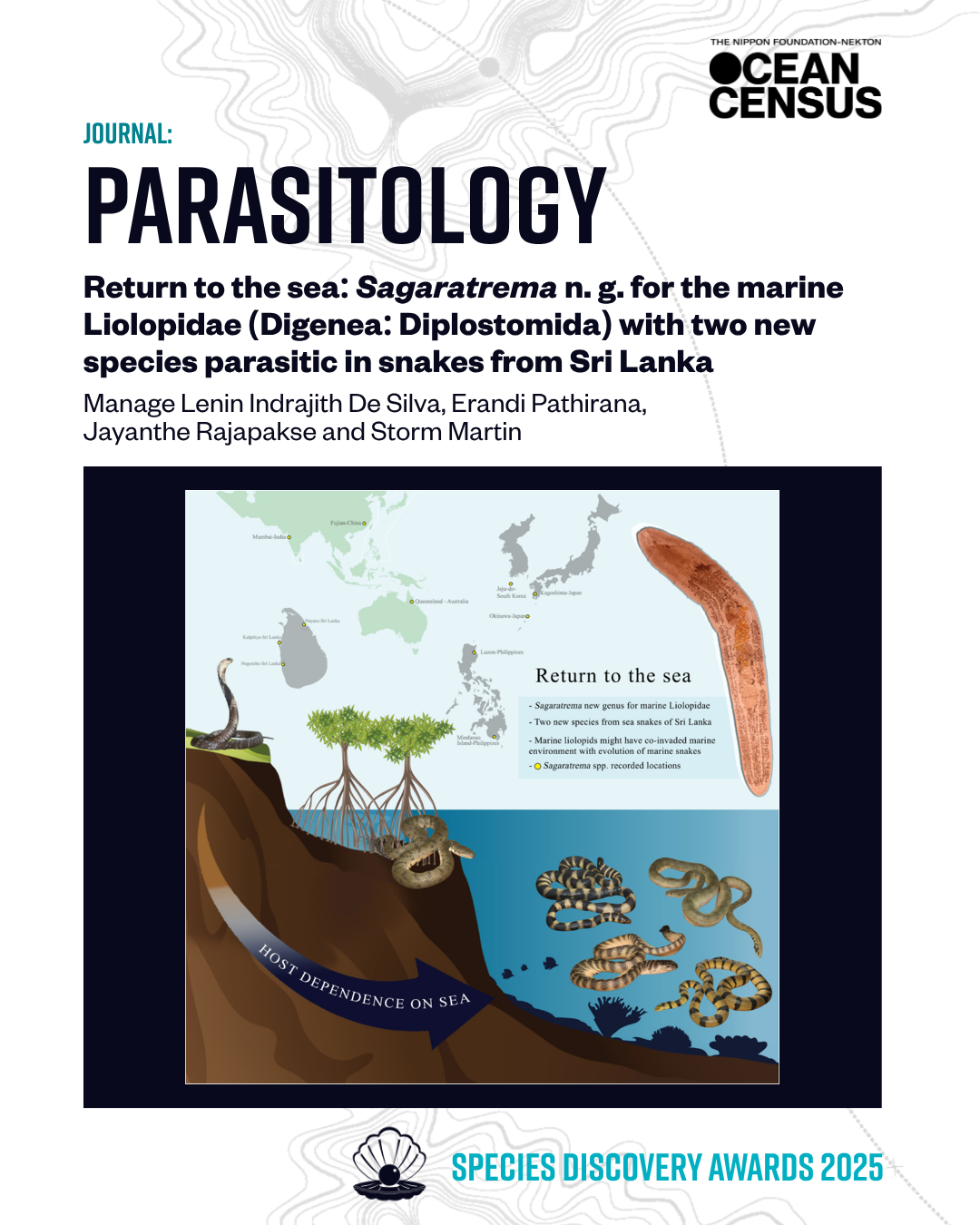
Return to the sea: Sagaratrema n. g. for the marine Liolopidae (Digenea: Diplostomida) with two new species parasitic in snakes from Sri Lanka
A new trematode genus, Sagaratrema, is proposed for liolopid parasites of marine snakes. Three new species from Sri Lanka are described alongside three reassigned species, while Harmotrema is revised. Genetic and morphological evidence supports their distinct evolutionary history and marine specialization.
04/03/26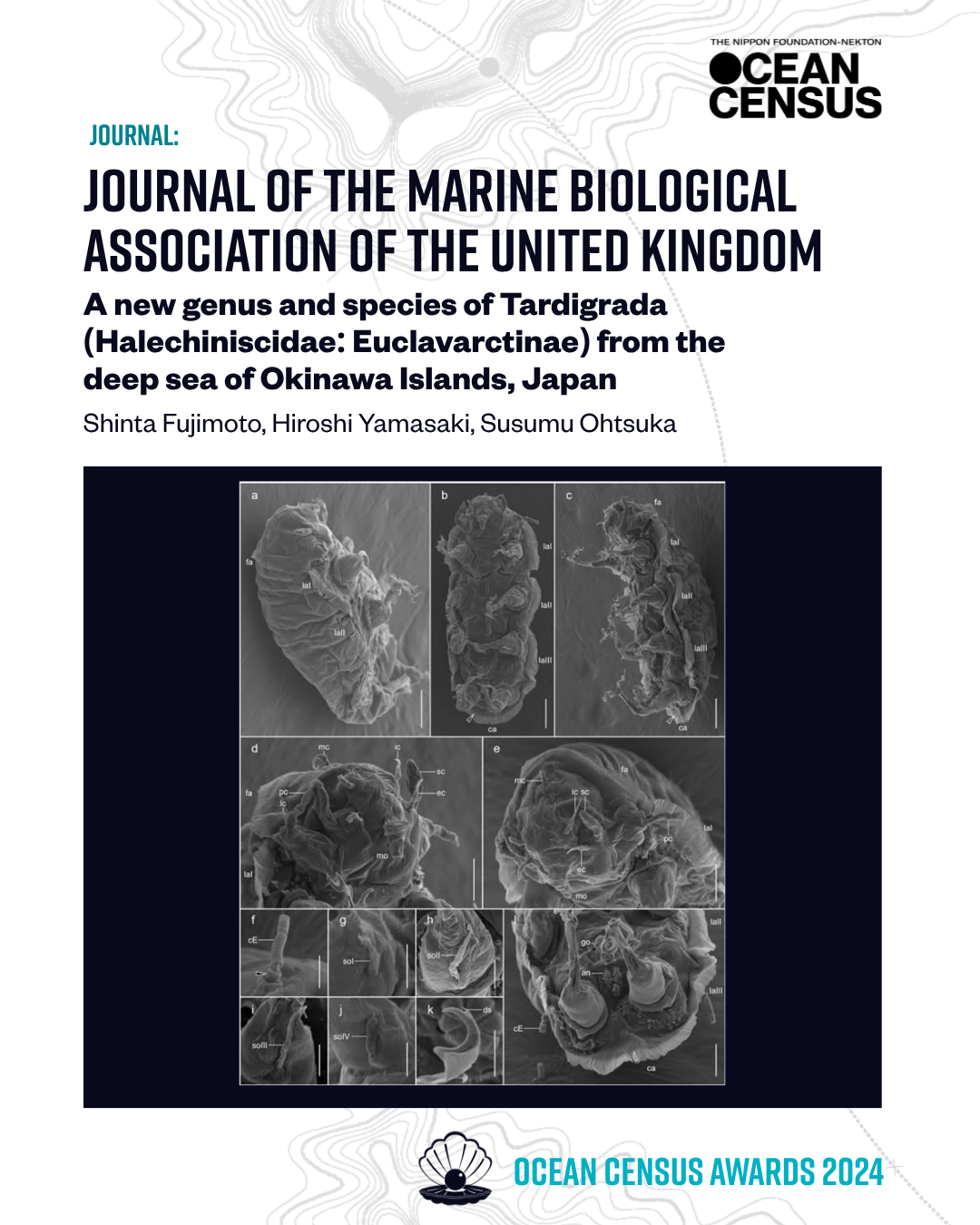
A new genus and species of Tardigrada (Halechiniscidae: Euclavarctinae) from the deep sea of Okinawa Islands, Japan
A new deep-sea tardigrade genus and species, Ranarctus kondoi, is described from 596–606 m depth near Okinawa, Japan. Its distinctive morphological features differentiate it from related Parmursa, expanding knowledge of the deep-sea-exclusive Euclavarctinae.
16/02/26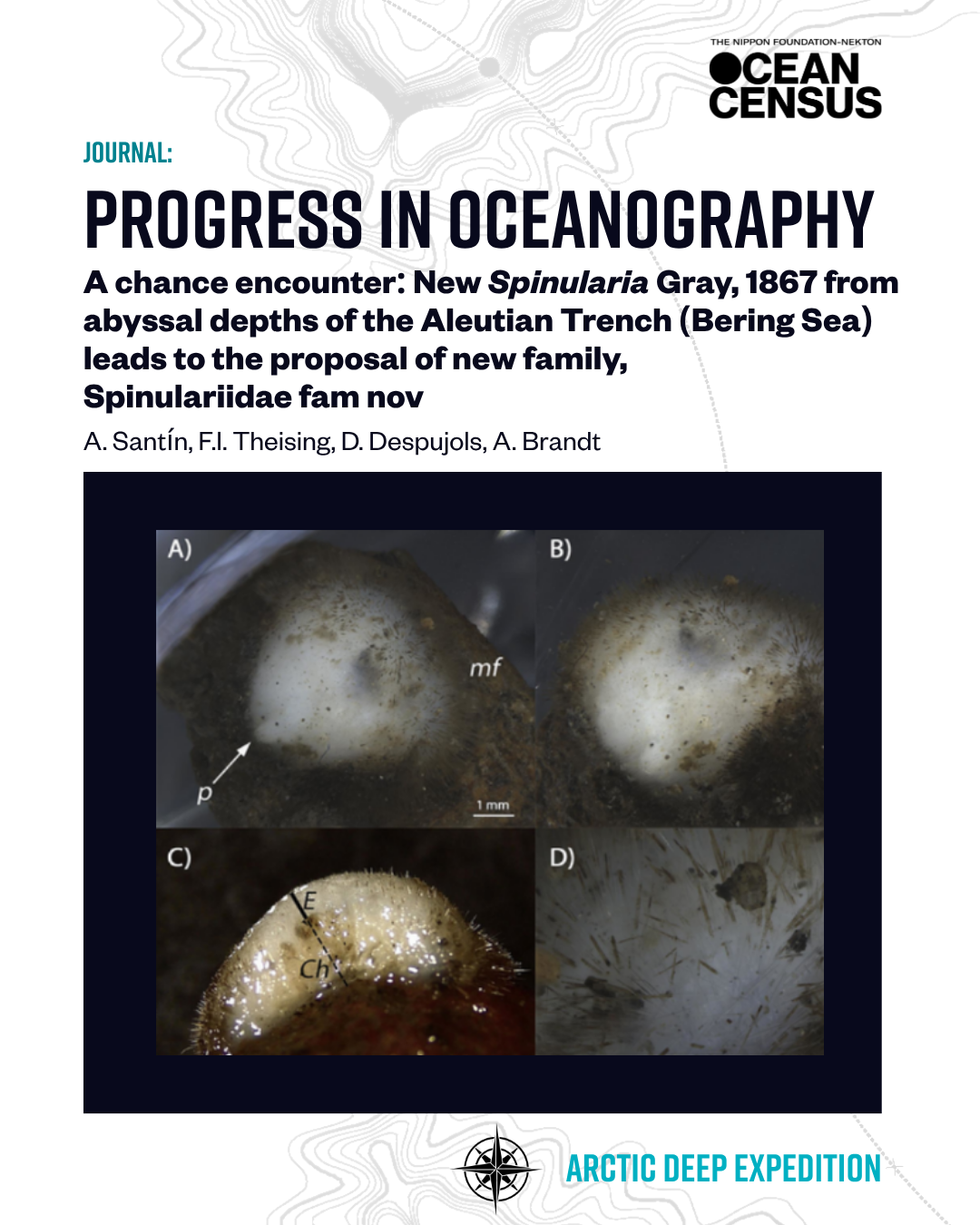
A chance encounter: New Spinularia Gray, 1867 from abyssal depths of the Aleutian Trench (Bering Sea) leads to the proposal of new family, Spinulariidae fam nov
A new sponge family, Spinulariidae, is proposed for small, deep-sea polymastiid sponges lacking a secondary cortical layer. Integrative taxonomy and phylogenetic analyses support the family, while several genera are synonymised under Spinularia, highlighting the overlooked diversity and evolutionary importance of inconspicuous sponges.
13/02/26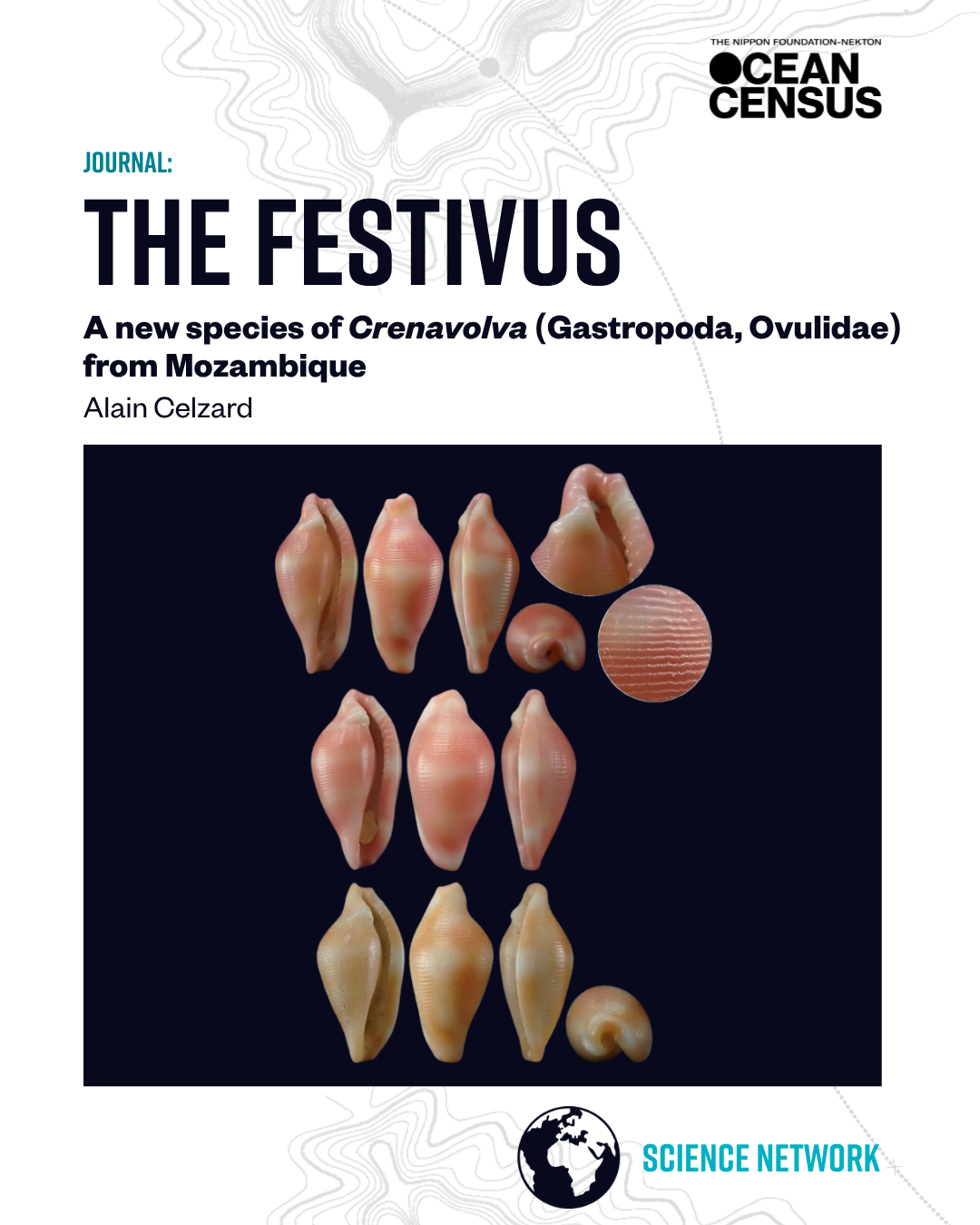
A new species of Crenavolva (Gastropoda, Ovulidae) from Mozambique
A new cowrie species, Crenavolva iris, is described from Mozambique. Detailed comparisons with related species from the western Indian Ocean, Pacific and eastern Indian Ocean confirm it as a distinct species, expanding knowledge of Crenavolva diversity in the region.
09/02/26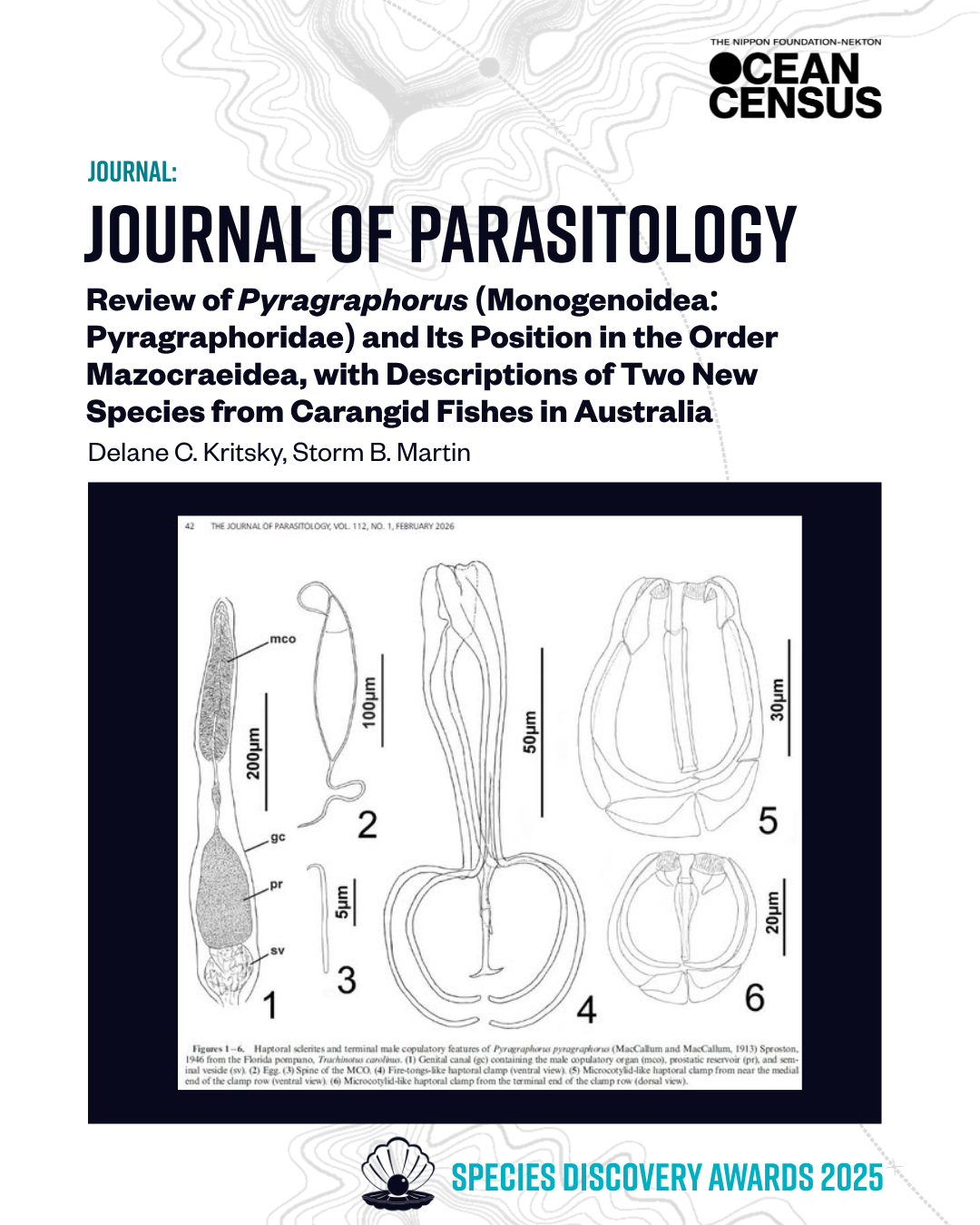
Review of Pyragraphorus (Monogenoidea: Pyragraphoridae) and Its Position in the Order Mazocraeidea, with Descriptions of Two New Species from Carangid Fishes in Australia
Two new parasitic worm species, Pyragraphorus rohdei and P. ningalooensis, are described from carangid fish in Australia. A taxonomic and molecular review of the genus also reveals complex evolutionary relationships among several monogenoid families.
03/02/26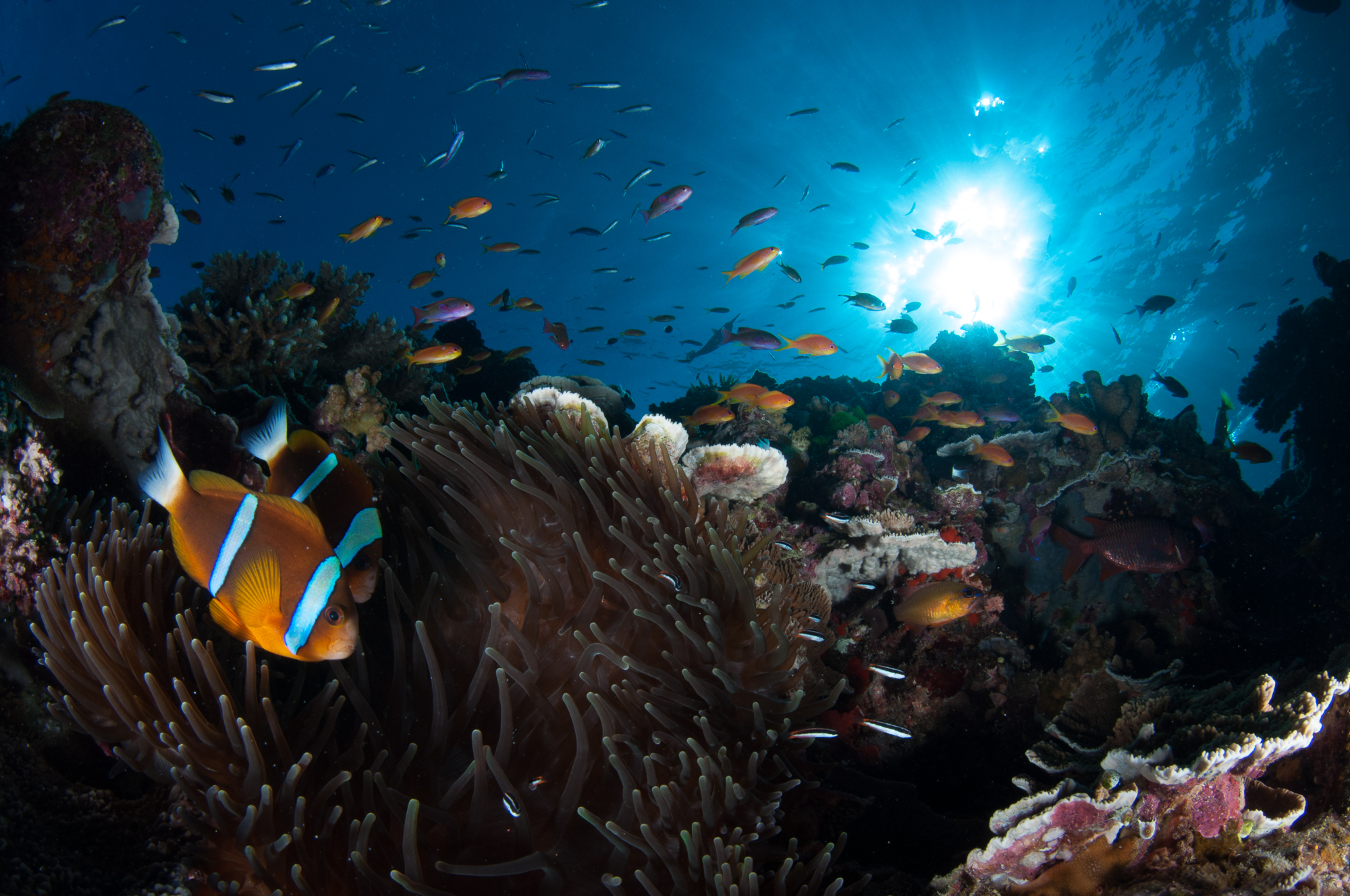
New approach revealed in Frontiers of Marine Science provides the revolutionary potential that underpins Ocean Census.
Want to submit a paper?
Join the census
The Ocean Census Alliance unites national and philanthropic marine institutes, museums, and universities, backed by governments, philanthropy, business and civil society partners.


