













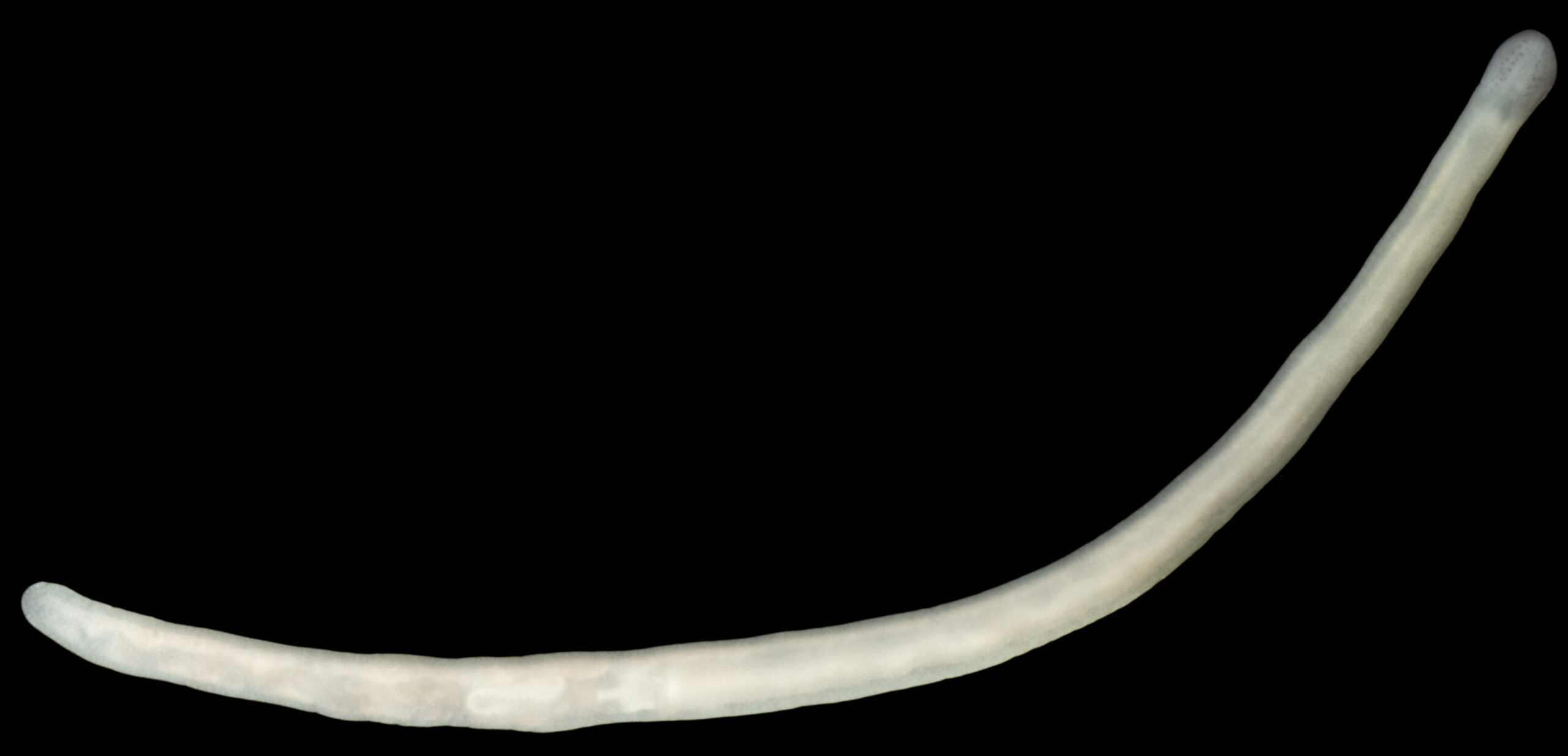

Edithburg - York Peninsula SA - pool north of jetty;31 - Nemertea;BQDAF0050;SACRED53-13;Zygonemertes sp. SMSA053;SMSA053;SP02556;AN015396;NMVE9355;PID0109226
Edithburg - York Peninsula SA - pool north of jetty;31 - Nemertea;BQDAF0050;SACRED53-13;Zygonemertes sp. SMSA053;SMSA053;SP02556;AN015396;NMVE9355;PID0109226
Species ID
OC-SP-0002989
Discovered
Phylum
Nemertea
Species ID
OC-SP-0002989
Provisional Species Name
Zygonemertes sp_SMSA053
Lowest Valid Taxon Name in WoRMS
Zygonemertes
Lowest Known Rank
Genus
Status
Discovered
Does the taxonomist(s) intend to work on this material further?
3. I/We are not sure yet. This is of course no problem, we will display your species info (if not embargoed) while you work out your species description plan.
Embargo
No
Kingdom
Animalia
Phylum
Nemertea
Class
Hoplonemertea
Order
Monostilifera
Family
Zygonemertidae
Genus
Zygonemertes
Date Identified
27/01/2026
Taxonomic Remarks
Zygonemertes sp. SMSA053 resembles two other local undescribed congeners, Zygonemertes sp. SMSA055 and SMSA056, and differs from several other cryptic nearly colorless Zygonemertes spp. in southeast Australia (Zygonemertes sp. SMSA048, SMSA049, SMSA050, SMSA051, SMSA052, SMSA058, SMSA062 and SMSA067) by the presence of numerous post-cerebral ocelli. It can be differentiated from Zygonemertes sp. SMSA055 and SMSA056 by having larger pre-cerebral ocelli, more numerous post-cerebral ocelli in rows, smaller S/B ratio, as well as by COI sequence data. Zygonemertes wadjemupensis Gibson 1999, described from the Rottnest Island, Western Australia (a distinct biogeographic province from southeastern Australia), has not been sequenced, but can be differentiated from the present species by the lack of larger ocelli in the precerebral region and a smaller S/B ratio.
Discovery registered on
08/04/2026
Description of Material
Body 6 – 15 mm long, 0.5 mm wide, translucent. Background colour uniform white with light mint-green tinge, especially in the anterior region. Some individuals sandy brown or light orange, occasionally with scattered darker orange irregular mottling dorsally. Cephalic lobe wider than adjacent body region, twice as long as it is wide, separated from body by an indistinct neck furrow. Oblique cerebral organ furrows visible dorsally and ventrally. Numerous large ocelli (19-26) in 2 irregular rows on each side of head. Additionally, a single row of smaller ocelli (up to 13) is found on each side of body posterior to cerebral ganglia. Epidermal sickle-like inclusions present. Posterior tip rounded. Rhynchocoel extends to posterior tip. Stylet basis skirt shaped, with a variable constriction anterior to the distal truncated end. S/B = 0.5, two accessory stylet sacs with 1 – 3 stylets in each.
Ecology
Found on Amphibolis antarctica, or red or brown sea weeds (including coralline algae) intertidally, or by divers in the subtidal zone.
Distribution
South Australia and Victoria Australia.
Scientific Name Authorship
Maslakova, Svetlana
Edithburg - York Peninsula SA - pool north of jetty;31 - Nemertea;BQDAF0050;SACRED53-13;Zygonemertes sp. SMSA053;SMSA053;SP02556;AN015396;NMVE9355;PID0109226
Edithburg - York Peninsula SA - pool north of jetty;31 - Nemertea;BQDAF0050;SACRED53-13;Zygonemertes sp. SMSA053;SMSA053;SP02556;AN015396;NMVE9355;PID0109226
Specimens
Additional Material
No Image yet…
AFLA_F290103
Phylum
Nemertea
Family
Zygonemertidae
Primary Voucher
AFLA_E9355
Phylum
Nemertea
Family
Zygonemertidae
Additional Material
No Image yet…
AFLA_F290101
Phylum
Nemertea
Family
Zygonemertidae
Additional Material
No Image yet…
AFLA_F290102
Phylum
Nemertea
Family
Zygonemertidae
Additional Material
No Image yet…
AFLA_F290104
Phylum
Nemertea
Family
Zygonemertidae
Additional Material
No Image yet…
AFLA_F290412
Phylum
Nemertea
Family
Zygonemertidae
Additional Material
No Image yet…
AFLA_F290207
Phylum
Nemertea
Family
Zygonemertidae
Additional Material
No Image yet…
AFLA_E9280
Phylum
Nemertea
Family
Zygonemertidae
Additional Material
No Image yet…
AFLA_E9298
Phylum
Nemertea
Family
Zygonemertidae
Additional Material
No Image yet…
AFLA_E9302
Phylum
Nemertea
Family
Zygonemertidae
Join the census
The Ocean Census Alliance unites national and philanthropic marine institutes, museums, and universities, backed by governments, philanthropy, business and civil society partners.


