
















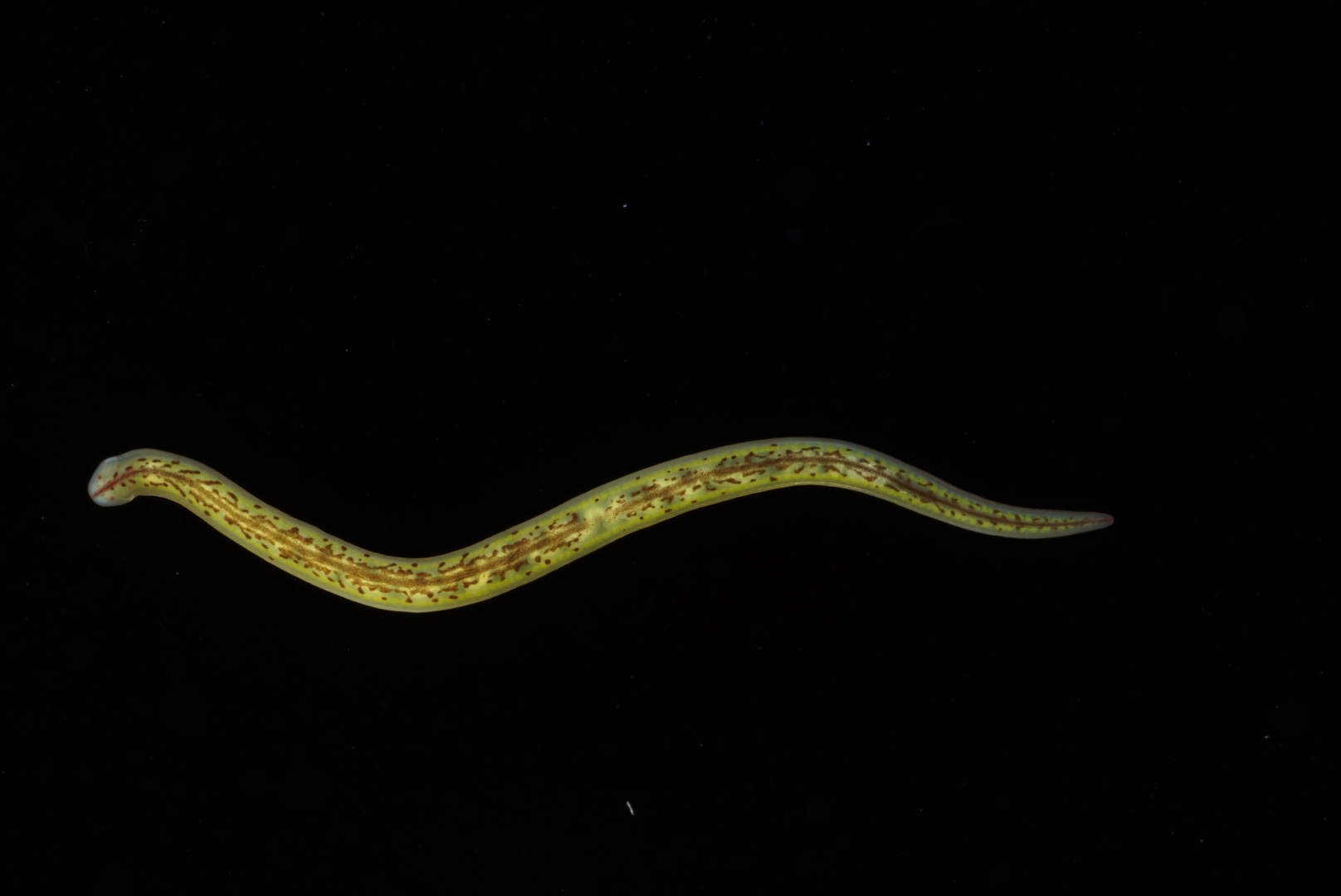
Point Lonsdale;31 - Nemertea;BQDAC0020;MRG929-04;Tetrastemma sp. SMSA022;SMSA022;SP02360;AN022279;NMVF290390;PID0246054
Species ID
OC-SP-0002967
Discovered
Phylum
Nemertea
Species ID
OC-SP-0002967
Provisional Species Name
Tetrastemma sp_SMSA022
Lowest Valid Taxon Name in WoRMS
Tetrastemma
Lowest Known Rank
Genus
Status
Discovered
Does the taxonomist(s) intend to work on this material further?
3. I/We are not sure yet. This is of course no problem, we will display your species info (if not embargoed) while you work out your species description plan.
Embargo
No
Kingdom
Animalia
Phylum
Nemertea
Class
Hoplonemertea
Order
Monostilifera
Family
Tetrastemmatidae
Genus
Tetrastemma
Date Identified
16/01/2026
Taxonomic Remarks
Closely related to and resembles another local undescribed species Tetrastemma sp. SMSA020 but is easily differentiated from it by the green rather than white background color, distally truncated stylet basis (as opposed to rounded, the different seagrass habitats, and the size and number of oocytes — the present species has up to 9 small oocytes per ovary, while Tetrastemma sp. SMSA020 has 1-2 large oocytes per ovary). COI sequence data confirms the two species are distinct (7-8% divergence).
Discovery registered on
08/04/2026
Description of Material
Body 14 mm long, 0.7 mm wide. Background colour green with brown dorsal markings of variable shape and a similarly colored mid-dorsal line from tip of head to posterior tip. Markings range from fine spots around the midline to dashes or heavy blotches or even a solid thick midline. Cephalic lobe slightly wider than body, slightly longer than it is wide, separated from body by neck furrow. Cerebral organ furrows present dorsally and ventrally. Four ocelli. Posterior tip bluntly pointed. Rhynchocoel extends to near posterior tip. Stylet basis cylindrical, distally truncated, sometimes with slight constriction in centre. S/B = 0.7. Two accessory stylet sacs with 2 stylets in each.
Ecology
Only known to live in the seagrass Amphipolis antarctica. Has been observed attacking and eating small amphipods.
Distribution
Species is common in Victoria from Walkerville to Portland across the whole range of the sea grass species, Amphibolis antarctica, with which it is associated, and very rare in South Australia. A. antarctica is also present in Western Australia but this species is not reported from there.
Scientific Name Authorship
Maslakova, Svetlana
Point Lonsdale;31 - Nemertea;BQDAC0020;MRG929-04;Tetrastemma sp. SMSA022;SMSA022;SP02360;AN022279;NMVF290390;PID0246054
Specimens
Additional Material
No Image yet…
AFLA_F202186
Phylum
Nemertea
Family
Tetrastemmatidae
Additional Material
No Image yet…
AFLA_E9349
Phylum
Nemertea
Family
Tetrastemmatidae
Additional Material
No Image yet…
AFLA_E9339
Phylum
Nemertea
Family
Tetrastemmatidae
Additional Material
No Image yet…
AFLA_F290288
Phylum
Nemertea
Family
Tetrastemmatidae
Additional Material
No Image yet…
AFLA_F290296
Phylum
Nemertea
Family
Tetrastemmatidae
Primary Voucher
AFLA_F290390
Phylum
Nemertea
Family
Tetrastemmatidae
Join the census
The Ocean Census Alliance unites national and philanthropic marine institutes, museums, and universities, backed by governments, philanthropy, business and civil society partners.


