





















Species ID
OC-SP-0002911
Discovered
Phylum
Nemertea
Species ID
OC-SP-0002911
Provisional Species Name
Drepanophoridae sp_SMTM007
Lowest Valid Taxon Name in WoRMS
Drepanophoridae
Lowest Known Rank
Family
Status
Discovered
Does the taxonomist(s) intend to work on this material further?
3. I/We are not sure yet. This is of course no problem, we will display your species info (if not embargoed) while you work out your species description plan.
Embargo
No
Kingdom
Animalia
Phylum
Nemertea
Class
Hoplonemertea
Order
Polystilifera
Family
Drepanophoridae
Date Identified
22/08/2025
Taxonomic Remarks
Resembles and most closely related to the co-occurring species, Drepanophoridae sp. SMTM005, SMTM042, and SMTM006, as well as a species from Red Sea (Drepanophoridae sp. SMRM004) from which it can be differentiated by COI sequence data (7-10% divergent), and colour pattern (lack of dark collar, and presence of sparse brown mottling on dorsal side). Circumscriptions of current families and genera of reptant polystiliferans are based on characters of internal anatomy, many of which have been shown to not be reliable indicators of relationships, and await testing with molecular phylogenies. On the other hand, most species that have been sequenced remain unidentified beyond the level of infraorder Reptantia. Placement in the family Drepanophoridae is putative, and the genus remains to be determined. Five species of reptant polystiliferous nemerteans have been collected off the southern coast of Timor by the Siboga Expedition in January 1900, and reported by Stiasni-Wijnhoff (1936): Drepanobanda trilineata, Drepanophorina argus, Punnettia maldivensis, Punnettia timorensis, and Siboganemertes weberi. Unfortunately, color in life is not known for any of these species, and descriptions are based almost exclusively on internal anatomy. Recent studies have shown that internal anatomy does not allow to differentiate between closely related nemertean species. The only information on external appearance available is for D. trilineata (three dorsal longitudinal stripes), and D. argus (over 200 small ocelli). Based on this we can exclude these two species. S. weberi is a bathyal species, so can be excluded on that ground. Furthermore, our sampling was restricted to the northern coast of Timor, which has substantially different oceanographic conditions, types of habitats, and fauna compared to the south coast. Both P. timorensis and P. maldivensis were collected from subtidal mud off the south coast of Timor (34 m) and can be excluded based on habitat alone. While Stiasni-Wijnhoff described several other species of reptant polystiliferans based on material from the Siboga Expedition (collected elsewhere in the Coral Triangle), most of these descriptions lack information on external appearance of living specimens, and thus cannot be matched to freshly collected material without DNA sequence data. While type and voucher material from the Siboga Expedition does exist (Naturalis, Leiden, Netherlands), much of it is in the form of histological sections on glass slides, and those specimens that remain in alcohol are likely to have been originally preserved in formalin, and thus chances are small they can yield useable sequence data, even if destructive sampling would be allowed. Given a large influx of better documented fresh material, it appears that the most reasonable way forward is to treat freshly collected species as new.
Discovery registered on
08/04/2026
Description of Material
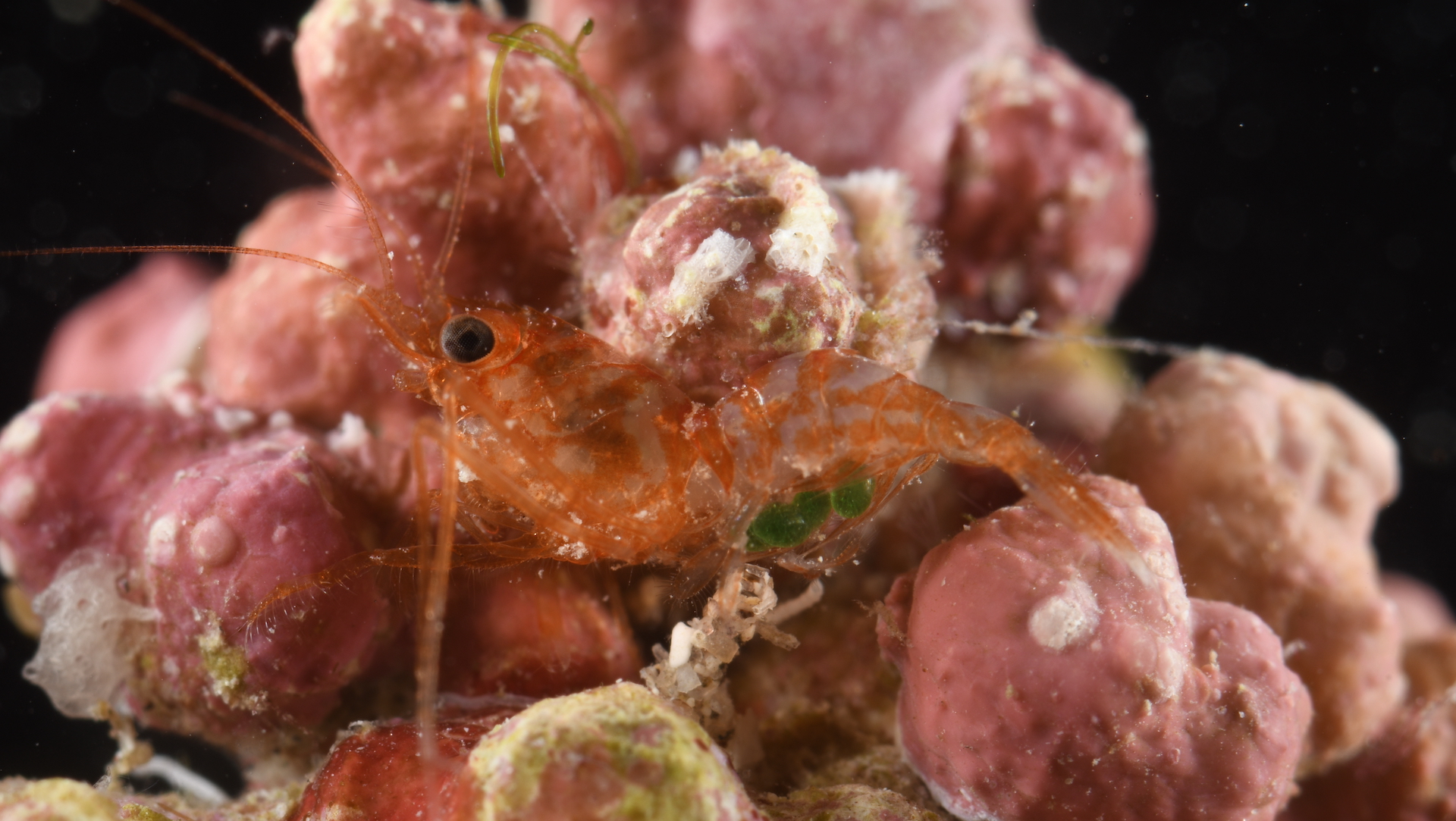
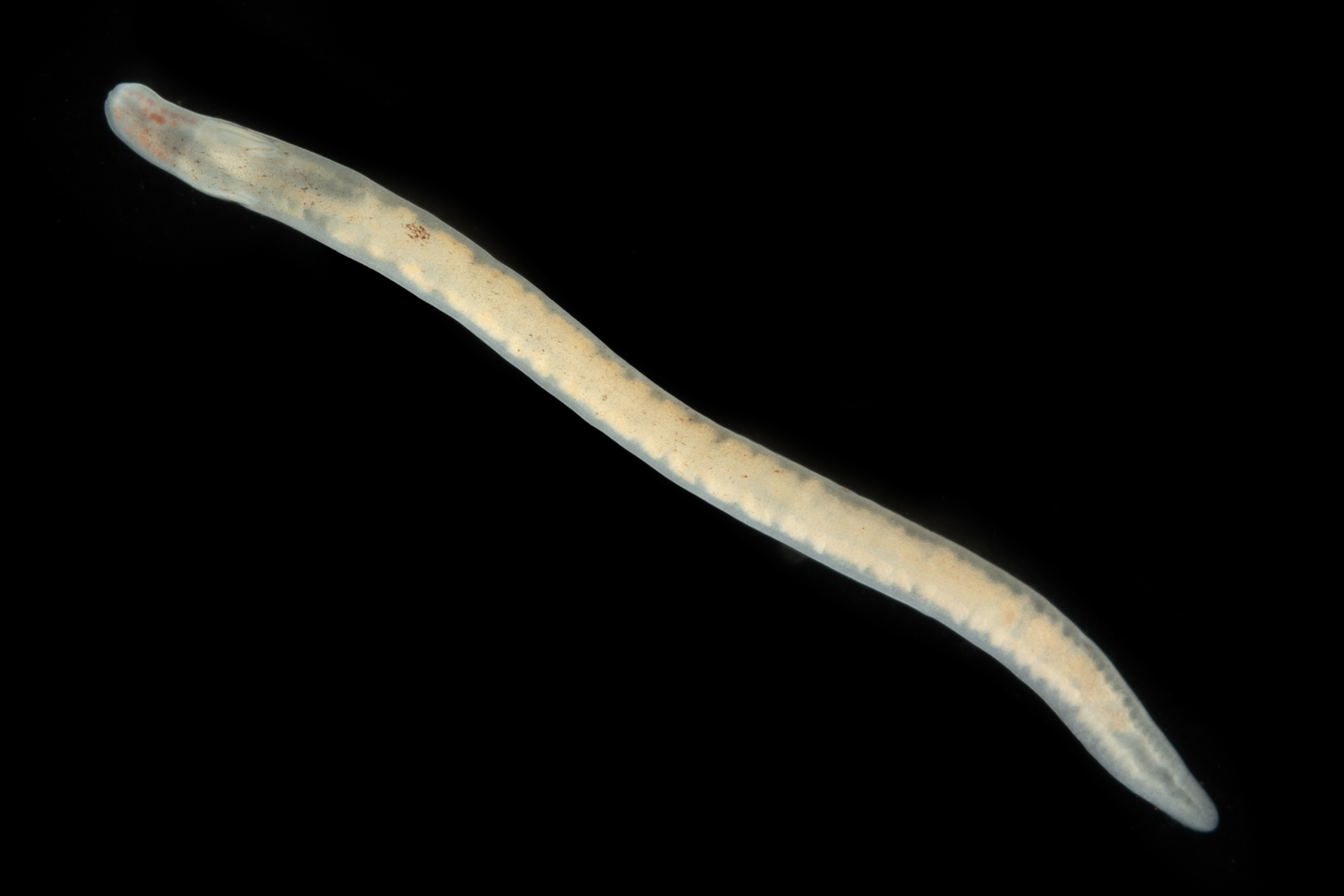
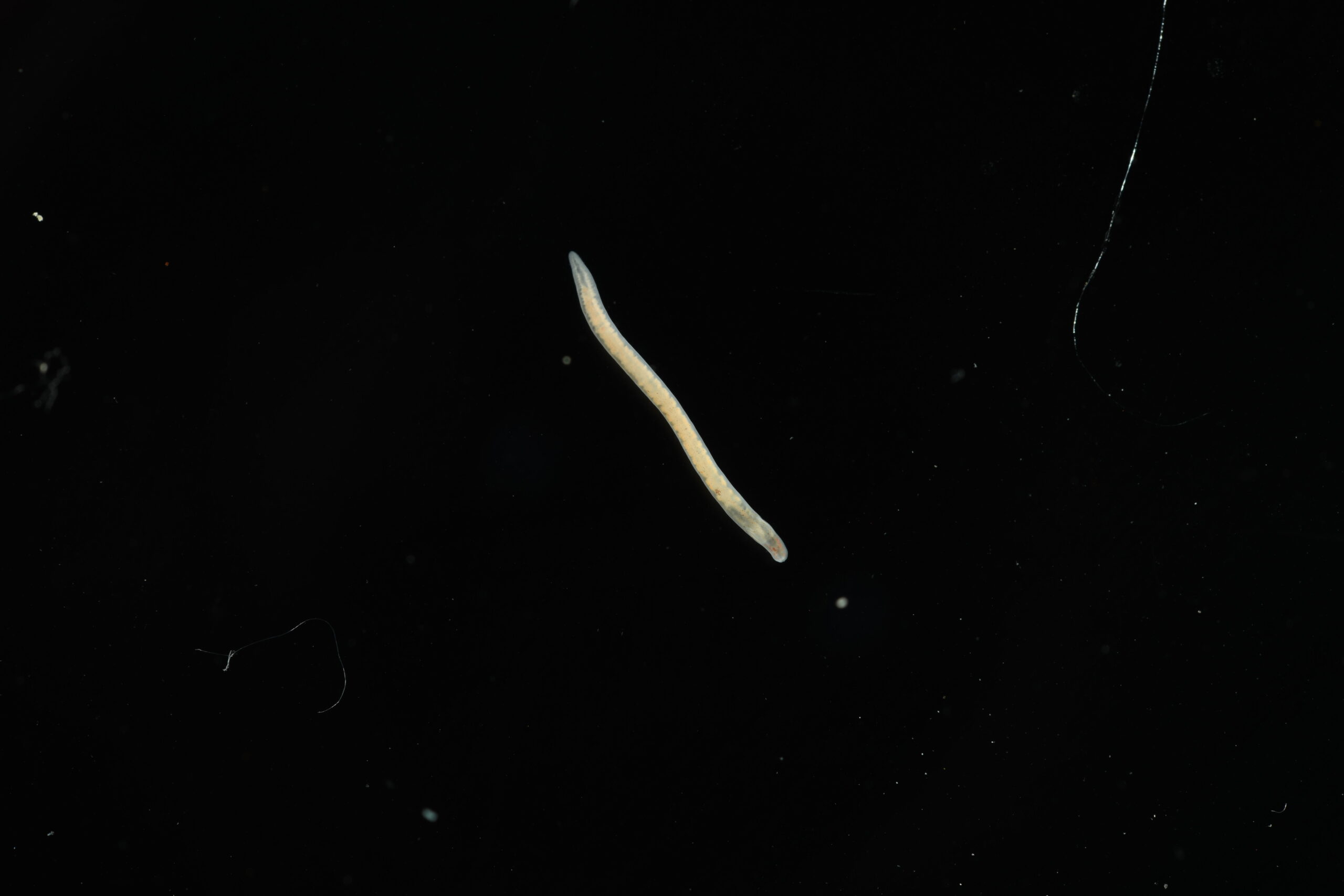
Body 5 mm long, 0.3-0.7 mm wide, relatively short and stout, dorso-ventrally flattened, semi-translucent, with sparse irregular mottling of dark brown dorsally. Cephalic lobe bluntly rounded, equipped with a mid-dorsal ridge, which is apparent as a small protuberance along the anterior margin. Cerebral organ furrows with secondary furrows (5-6 pairs, but only 2-3 pairs are visible on dorsal side). Ocelli large, situated in four loosely defined rows — a lateral row along each side of head with 5-6 ocelli in each, and two medial rows, each with four ocelli. Posterior tapering to a bluntly rounded tip. Gut diverticula show clearly through body wall (cream-colored).
Ecology
Associated with coral rubble.
Distribution
Only known from Atauro Island, Timor-Leste.
Scientific Name Authorship
Maslakova, Svetlana
Join the census
The Ocean Census Alliance unites national and philanthropic marine institutes, museums, and universities, backed by governments, philanthropy, business and civil society partners.


