























Species ID
OC-SP-0002813
Discovered
Phylum
Echinodermata
Species ID
OC-SP-0002813
Provisional Species Name
Pteraster sp_OCSSI_465
Lowest Valid Taxon Name in WoRMS
Pteraster
Lowest Known Rank
Genus
Status
Discovered
Does the taxonomist(s) intend to work on this material further?
2. I/We already have plans to publish. (For marine invertebrates please know that SOSA could support you in this too - please click the button for more details).
Embargo
No
Kingdom
Animalia
Phylum
Echinodermata
Class
Asteroidea
Order
Velatida
Family
Pterasteridae
Genus
Pteraster
Date Identified
15/08/2025
Taxonomic Remarks
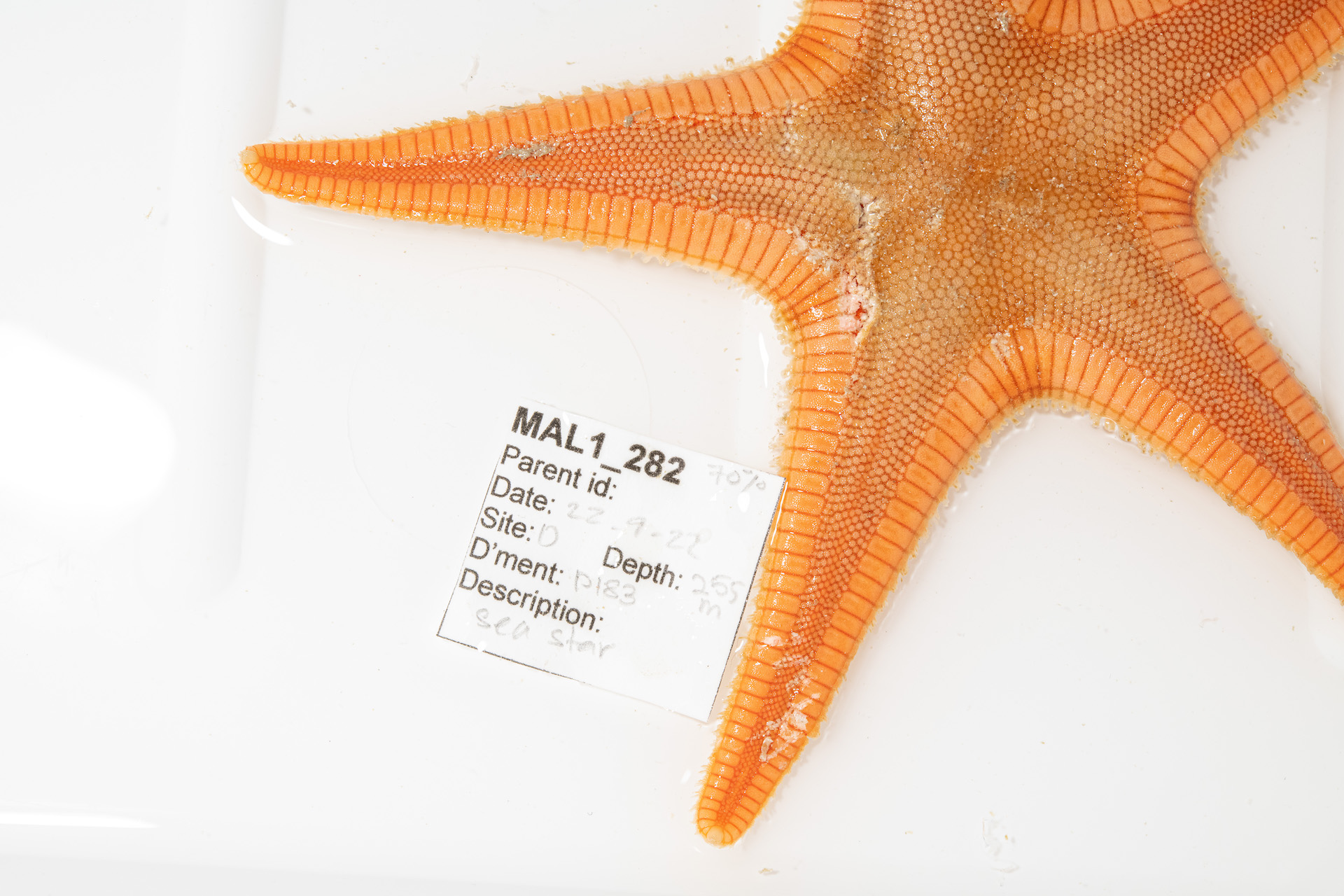
This specimen belongs to Pteraster, being more similar to P. affinis lebruni. Still, it differs from that in the R/r, which is larger in this specimen, the lack of the abactinal paxilar columns, the rows of tube feet (4 vs 2), the number of oral spines, and the length of the actinolateral spines. This specimen also differs from Pteraster hirsutus, which has a similar distribution, in the supradorsal membrane, paxilaes, the presence of a spiracule, the number of tube feet, and in the number and disposition of furrow spines.
Discovery registered on
07/04/2026
Description of Material
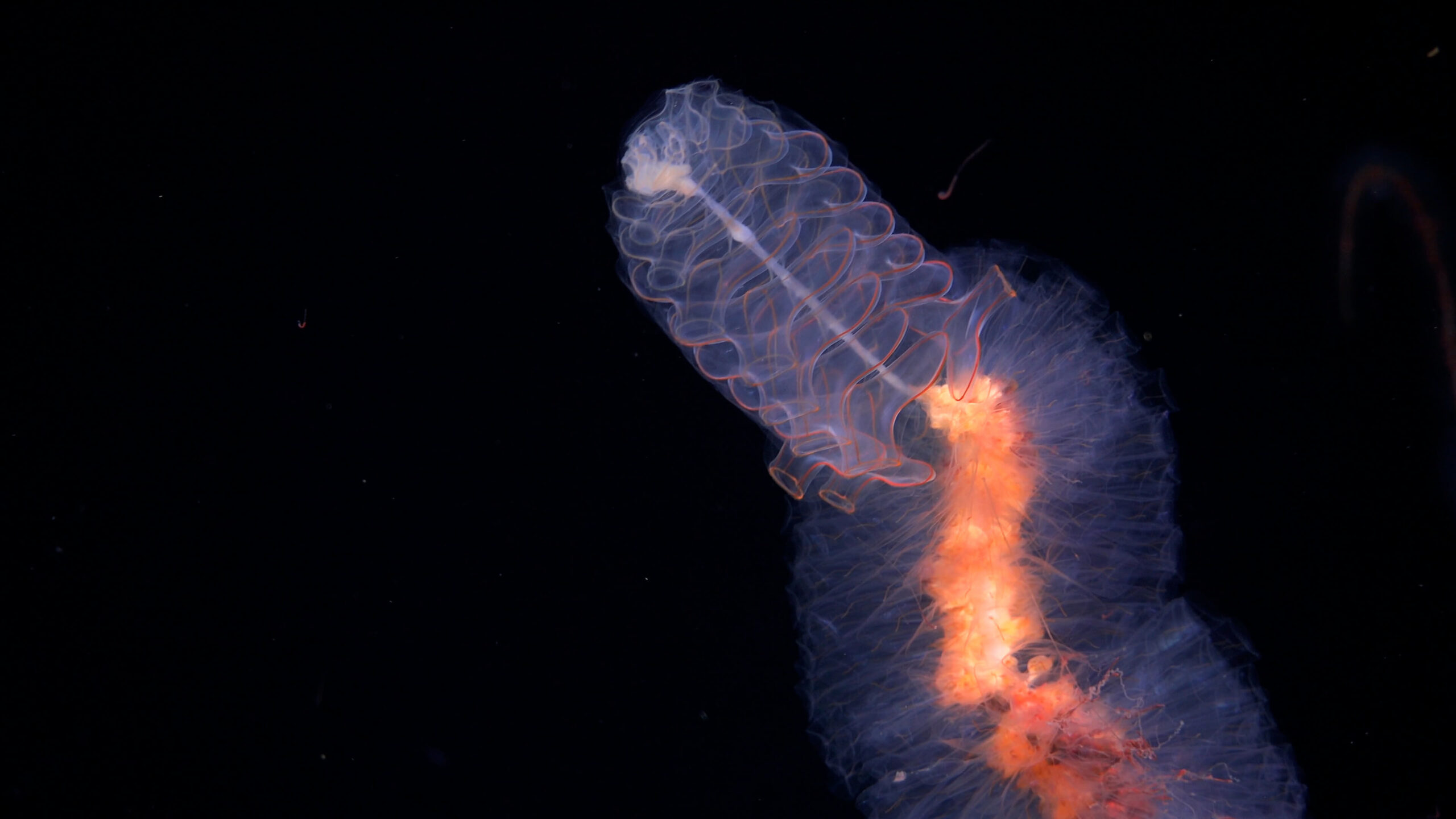
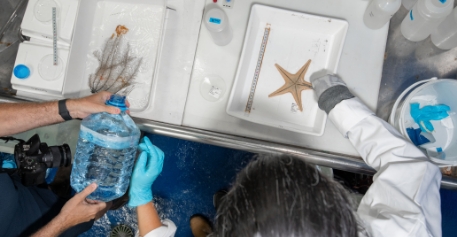
Abactinal surface fat, reticulate/lobule-like, formed by fat and plane paxillaes. Osculum small and closed. The madreporic plate is not evident. Arms are broad proximally, narrowing distally, with elevated lateral margins. No marginal plates are distinguishable, with long, plane, and thin inferomarginals which form a thick lateral membrane; only on the tip is possible to distinguish the spine. R: 9 cm, r: 3 cm.
Ecology
The genus Pteraster belongs to the family Pterasteridae, which is the most diverse family within the order Velatida, and is also almost exclusively found in deep-water environments globally. A unique characteristic of the Pterasteridae is the presence of an additional (supra)dorsal membrane. This membrane produces abundant quantities of mucus. It also forms a nidamental cavity between itself and the dorsal body wall. These sea stars have a thick, cushion-like body form, which can range from pentagonal to stellate. Members of the order Velatida are generally specialists in deep and cold habitats; some Pteraster species feed on sponges, and they are also burrowers in soft mud or muddy sand, often swallowing quantities of the substrate, which can distend their disc
Distribution
Minke Seamount, South Atlantic Ocean, at 521 m. -57.4504843, -26.63251856.
Scientific Name Authorship
PAMELA RIVADENEIRA
Join the census
The Ocean Census Alliance unites national and philanthropic marine institutes, museums, and universities, backed by governments, philanthropy, business and civil society partners.


