














Species ID
OC-SP-0002389
Discovered
Phylum
Cnidaria
Species ID
OC-SP-0002389
Provisional Species Name
Victorgorgia sp_FKt240224676CQ18001
Lowest Valid Taxon Name in WoRMS
Victorgorgia
Lowest Known Rank
Genus
Status
Discovered
Embargo
No
Kingdom
Animalia
Phylum
Cnidaria
Class
Octocorallia
Order
Malacalcyonacea
Family
Victorgorgiidae
Genus
Victorgorgia
Date Identified
01/07/2025
Taxonomic Remarks
There are several morphologic characteristics that differentiate Victorgorgia n. sp. 1 with known species of the genus. The most important differences are in the rachis sclerites, which are elongated bulgy spindles, slightly bent with a pointy end (Fig. 2). Similar branching species in the Southern Pacific, such as V. nyahae and V. eminems, despite being purple have robust tuberculate rods (almost like clubs). with the most robust forms in V. nyahae and V. eminems have polyps arranged englobed clavate bunches (Moore, Alderslade & Miller, 2017). Recently described species from the Northwestern Pacific have even larger polyp bunches, like V. fasciculata and when including thinner rachis sclerites they lack the bulged spindles of Victorgorgia n. sp. 1, as in V. fabellata and V. iocasica, despite these three species are purple colored colonies (Li, Zhan & Xu, 2020).
Discovery registered on
23/03/2026
Description of Material
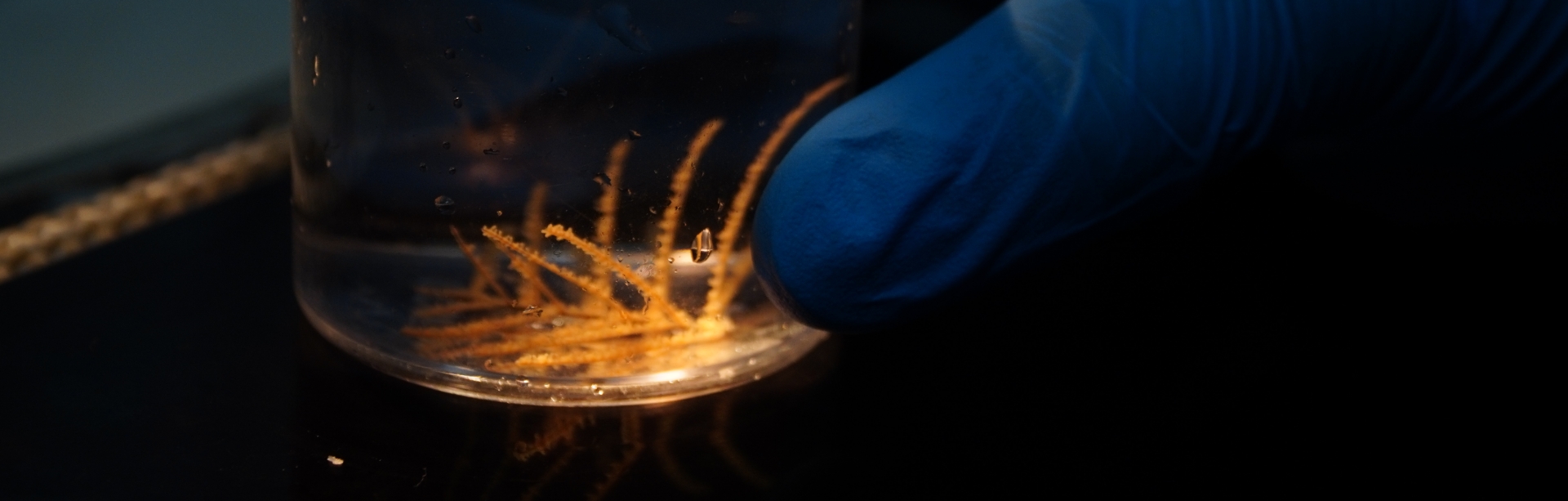
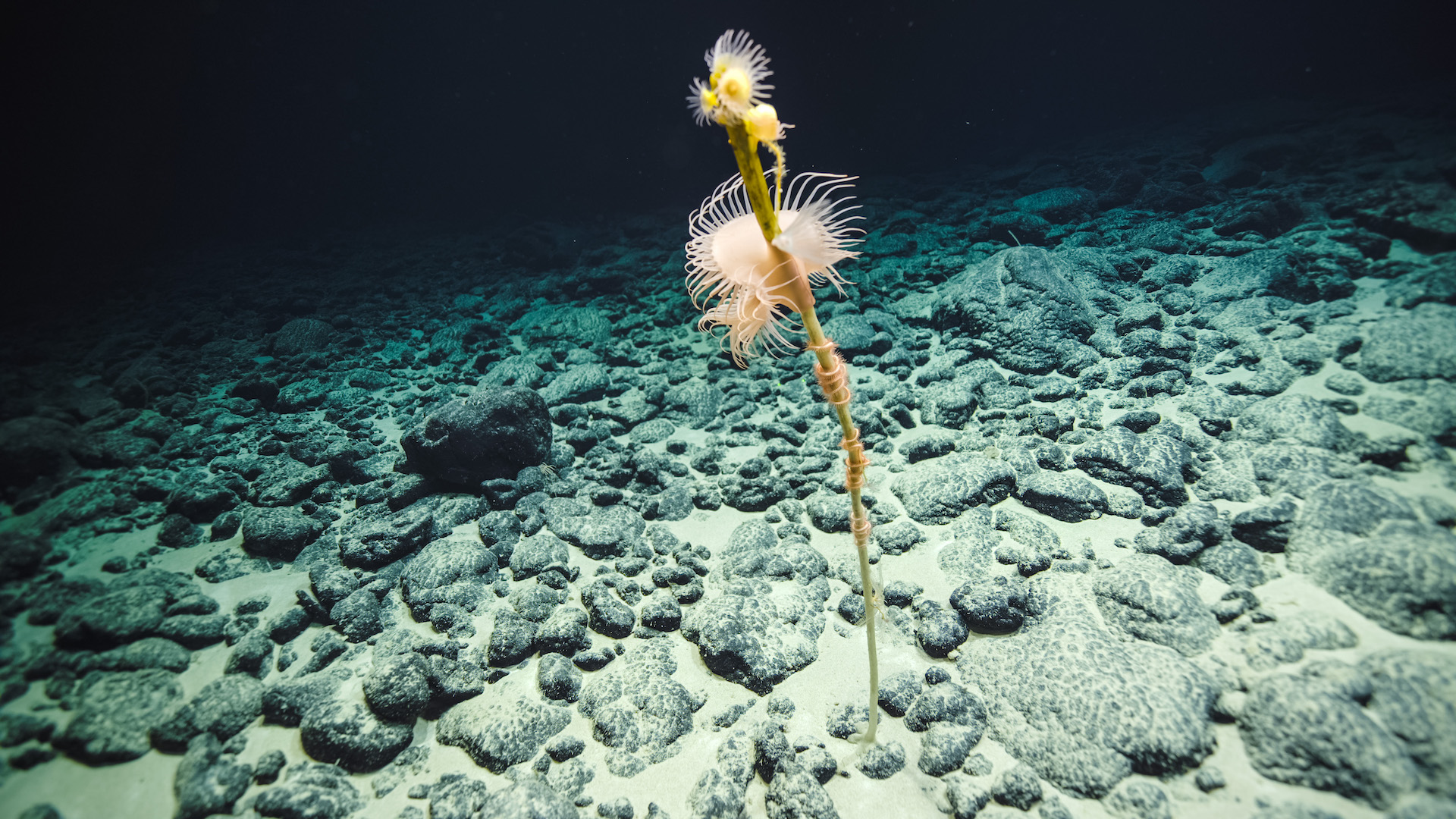
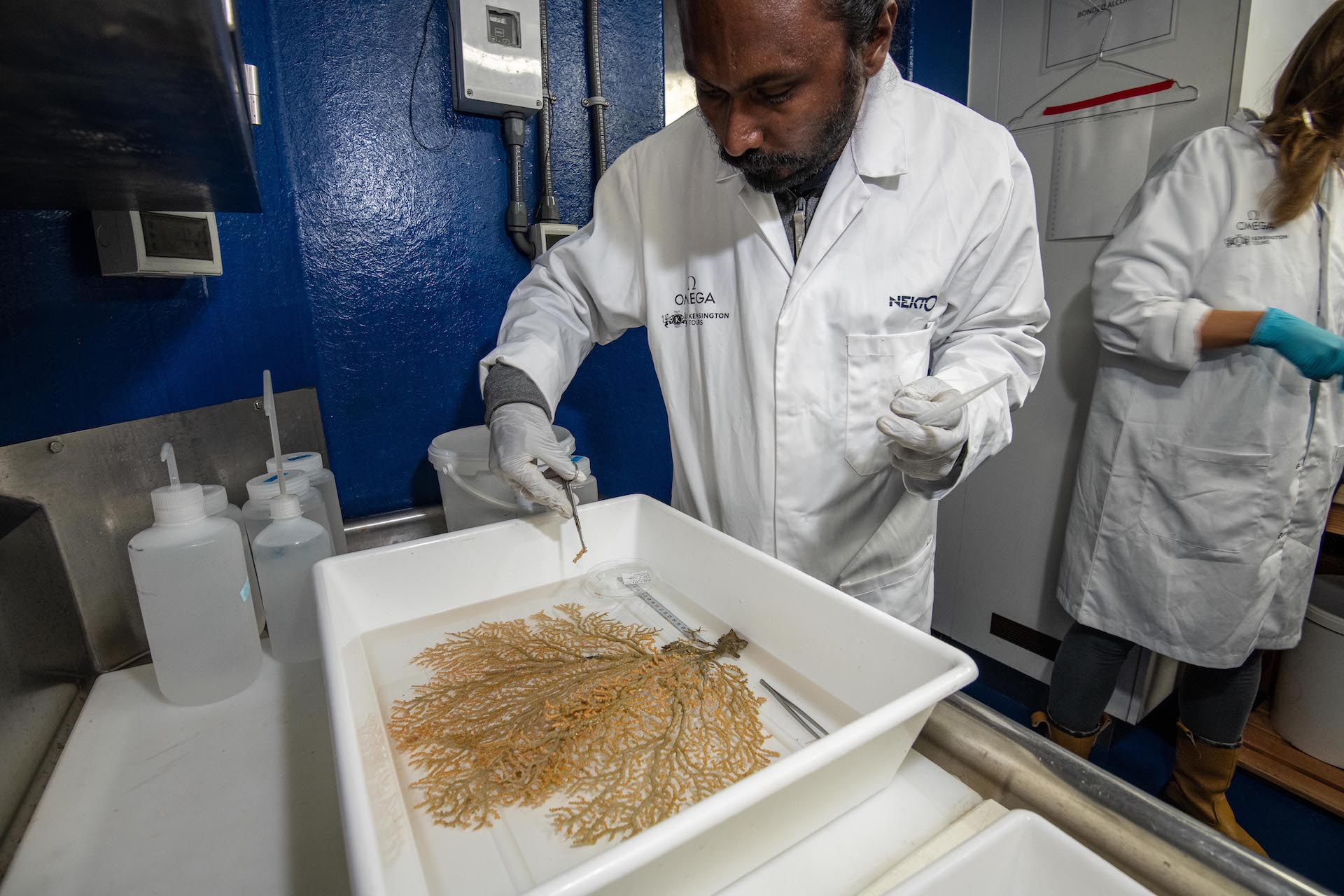
Victorgorgia specimen with light yellow colonies when alive and light beige in ethanol. Polyps uniformly distributed throughout the branches. Polyp tentacles exserted after collection, showing clearly the collaret and point sclerites and even the soft tissues of pinnules (Figure 1A-D). Cross section of branches showing a large perforating canal, and about two secondary perforations together with small boundary canales near the surface (Fig 1E). Tentacle sclerome made of jockey sticks and elongated bulged spindles in the rachis. Curved point spindles, thin and uniform in width, with more ornamentation towards the tips. Pinnule sclerites including Josephine clubs (Fig 2).
Ecology
Pending (e.g., GenBank number/s if available) ; Depth: 838.23 m; T°: 4.75 °C; OD: concentration raw: 203.895 μ mol; saturation raw: 50.77 %; concentration corr: 166.66 μ mol; saturation corr: 52.15 %
Distribution
Location: -26.205, -102.957 Mana, Motu Motiro Hira Reserve, Rapa Nui, Southeastern Pacific Ocean.
Scientific Name Authorship
Juan Sanchez
Join the census
The Ocean Census Alliance unites national and philanthropic marine institutes, museums, and universities, backed by governments, philanthropy, business and civil society partners.


