




















Species ID
OC-SP-0002522
Discovered
Phylum
Cnidaria
Species ID
OC-SP-0002522
Provisional Species Name
Calyptrophora sp_YK25-09C_OC0158
Lowest Valid Taxon Name in WoRMS
Calyptrophora
Lowest Known Rank
Genus
Status
Discovered
Does the taxonomist(s) intend to work on this material further?
4. I/We are not going to publish.
Embargo
No
Kingdom
Animalia
Phylum
Cnidaria
Class
Octocorallia
Order
Scleralcyonacea
Family
Primnoidae
Genus
Calyptrophora
Taxonomic Remarks
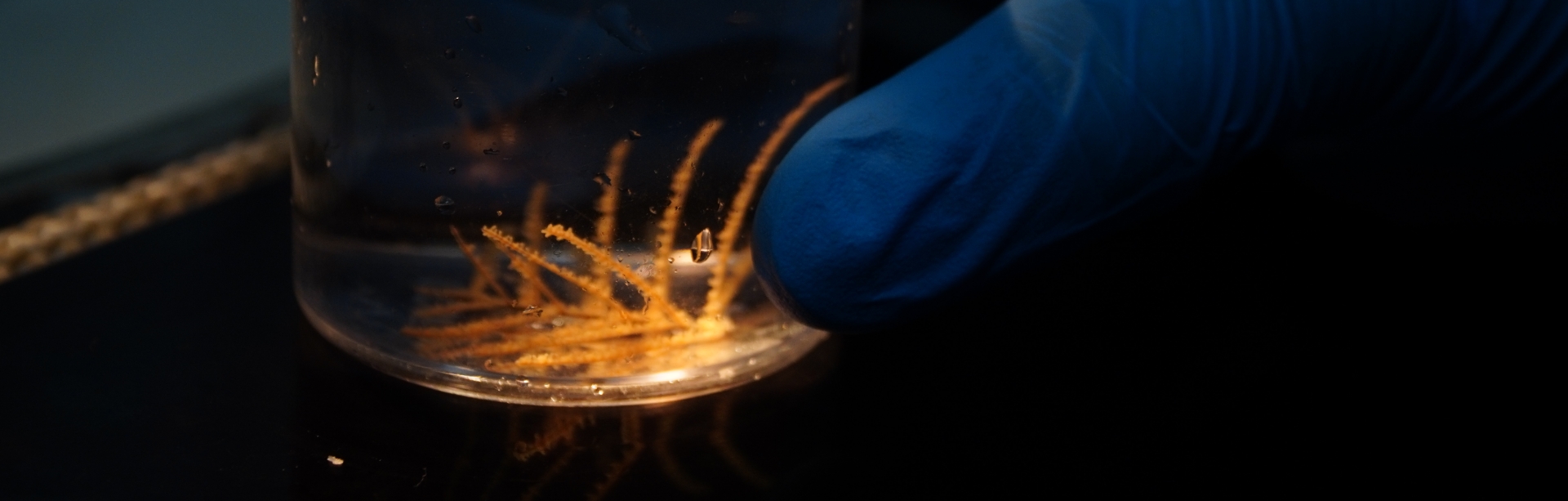
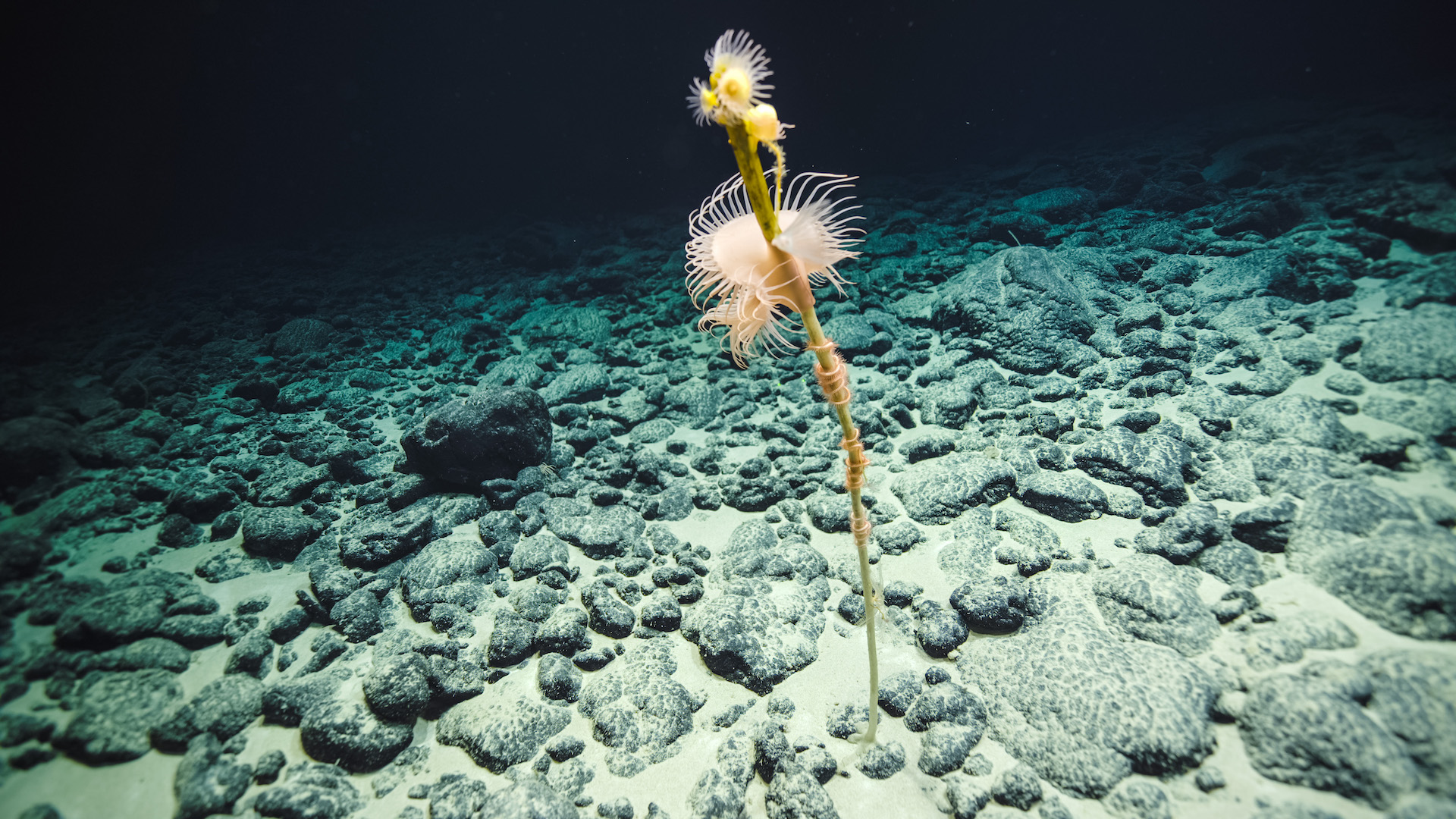
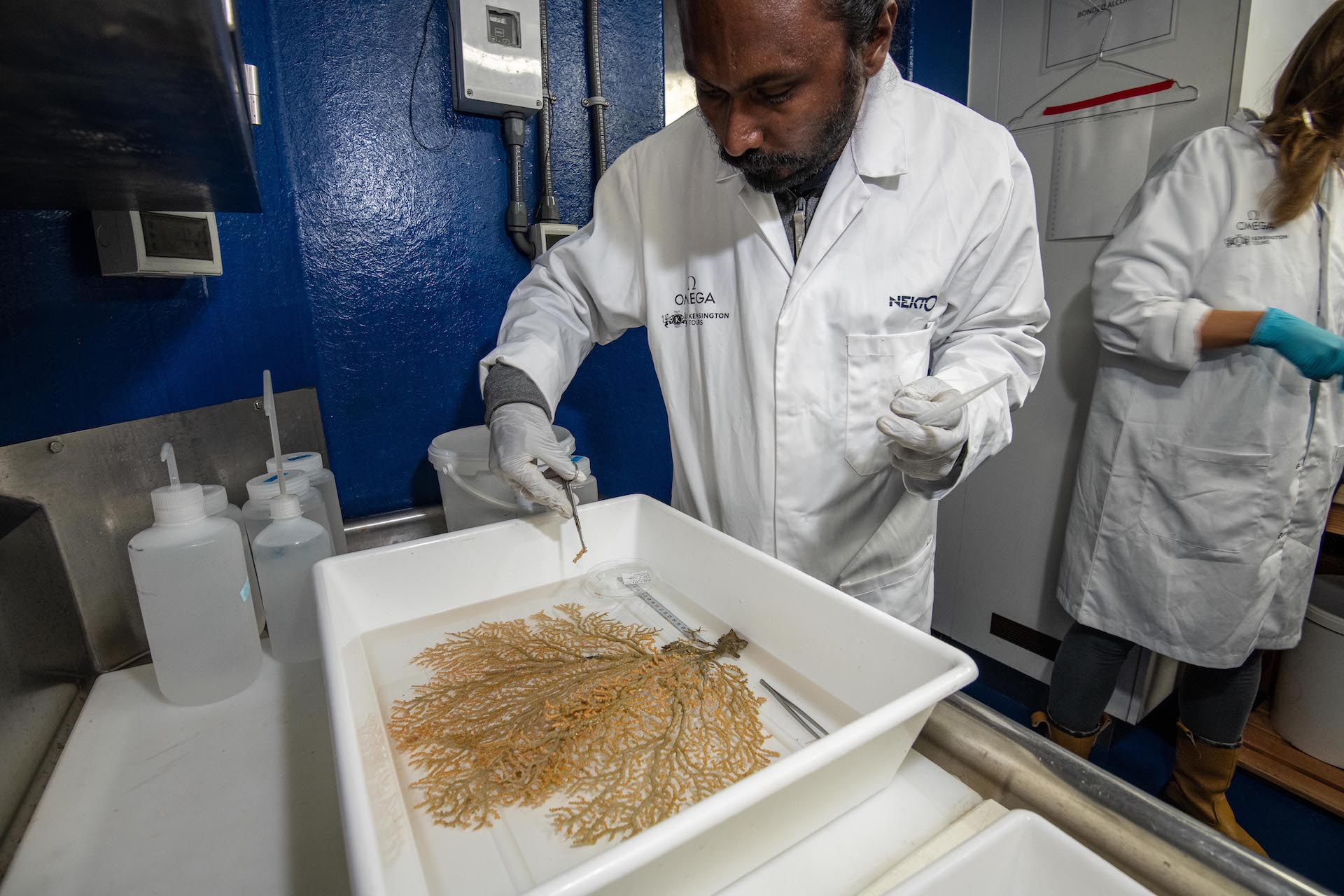
Dichotomous colony branching. Upward facing polyps (thus in the “japonica” complex) in whorls of 3-4 on end branchlets, 11-12 whorls / 3cm, polyps 1.8-2.2mm tall. Polyps have spine on buccal scales so are in “Species group 1” (sensu Bayer, 2001). Spines on buccal relatively short, under 0.3-0.4mm tall – this is at the margins of the key diagnostic (decision 8 in the dichotomous key for Calyptrophora, Cairns, 2018). If consider they are shorter the specimen keys out as C. tripelis (confusing as this is drawn as having no spines in Bayer 2001) – this specimen has spines. If consider the spines are over 0.3mm and thus chose the other key option, this specimen keys out as C. bayeri - That species has taller spines on the basal scale. The curvature of the opercular scales is more extreme in this specimen and the whorls of polyps are more closely spaced (and the polyps are larger on bayeri). This specimen is more robust, thicker scales. Small curved tentacular (pinnular) sclerites. Buccal scale teeth are irregular, sometimes 4, sometimes 6, sometimes not teeth but more irregular shapes. Coenenchymal scales thick rods, quite round in cross section. Is this C japonica? Looks very similar but not because this colony does not have biplanar branching.
Discovery registered on
30/03/2026
Join the census
The Ocean Census Alliance unites national and philanthropic marine institutes, museums, and universities, backed by governments, philanthropy, business and civil society partners.


