

















Species ID
OC-SP-0002520
Discovered
Phylum
Cnidaria
Species ID
OC-SP-0002520
Provisional Species Name
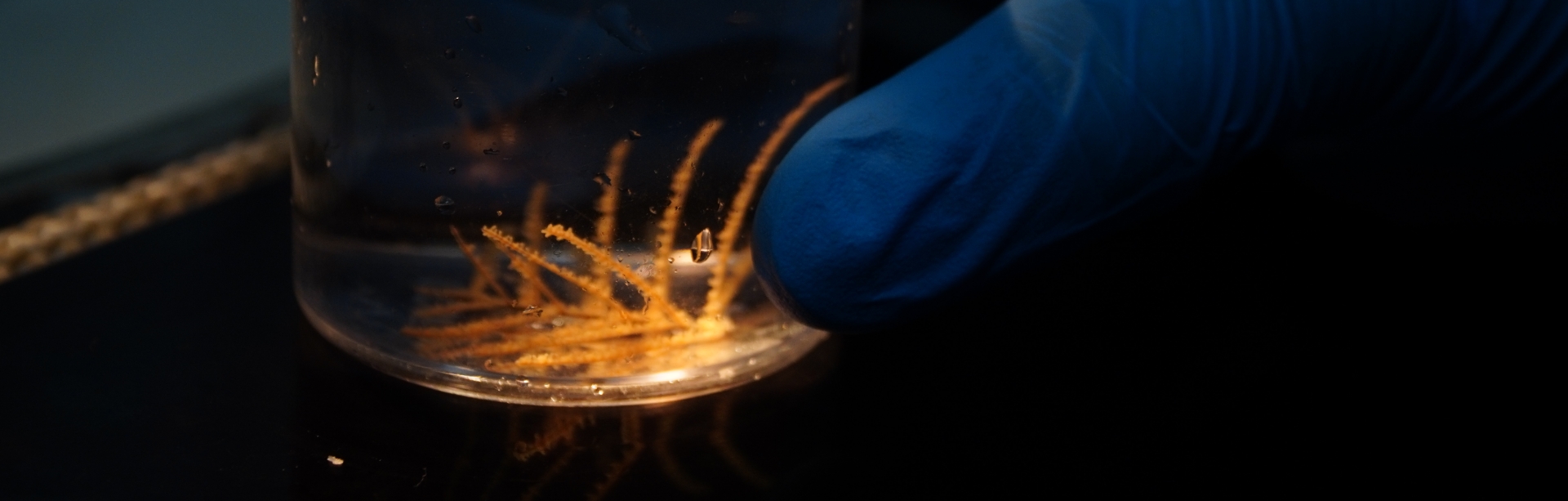
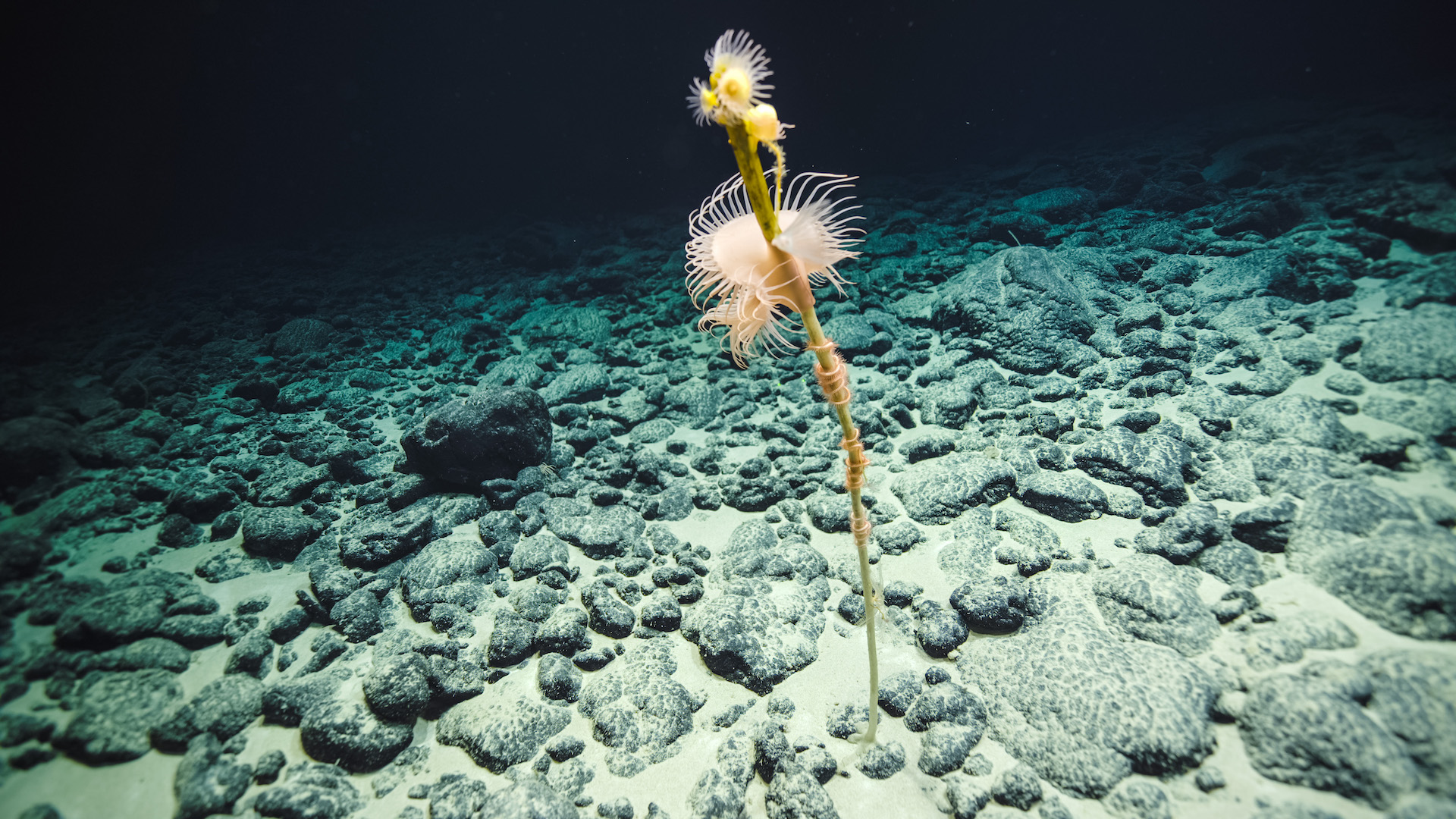
Arthrogorgia sp_YK25-09C_OC0177
Lowest Valid Taxon Name in WoRMS
Arthrogorgia
Lowest Known Rank
Genus
Status
Discovered
Does the taxonomist(s) intend to work on this material further?
4. I/We are not going to publish.
Embargo
No
Kingdom
Animalia
Phylum
Cnidaria
Class
Octocorallia
Order
Scleralcyonacea
Family
Primnoidae
Genus
Arthrogorgia
Taxonomic Remarks
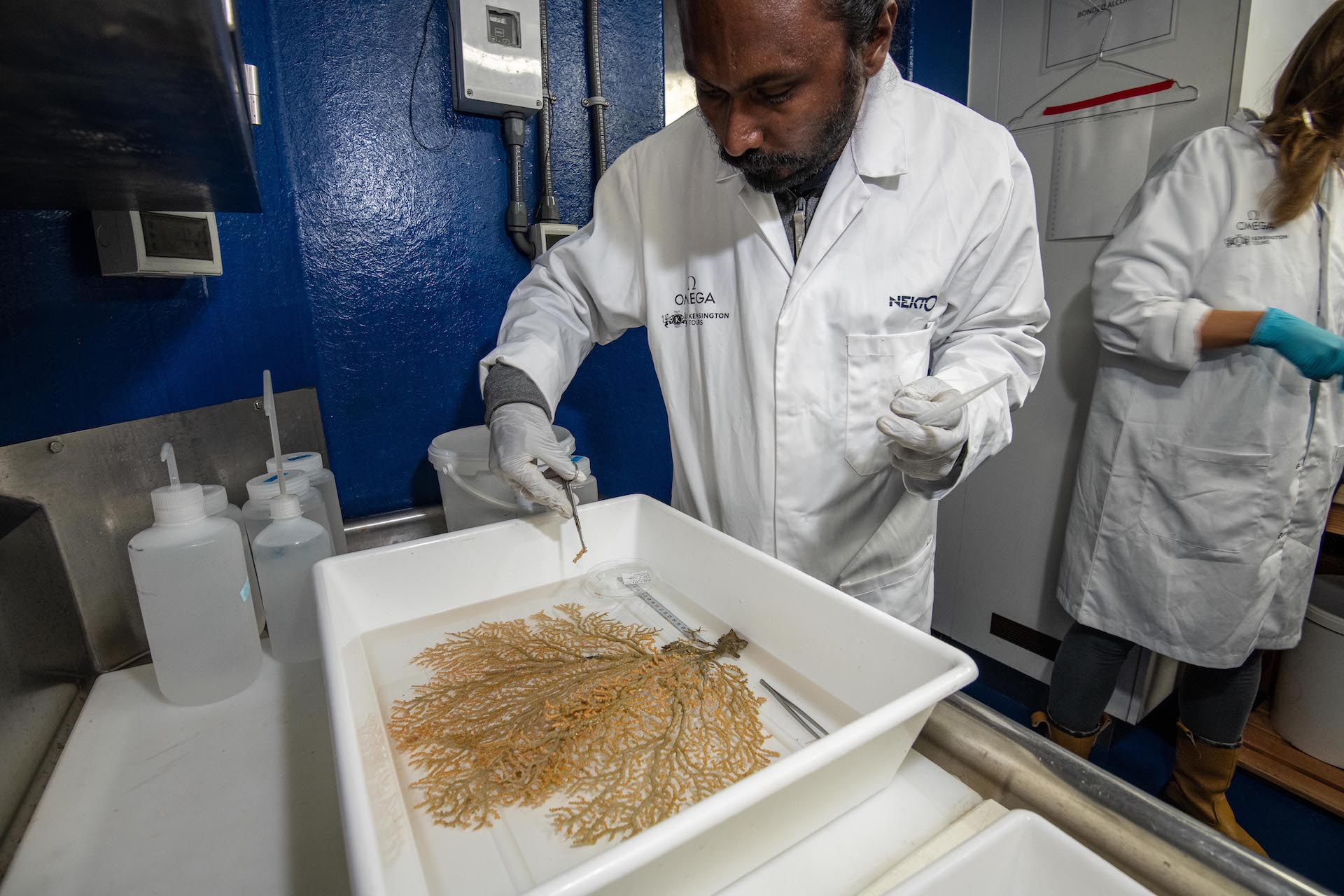
This specimen has even dictomous branching so cannot be A. Ijimai. The remaining dichotomously branched species have much larger polyps than those seen here. There are spines on the basal scales so this is not A. otsukai. Strong spines on basal scales are seen in the remaining two species but both species have polyps that are twice the height of those seen here. Buccal scales extend over the base of opercular scales, unlike in A. utinomii and this specimen lacks the “extra” scales below the buccal ring that is specific to that species too. This species is most similar to A. kinoshtiai which, corresponding to the large polyp size difference, also has fewer polyps / 3cm of branchlet (7-8 vs ~14) and it has more polyps / whorl (6-9 vs. 5-6). The spines on basal scales are sharper and smoother than the more stocky, thicker spines seen here.
Discovery registered on
30/03/2026
Distribution
Unknown
Join the census
The Ocean Census Alliance unites national and philanthropic marine institutes, museums, and universities, backed by governments, philanthropy, business and civil society partners.


