














Species ID
OC-SP-0002178
Discovered
Phylum
Cnidaria
Species ID
OC-SP-0002178
Provisional Species Name
Phelliogeton sp_OCCNI11
Lowest Valid Taxon Name in WoRMS
Phelliogeton
Lowest Known Rank
Genus
Status
Discovered
Does the taxonomist(s) intend to work on this material further?
2. I/We already have plans to publish. (For marine invertebrates please know that SOSA could support you in this too - please click the button for more details).
Embargo
No
Kingdom
Animalia
Phylum
Cnidaria
Class
Hexacorallia
Order
Actiniaria
Family
Bathyphelliidae
Genus
Phelliogeton
Date Identified
04/02/2026
Taxonomic Remarks
The genus Phelliogeton currently includes two valid species: Phelliogeton falklandicus Carlgren, 1927 and Phelliogeton kerguelensis Carlgren, 1928. Phelliogeton sp. differs from P. falklandicus by its larger body size, by the absence of adhered particles on the column, and by exhibiting a different cnidom distribution pattern. In particular, p-mastigophores were recorded in the tentacles and acontia of Phelliogeton sp., and the cnidae generally reach greater lengths. Basitrichs of the mesenterial filaments show marked differences (16–21 µm in P. falklandicus vs. 32–62 µm in Phelliogeton sp.). Phelliogeton kerguelensis differs geographically from the preceding species, as it is distributed in shallow waters (9–13 m) of the Kerguelen Islands. It also presents approximately 40 tentacles, and the processes of the retractor muscles tend to group into two bundles, giving the muscle a bilobed appearance. Carlgren (1928) did not clearly specify the type of nematocysts present in the acontia of this species, possibly referring to basitrichs. Even so, if they were p-mastigophores, the lengths recorded in Phelliogeton sp. nov. are considerably greater (24–38 µm in P. kerguelensis vs. 40–77 µm in the mesobasic p-mastigophores of Phelliogeton sp. nov.).
Discovery registered on
20/02/2026
Description of Material
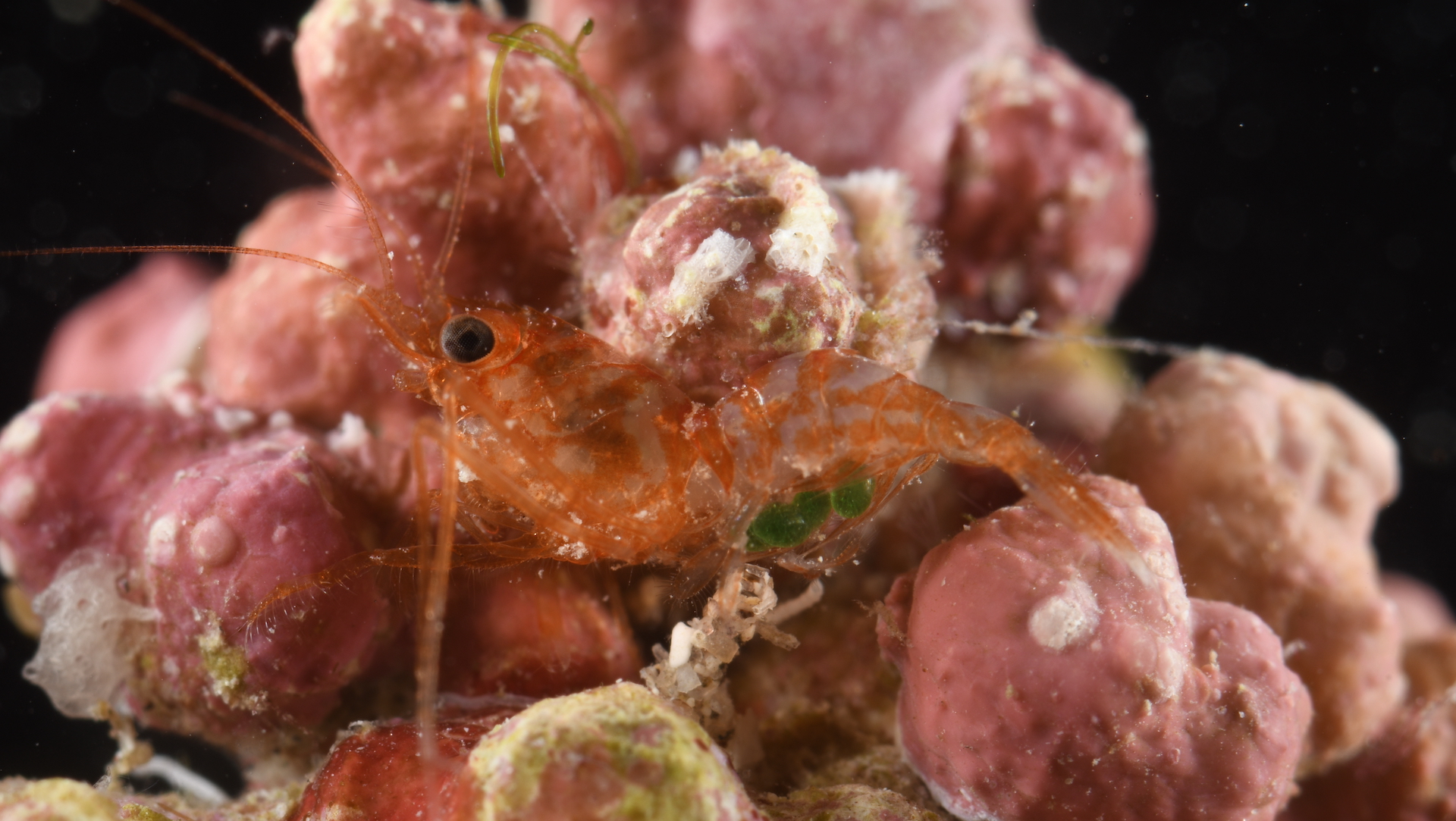
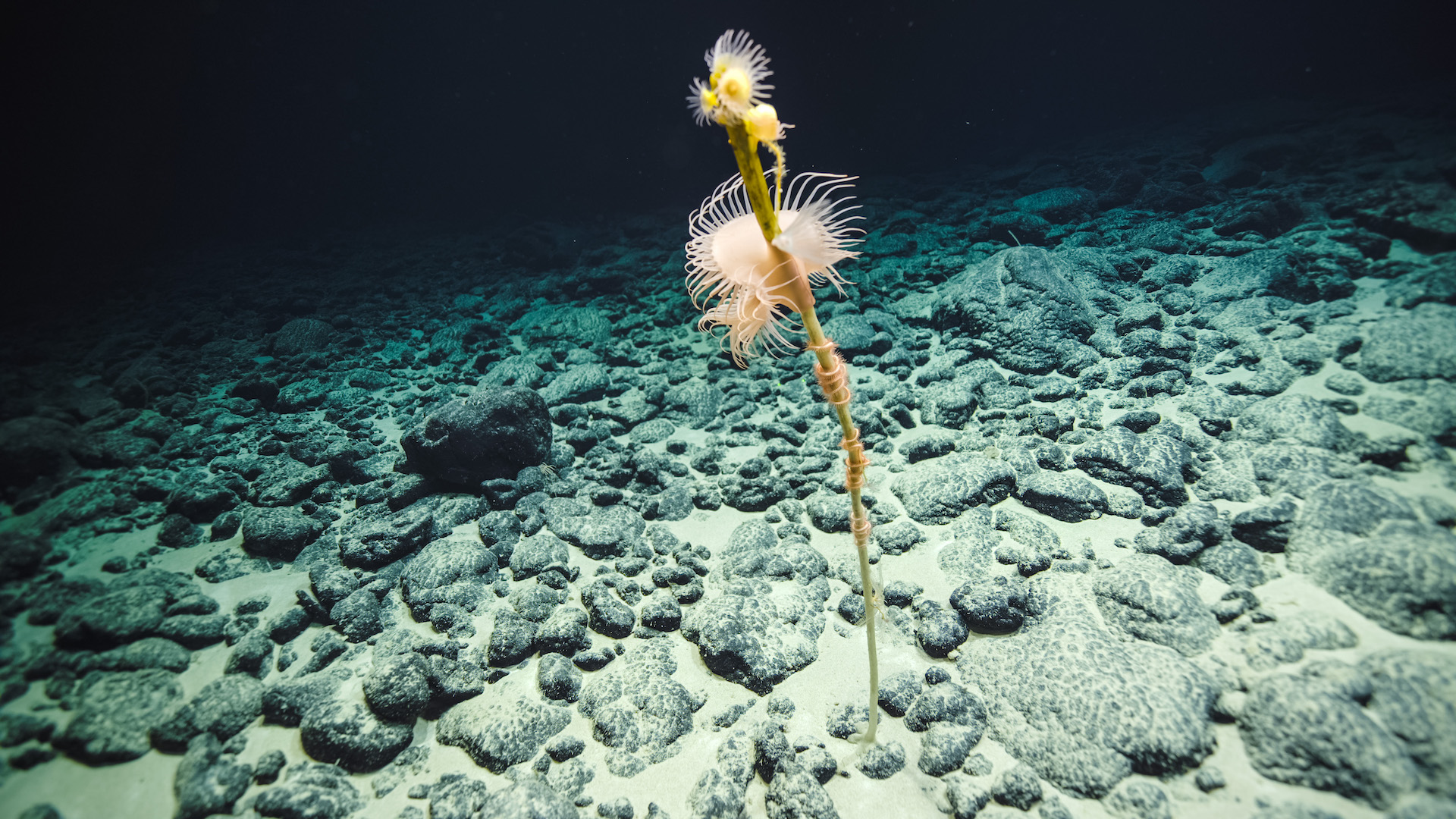
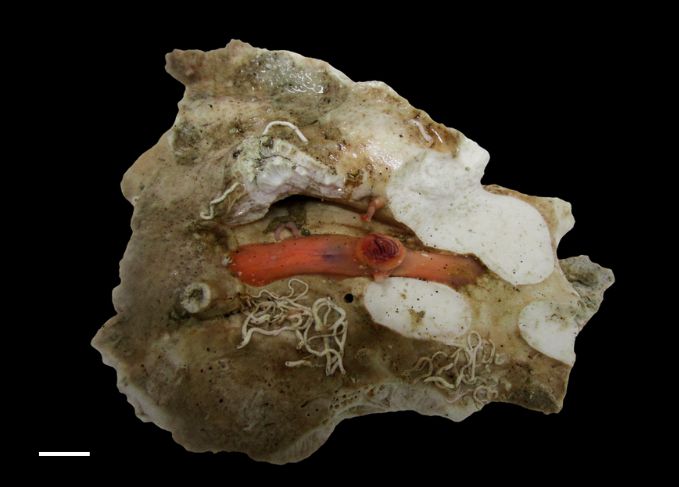
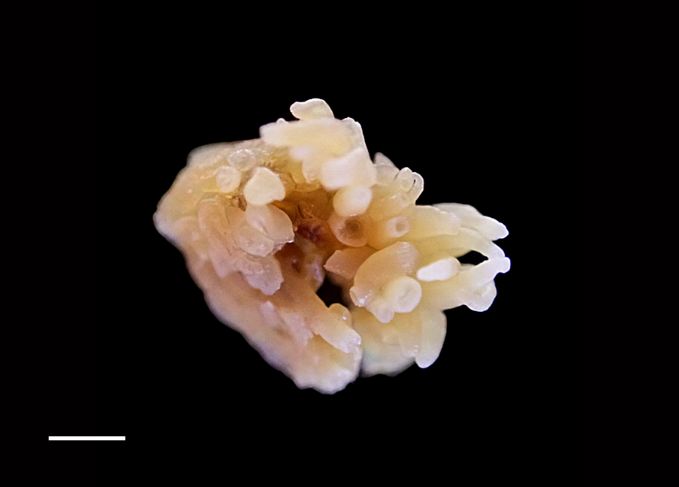
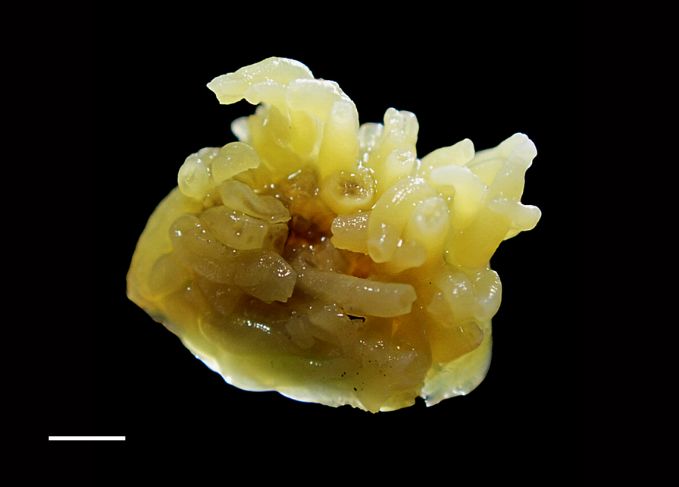
Pedal disc well developed, attached to hard substrates. The pedal disc can elongate markedly, probably to occupy a larger attachment area, increasing to almost three times its size and adopting rectangular or oval shapes; up to 14 mm in preserved specimens. Column cylindrical, smooth, not divided into regions; up to 15 mm in length and 8 mm in diameter. Column orange–reddish. Oral disc partially covered by tentacles, up to 5 mm in diameter in preserved specimens. Tentacles slender, short, some digitiform, numerous although the exact number cannot be precisely determined, between 26 and 28, arranged in at least three cycles. Tentacles externally orange but internally with a darker, violet tone. Externally, neither cinclides nor acontia are observed. Mesenteries arranged in three cycles, organized in 24 pairs. First cycle of mesenteries with six pairs of macronemes bearing well-developed musculature. The remaining eighteen pairs correspond to micronemes; the six pairs of the second cycle with muscular processes that do not become fully developed, and the twelve pairs of the third cycle with thin projections and without well-differentiated musculature. Two pairs of directive mesenteries between the mesenteries of the first cycle, possibly each associated with a siphonoglyph. Retractor muscles well developed, restricted to circumscribed, with 10–13 processes varying in degree of branching. Parietobasilar muscles weakly developed, located on the sides opposite the retractors; in some mesenteries the mesoglea separates from the main lamella forming a digitiform projection. Basilar muscles could not be distinguished in the sections. Marginal sphincter muscle mesogleal. Acontia observed in histological sections, but not under a stereomicroscope, probably due to the preservation state of the material. Cinclides not observed. Reproductive structures not recorded in the examined material. Body wall layers variable in development, with an epidermis approximately 108 µm thick, mesoglea 44–167 µm thick, and a gastrodermis not clearly distinguishable in the sections. Cnidom: spirocysts, basitrichs, microbasic p-mastigophores, and mesobasic p-mastigophores.
Ecology
It firmly attaches to hard substrates such as coral skeletons, elongating its pedal disc to occupy a larger area of the substrate. This activity could be related to a process of asexual reproduction, such as longitudinal fission or even pedal laceration, as has been observed in other acontiarian species; however, additional specimens and further studies are required to confirm this hypothesis.
Distribution
MPA Namuncurá-Burwood Bank, 54º36,45’S, 61º5,22’O. Depth (193 m)
Scientific Name Authorship
Camila Vasquez Sasali, Ricardo González Muñoz, Fabián H. Acuña & Agustín Garese
Join the census
The Ocean Census Alliance unites national and philanthropic marine institutes, museums, and universities, backed by governments, philanthropy, business and civil society partners.


